Friday, September 28, 2012
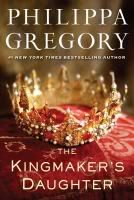
The Kingmaker's Daughter by Philippa Gregory
Like any powerful woman of the 15th century, Elizabeth Woodville was not to be trusted. Accusations of witchcraft follow her everywhere, and are blamed for her successes and her failures. Richard Neville begins as a staunch Yorkist, but when the king begins to follow the advice of the Woodville family rather than his, he changes sides, becomes a Lancastrian, and starts working to remove Edward from the throne. Anne is initially confused by this turn of events. She's spent her entire life hating and fearing the Lancasters, especially their queen, Margaret of Anjou. Now, she's not only a supporter of their claim to the throne, she's forced to marry the Edward, the Lancaster heir and presumptive king. Theirs is a loveless political marriage, and Neville's intent is to get close to whomever is to become king via his daughters. Further muddying the family's loyalties is Isabel's marriage to Edward IV's brother George, second in line to the throne at the time of their marriage. One sister is married to a York, the other to a Lancaster, which should put Richard Neville in a position of power. Neville's scheming backfires (his failure is blamed on Elizabeth Woodville's witchcraft, of course), he is executed, his son-in-law Edward dies, and his daughters are left to their own resources, forced to distance themselves from the father whose shadow looms large over their lives.
After some time as a widow, Anne marries Richard, the youngest of the York brothers. There's some foreshadowing of the marriage in earlier parts of the book -- they shared a flirtation as youths. This seems to tie Anne in strongly with the York cause; between her new marriage and her sister's marriage to Richard's brother George, their loyalties should be secure. But one of the most enduring lessons these sisters learned from their father was to strive for more, at any cost -- and they do, and the cost is devastatingly high. We watch Anne turn from an innocent whose life is fully controlled by her politically-connected father to a young woman whose life is poisoned by paranoia and jealousy. By the time Richard ascends to the throne, it's hard to recognize the young woman whose unquestioning, unwavering belief in her father's cause -- whatever it was at the time -- was the key characteristic of her personality.
This is the Gregory treatment of the story, so women are the prime movers. It's their gossip that stirs up tales of Edward IV's illegitimacy and turns Elizabeth Woodville from beautiful queen to villainous witch; it's their advice that puts the princes in the tower and Richard on the throne. This is all speculation, but a seasoned author like Gregory knows that it makes a good story and uses it to her full advantage. Gregory teases with speculation; she offers several options but leaves it to her readers to make their judgment about what really happened. She absolves both Richard and Anne of responsibility, and insinuates that the princes are alive and well and living in exile somewhere. It's a very noncommittal approach to one of the great mysteries of English history, and a bit of a surprise given the drama inherent in this story.
There are facts, and there are speculations. We know that Richard was a third son, and therefore unlikely to inherit the throne. We know that the late King Edward's sons -- his heirs -- were locked in the Tower of London, never to be seen or heard from again. We know Richard became king, and we know he was defeated in battle by Henry Tudor, who became Henry VII after Richard's defeat and founded one England's most storied royal dynasties. But history hasn't been kind to Richard. He was a usurper, and it is widely believed that he murdered two innocent boys in the process. But Gregory spends most of the novel setting Richard and Anne up as heroes. Richard especially remains loyal and steadfast to his family's cause, succumbing to the scheming that puts him on the throne only after his mother gets in on the action. It's kind of a "The Princes in the Tower, and How They Got There" story. Richard is presented as a nice guy who loves his brothers despite their faults. His strings get pulled by some very conniving people, among them, his own mother, and he ends up benefiting, even though he never meant to do anything wrong.
Throughout the novel, there are numerous references to the wheel of fortune -- what goes up must come down. It's a fine metaphor for the lives of all of the women embroiled in this bitter battle.These women battle their way to the top in the ways that they can -- through marriage, childbirth, loyalty, and family ties -- and once they get there, they know there's nowhere to go but right back down. At a particularly poignant scene at the end of the novel, Anne says it herself: "You can go very high and you can sink very low, but you can rarely turn the wheel at your own bidding." Despite all that Gregory's Cousins' War heroines had to offer -- their intelligence, their shrewdness, their political savvy -- they were never able to really turn that wheel on their own.
Anne led a short but eventful life, and Gregory does her justice. Since this is the last in the Cousins' War series, I look forward to finding out which era she will write about next.
Tuesday, July 20, 2010
The Other Boleyn Girl by Philippa Gregory
Dazzled by the golden prince, Mary’s joy is cut short when she discovers that she is a pawn in the dynastic plots of her family. When the capricious king’s interest wanes, Mary is ordered to pass on her knowledge of how to please him to her friend and rival: her sister Anne.
Anne soon becomes irresistible to Henry, and Mary can do nothing but watch her sister’s rise. Anne stops at nothing to achieve her own ambition. From now on, Mary will be no more than the other Boleyn girl. But beyond the court is a man who dares to challenge the power of her family to offer Mary a life of freedom and passion. If only she has the courage to breakaway – before the Boleyn enemies turn on the Boleyn girls…
I still remember getting really annoyed the first (and even the second!) time I read this book with the historical liberties taken by Philippa Gregory. The Other Boleyn Girl is loosely based on real facts and far from being an accurate historical portrayal. This was clearly getting on my nerves, which is never a good sign. Many parts of this story were based in unproved theories and even Mary Boleyn’s life is mostly a mystery. There’s very little information, especially about her relationship with her sister or/and the King Henry VIII.
The last time I read this book, Gregory’s writing style made up for the less pleasant parts. This time around, I was simply exasperated by this over the top drama.
Wednesday, April 15, 2009
HT News - UK Covers

Another UK cover, this time for the September 2009 release by Philippa Gregory, The White Queen

Thanks to Tanzanite for mentioning these covers over at HistoricalFictionOnline.com.
Tuesday, August 19, 2008
Upcoming Release: The Other Queen by Philippa Gregory

A dramatic novel of passion, politics and betrayal from the author of The Other Boleyn Girl, in which Mary, Queen of Scots, fights to regain her kingdom whilst under the guard of Queen Elizabeth's trusted accomplice, Bess of Hardwick Mary is Queen of Scotland but she has been forced to flee her land and take refuge in an England that is ruled by her cousin Elizabeth. But England, precarious in its Protestant state, set against the mighty powers of Spain, France and Rome, doesn't need a charismatic Catholic figurehead at large. So Elizabeth's chief advisor, Cecil, devises a plan in which Mary will live under guard with his trusted accomplice: Bess of Hardwick. Bess is a self-made woman, a shrewd survivor. She is newly married to her fourth and most distinguished husband, the Earl of Shrewsbury. But what marriage can withstand the charms of Mary? Or the threat of rebellion that she always carries? Mary must wait in her privileged imprisonment for the return to Scotland and her infant son; but waiting is not the same as doing nothing!With her characteristic combination of superb storytelling and authentic historical background, Philippa Gregory brings to life this period of great change in her final novel in the Tudor series.You may have noticed that I said that the book was released months ago here. You might assume that might mean that I have actually read it, but it is not the case! Because I am currently trying to limit my book buying a little, I have had my name on the request list at the library since the beginning of the year. It appears as though that the library is buying their copy from the American publisher instead of the Australian publisher because it is still on order now, and the catalogue has a picture of the American cover as well!
We have previously posted a Cover Story for this book showing the two very different covers for the same book in the UK (and Australia) and the US.
Thursday, April 24, 2008
Cover Story: The Other Queen by Philippa Gregory
A dramatic novel of passion, politics and betrayal from the author of The Other Boleyn Girl, in which Mary, Queen of Scots, fights to regain her kingdom whilst under the guard of Queen Elizabeth's trusted accomplice, Bess of Hardwick Mary is Queen of Scotland but she has been forced to flee her land and take refuge in an England that is ruled by her cousin Elizabeth. But England, precarious in its Protestant state, set against the mighty powers of Spain, France and Rome, doesn't need a charismatic Catholic figurehead at large. So Elizabeth's chief advisor, Cecil, devises a plan in which Mary will live under guard with his trusted accomplice: Bess of Hardwick. Bess is a self-made woman, a shrewd survivor. She is newly married to her fourth and most distinguished husband, the Earl of Shrewsbury. But what marriage can withstand the charms of Mary? Or the threat of rebellion that she always carries? Mary must wait in her privileged imprisonment for the return to Scotland and her infant son; but waiting is not the same as doing nothing!With her characteristic combination of superb storytelling and authentic historical background, Philippa Gregory brings to life this period of great change in her final novel in the Tudor series.
Why is it a surprise? Well, because last time I heard, the UK release had been pushed back to around August, so that it was closer to the original US release date which I believe is September.
I have to say that having now seen the UK cover up close, it still does absolutely nothing for me! The US cover is kind of generic looking but preferable to the very drab UK cover.


Which do you prefer?
Friday, March 14, 2008
The Other Boleyn Girl - The Movie

Based on the best selling novel by Philippa Gregory, "The Other Boleyn Girl" is an engrossing and sensual tale of intrigue, romance, and betrayal set against the backdrop of a defining moment in history. Two sisters, Anne (Natalie Portman) and Mary (Scarlett Johansson) Boleyn, are driven by their ambitious father and uncle to advance the family's power and status by courting the affections of the King of England (Eric Bana). Leaving behind the simplicity of
country life, the girls are thrust into the dangerous and thrilling world of court life – and what began as a bid to help their family develops into a ruthless rivalry between Anne and Mary for the love of the king. Initially, Mary wins King Henry's favor and becomes his mistress, bearing him an illegitimate child. But Anne, clever, conniving, and fearless, edges aside both her sister and Henry's wife, Queen Katherine of Aragon, in her relentless pursuit of the king. Despite Mary's genuine feelings for Henry, her sister Anne has her sights set on the ultimate prize; Anne will not stop until she is Queen of England. As the Boleyn girls battle for the love of a king – one driven by ambition, the other by true affection – England is torn apart. Despite the dramatic consequences, the Boleyn girls ultimately find strength and loyalty in each other, and they remain forever connected by their bond as sisters.
I have read the book, so you know that meant I was looking forward to the movie. More because the book was one of the best books I read the year I read it, so I wanted to see how that would transfer to the big screen. The other night, I finally got my chance. I sat through the annoying commercials (a car commercial set to Mambo Number Five...), I watched the previews for up-coming releases (first movie I have seen in a while without the annoying robot movie preview), and then finally the movie began. The setting was wonderful, the costumes were impressive, and I was beginning to think that I was in for a good show.
First up, I should mention I was not thrilled by the casting choices. I do not mind Natalie Portman, but I am not a big Scarlett fan. There is something about her that I just cannot warm up to. I think that for the role that was written for her, Natalie did an awesome job. Scarlett did meek pretty good, but like I said, I just cannot warm to her. I am not sure Eric Bana was exactly who I would picture for Henry, but he did do a good job. There was, for me, nothing majorly wrong with the cast. Even the secondary characters did a very good job. I just did not like the movie. Actually, I sat there for the entire time praying it would hurry up and get over. The other two people I went with enjoyed it, and I imagine one of them will buy it when it comes out on DVD, but once was more than enough for me!
I know that the Boleyn's and their connection with the king was all rather dramatic, but there was just too much drama for me. I found that they were trying to overplay everything just a bit too much for me. I didn't feel bad for Anne in the end, I was just happy that if she was now dead, the movie must be almost over. In the book, Anne is the younger sister, but in the movie they changed it to have her as the older one. The fact that she was the older sister was a line of dialogue several times throughout the movie. All I kept thinking is that we get it already, no need to mention it again! I just found that the movie had too much whining, tears, and back-stabbing. Historically correct? Probably. Just too much drama for me. It was really rushed, the whole story. Two babies were born, so you know at least 18 months went by, but it felt like a week. I just did not like how the movie was written. It annoyed me to no end.
So, while I know that people like this movie, I do not. I can go on and on about it, but for now, I will just say that this is not a movie for everyone.
Monday, February 11, 2008
The Other Boleyn Girl - Philippa Gregory

I bought this book and it's been sitting on my TBR pile for a while now. I was hesitant to pick it up. Anne Boleyn's story is one I researched a long time ago and I wasn't too sure I wanted to revisit it. However this month I decided to read it and now I'm glad that I did it.
I wasn't too sure I was enjoying it very much at first. Mary Boleyn seemed, at times too innocent and tongue-tied, and at other times an intelligent observer of human nature. I wasn't too convinced with her as a character! A king's mistress should be at the time an enviable position and she seems not to care for it which I found a bit unbelievable. Also Anne seemed too sophisticated for a girl of 16, not only she knows anything and everything about manipulating and seducing a man she is even knowledgeable enough to know her sister wont hold his interest for long and the real secret to do that. Even if she has learned much in the french court it seems a bit too much that in that time and age powerful nobles like her father and uncle would listen to a mere girl of 16. She seems a bit over the top in her ruthlessness and her knowledgeable attitudes. It's difficult to believe that Mary, being the king's mistress would so readily be ordered about by Anne, she would surely revel in the power she had. And being born is such a family of courtiers it's also difficult to believe she would be as innocent and without malice as she is portrayed here. She might be young but she was surely aware of what riches she could and should obtain. If nothing else from being brought up that way.
I became much more engrossed in the action after Anne captures the kings attention, and seems much more aware of what's at stake, and Mary is allowed to spend more time in the country with the children. It's seems to me that both sisters are much more fleshed out after that and it became more interesting for me too.
I think Gregory tried to paint them has having 2 opposing tempers and attitudes. To me she went a bit too far, that black and white approach is too unreal. The story is reported from Mary's point of view who is the narrator and is usurped and sometimes humiliated by Anne on her way to the throne. It would be too easy to say that one was the good and the other the bad but I feel that they basically did the same thing. Gregory chooses to portray Mary's affair as the family's ambition and Anne's fight for the throne as her personal ambition but can we really say that was what happened? And is that really relevant? The girl who had Henry's attention when he first thought of getting rid of Catherine would do all in her power to be his future queen. And if Anne was an intelligent and learned young woman who participated in the debates regarding the new religion to help her cause I think that that is more compliment to her than something to condemn. What she may not have realised was that, after getting rid of one queen it would be easier for Henry to get rid of another if she fell out of favour or didn't give him the desired son. He was a king of which it was safer to be mistress than wife.
As Mary's story unfolds I became more and more interested in her. She did really marry a "nobody" and she had to go away because of it, it seems like a beautiful love story and I found myself eager for more details about her and William's courtship. Much more than about Henry and Anne's which is ruined a bit for me because of her portrayal of Anne who must have been scheming and determined yes but also intriguing and more complex than she appeared here.
Gregory does take several liberties with the story and I'm usually okay with that if there are no known facts or if there are several theories about it but I was really disappointed with what she decided to use to support Henry's accusations. Totally unnecessary I think, history is interesting enough in this case; no need to pass for truth something that is widely known today to be a lie... The case against Anne Boleyn was so badly done and the king's interest in getting rid of her was so open that even his contemporaries (and Anne's enemies) felt it unfair and without cause.
So yes I think Gregory is a good storyteller if even I am sometimes jarred out of the story by things I recognise as not being true or because the characters react in ways that I find are too modern. I will read her again but I'm hoping she wont pull much more stunts like that one or she will ruin the books for me.
Friday, February 8, 2008
Cover story: The Other Boleyn Girl
Of course, with the movie out soon, we now have the movie tie-in covers as well. This seems to be the main cover that is being used most places:
But this is the one that we have in Australia. When I went to the department store on Thursday, there were so many copies of this books it was unbelievable. I guess they are figuring that the trailers are starting to play so people's interest will be piqued. Unfortunately I couldn't find one of the book cover, but have had to go with the audiobook cover instead, so it's a bit small, but hopefully you get the general idea!

Of the two movie tie-in covers, I definitely prefer the Australian one. The other one is just so green!
Speaking of the movie, the official site is now up.
Friday, November 16, 2007
Movie Trailer: The Other Boleyn Girl
Okay, so the video isn't going to embed. Instead click here, and then come back and tell us what you think!
Sunday, September 16, 2007
Philippa Gregory News
I definitely won't be getting up for it, but I would love to hear what people think of it if they do participate.
By the way, Philippa's website has just had a really big makeover so go take a look.
Originally posted 12 July 2007
From Philippa Gregory's home page:
Join bestselling author Philippa Gregory for a live web event on Sunday, September 16 at 7pm (UK) or 2pm (US - EDT). Philippa will discuss her research methods, writing process, the latest novel The Boleyn Inheritance, the upcoming movie based on The Other Boleyn Girl, the next novel The Other Queen about Mary, Queen of Scots, and much more. As an online attendee, you'll view a simulcast of Philippa speaking to an audience in London, be able to ask Philippa your own questions and interact with other book clubs and fans. Register now and you'll receive emails with reminders and special content throughout the summer.
Visit www.philippagregorylive.com to register to become part of the audience.
For me, this means getting up at 4am, so I think I will be giving it a miss, but other people might find it interesting!


