Showing posts with label Deborah Swift. Show all posts

Monday, September 15, 2014

Shadow On The Highway Blog Tour: Review

Publication Date: July 15, 2014
Endeavor Press
Formats: eBook, Paperback; 200P

Series: The Highway Trilogy
Genre: Historical Fiction/YA (14+)

Synopsis:


May 1651. England has been in the midst of a civil war for nearly ten years. The country has been torn in two, and the King is getting ready to make his last stand against Cromwell’s New Model Army.

Abigail Chaplin, a young mute girl, has lost her father to the parliamentarian cause. But with her family now in reduced circumstances, she is forced to work as a servant at a royalist household – the estate of Lady Katherine Fanshawe.

Abi is soon caught up in a web of sinister secrets which surround the Fanshawe estate. The most curious of which is the disappearance of Lady Katherine late at night.

Why are her husband’s clothes worn and muddy even though he hasn’t been home for weeks? How is she stealing out of the house late at night when her room is being guarded? And what is her involvement with the robberies being committed by the mysterious Shadow on the Highway?

‘Shadow On The Highway’ is based on the life and legend of Lady Katherine Fanshawe, the highwaywoman, sometimes known as ‘The Wicked Lady’. It is the first book in ‘The Highway Trilogy’.

So What Did I Think About The Story?:


Shadow on the Highway is an exciting peek into the English Civil War from both sides of the fighting as well as from the viewpoint of those left at home to fend for themselves. I was impressed with how the author was able to highlight the greed and corruption on both sides of this coin and how this English war ripped apart families and communities.  No one seems better equipped to represent this dividing of loyalties and the chaos that swirled through England during this time than young Abigail, a girl caught between the parliamentarian leanings of her family and the royalist household she finds herself ensconced in.

Abigail was by far my favorite character. You can't help but feel terrible for all she has had to go through: the guilt she feels over causing the fire that destroyed her family's home and the belief that the illness that caused her deafness was retribution for her actions; the sadness over losing her father and the hard life this left her mother and siblings in; the feeling that she has to stick it out and take whatever abuse she receives at the Fanshawe household because she has very few choices in life and needs to do what she can to help her family. With all of this she is stuck in the middle of all the varying beliefs and dangers around her, made to keep secrets from everyone and forced to find a way to survive, and all without being able to hear a thing! It was remarkable seeing her use her other senses to navigate the world around her and I got a great delight when she would let her anger and jealousies surface and act out in what little ways she could safely do.

My least favorite character would have to be Lady Katherine Fanshawe. She was bossy, stubborn and used poor Abi to get her way without taking into consideration what problems her demands might cause. Even when we see her in a more sympathetic light - seeing her being used by first her step-father and then the manor's overseer, the physical abuse she is made to suffer through for not doing what she is told, etc. - Katherine would turn around and threaten or cajole Abi into doing something or helping her to do something that could get them both into a lot of trouble. By the end she does show herself to be a better, more humble person that initially expected but I would have preferred  that to happen a lot sooner. Being that this is the first in a trilogy and the final book is slated to be from Katherine's perspective I am hoping she will redeem herself in full when she gets to tell her own story.

Possibly the most fascinating aspect of Shadow on the Highway for me was the introduction of aspects of the English Civil War I had never heard of before. For example, The Diggers were a group of Englishman during this time who tried to live in what we would now call communes, living off the land in a state of equality for all and the sharing of all goods and properties. By having Abi's brother Ralph (who will be the centerpiece of the second book in this trilogy) advocating for a Digger's community on their village's common land we the reader are able to walk into this fascinating segment of history and see how these radical thinkers of the time tried desperately to make a place for themselves in a country placing so many restrictions and demands on their freedom.

One of the aspects of historical novels I cherish the most are the historical notes many authors put at the back of the book, letting the reader know where they have stuck to the true events discussed and where they have embellished to advance the story in some way. Deborah Swift's historical notes are delightful and prompted me to want to learn more about the English Civil War, the real life Lady Katherine Fanshawe, the 17th century advancements in helping non-hearing children communicate and so much more. This rounding up of the themes and characters discussed in the story really solidified the story for me and has me excited to read the next two books in the trilogy.

Being that this is categorized as a YA novel I think it will appear to young readers just learning about the English Civil War as well as readers well versed in this era. I have enjoyed Deborah Swift's writing before and this was no exception. I very much look forward to the next two books in this trilogy!

So What Did I Think About The Cover?:


I think it's beautiful! I love the sumptuous red dress and the swirling gold around the edges. I am assuming the woman on the cover is meant to be Lady Katherine and I think it represents her well. 

My Rating: 4.0/5.0


Thank you to Amy at Historical Fiction Virtual Book Tours for providing me with a free copy of Shadow on the Highway in exchange for an honest review! Be sure to continue below for more information about the author and the book tour.


Praise for Deborah Swift


“There is no greater compliment than ‘Give me more!’” – Author Susanna Gregory

“realistic dialogue, an author’s obvious love for history, and characters that leap off the pages” – Romance Reviews Today

“genuinely engrossing… with characters you can get interested in” – The Mum Website


Buy The Book


Amazon US
Amazon UK

About The Author


Deborah Swift used to work in the theatre and at the BBC as a set and costume designer, before
studying for an MA in Creative Writing in 2007. She lives in a beautiful area of Lancashire near the Lake District National Park. She is the author of The Lady’s Slipper and is a member of the Historical Writers Association, the Historical Novel Society, and the Romantic Novelists Association.
For more information, please visit Deborah’s website. You can also find her on Facebook and Twitter.


Shadow on the Highway Blog Tour


Monday, August 25

Review at Flashlight Commentary

Tuesday, August 26

Interview at Flashlight Commentary
Book Blast at Princess of Eboli

Wednesday, August 27

Guest Post at Reading the Past
Book Blast at Broken Teepee

Thursday, August 28

Review at WTF Are You Reading?
Book Blast at Peeking Between the Pages

Friday, August 29

Book Blast at Passages to the Past
Book Blast at What Is That Book About

Monday, September 1

Review at The Maiden’s Court
Book Blast at Reading Lark

Tuesday, September 2

Guest Post at Let Them Read Books

Wednesday, September 3

Review at A Bookish Affair

Friday, September 5

Book Blast at Curling Up By the Fire

Saturday, September 6

Book Blast at A Book Geek

Monday, September 8

Review at Oh, for the Hook of a Book
Review at Historical Fiction Obsession

Tuesday, September 9

Review at Brooke Blogs
Book Blast at CelticLady’s Reviews

Wednesday, September 10

Review at Unabridged Chick
Review at So Many Books, So Little Time

Thursday, September 11

Review & Guest Post at Just One More Chapter
Interview & Giveaway at Unabridged Chick
Book Blast at Luxury Reading

Friday, September 12
Review at The Musings of ALMYBNENR
Review at Ageless Pages Reviews

Monday, September 15
Review at Historical Tapestry
Book Blast at A Bibliophile’s Reverie


Wednesday, March 19, 2014

Book Blast: Deborah Swift

I am really pleased to be hosting a book blast for Deborah Swift today. I really enjoyed her first two books, set in Restoration England, and liked the third one too, which was set predominantly in Spain in the same period. Deborah has also written some awesome guest posts for us over the years! Click on this link to see more of the posts that we have either by Deborah Swift or about her books. Click on the the links to read my review of The Lady Slipper and The Gilded Lily.

Anyway onto the official book blast!


~~~~~~~~~~~~~~~~~~~~~~~~~~


HF Virtual Book Tours is delighted to introduce you to historical novelist Deborah Swift! Deborah’s acclaimed novels are set in turbulent seventeenth century England and have been described as “brilliant” and “a must for all readers looking for something out of the ordinary but grippingly alive”. Her previous life as a scenographer and costume designer shine through as the settings are beautifully evoked, immersing the reader in the sights and smells of the time.

Deborah’s multi-layered and engrossing historical adventures will make perfect picks for reading groups. Reading Group Guides can be conveniently found in the back of each book and on her website.

Find more information on Deborah's novels below and enter to win a $25 Amazon Gift Card (£15 UK)!

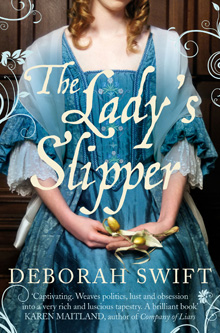
The Lady's Slipper

The Lady's SlipperPublication Date: June 3, 2011
Pan MacMillan
Formats: Ebook, Paperback

England, 1660.

The King is back, but memories of the English Civil War still rankle. In rural Westmorland, artist Alice Ibbetson has become captivated by the rare Lady’s Slipper orchid. She is determined to capture it’s unique beauty for posterity, even if it means stealing the flower from the land of the recently converted Quaker, Richard Wheeler. Fired by his newfound faith, the former soldier Wheeler feels bound to track down the missing orchid. Meanwhile, others are eager to lay hands on the flower, and have their own powerful motives.

Margaret Poulter, a local medicine woman, is seduced by the orchid’s mysterious herbal powers, while Geoffrey Fisk, Alice’s patron and former comrade-in-arms of Wheeler, sees the valuable plant as a way to repair his ailing fortunes and cure his own agonizing illness. Fearing that Wheeler and his friends are planning revolution, Fisk sends his son Stephen to spy on the Quakers, only for the young man to find his loyalties divided as he befriends the group he has been sent to investigate.

Then, when Alice Ibbetson is implicated in a brutal murder, she is imprisoned along with the suspected anti-royalist Wheeler. As Fisk’s sanity grows ever more precarious, and Wheeler and Alice plot their escape, a storm begins to brew, from which no party will escape unscathed. Vivid, gripping and intensely atmospheric, The Lady’s Slipper is a novel about beauty, faith and loyalty.

Praise for The Lady's Slipper

"The novel grips from the opening lines and carries the interest throughout. The several plot-lines are seamlessly blended and come together in a wholly satisfying conclusion. Her characters are so real that they linger in the mind long after the book is back on the shelf. Highly recommended." - Historical Novels Review Magazine

"Recommended for fans of Philippa Gregory and Rose Tremain, as well as students of the English Civil War." - Library Journal

“The intertwined stories of the orchid’s fate, the mounting problems between the Quakers and the King’s men, and Alice’s murder trial and its aftermath make for a riveting narrative.” - For the Love of Books Blog

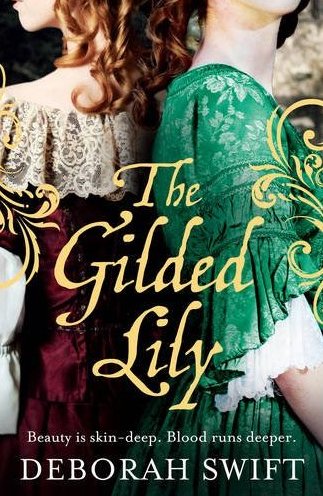
The Gilded Lily

The Gilded Lily UK CoverPublication Date: September 13, 2012
Pan MacMillan
Formats: Ebook, Paperback

Westmorland, 1660.

Sadie Appleby has lived all her life in her small village. One night she is rudely awoken by her older and bolder sister, Ella, who has robbed her employer and is on the run. The girls flee their rural home of Westmorland to head for London, hoping to lose themselves in the teeming city. But the dead man’s relatives are in hot pursuit, and soon a game of cat and mouse begins.

Ella becomes obsessed with the glitter and glamour of city life and sets her sights on the flamboyant man-about-town, Jay Whitgift. But nothing is what it seems – even Jay Whitgift.

Can Sadie survive a fugitive’s life in the big city? But even more pressing, can she survive life with her older sister Ella?

Set in London’s atmospheric coffee houses, the rich mansions of Whitehall, and the pawnshops, slums and rookeries hidden from rich men’s view, The Gilded Lily is about beauty and desire, about the stories we tell ourselves, and about how sisterhood can be both a burden and a saving grace.

Praise for The Gilded Lily

"There is no greater compliment than ‘Give me more!’ A delight." - Susanna Gregory

"The Gilded Lily is impeccably written historical fiction. The detail is superb and life in London is so vividly depicted that the city seems to take on its own persona and become a lurking character in the story." - Let Them Read Books

"A heart-rending story of two sisters on the run, searching for a better life. Beautifully written and meticulously researched, the novel drew me straight into the teeming streets of Restoration London. An addictive, page-turning read." - Mary Sharratt


"Superb dialogue, steeped in contemporary language, adds credibility and atmosphere to this compelling tale which examines the ties that bind together siblings, the consequences of greed and ambition, the fickleness of fate and women’s constant battle to survive in a man’s world. The Gilded Lily is also a fast-paced adventure peopled with ruthless villains and feisty heroines whose exploits grab the imagination and add suspense and excitement to a historical gem." - Lancashire Evening Post

The Gilded Lily Book Trailer


A Divided Inheritance

A Divided InheritanceUK Publication Date: October 24, 2013
Pan MacMillan
Formats: Ebook, Paperback

London, 1609.

Elspet Leviston’s greatest ambition is to continue the success of her father Nathaniel’s lace business. But her simple dreams are thrown into turmoil with the arrival of her mysterious cousin Zachary Deane – who has his own designs on Leviston’s Lace. Zachary is a dedicated swordsman with a secret past that seems to invite trouble. So Nathaniel sends him on a Grand Tour, away from the distractions of Jacobean London. Elspet believes herself to be free of her hot-headed relation but when Nathaniel dies her fortunes change dramatically. She is forced to leave her beloved home and go in search of Zachary – determined to claim the inheritance that is rightfully hers.

In the searing heat of Seville, Elspet and Zachary become locked in a battle of wills. But these are dangerous times and they are soon embroiled in the roar and sweep of something far more threatening, sending them both on an unexpected journey of discovery and finally unlocking the true meaning of family.

Praise for A Divided Inheritance

"a true gem. It has a pacy storyline, the characters are complex, intriguing and often unexpected – and it is packed with fascinating historical fact" - Gabrielle Kimm, author of His Last Duchess

"Elegantly written, A Divided Inheritance brings the uncertainty of the seventeenth century gloriously to life in an engaging tale of determination, tenacity and family loyalty." - Flashlight Commentary Blog

"a multifaceted tale about the consequences of religious intolerance, the expiation of guilt, the importance of family, and the appearance of unexpected love. And swordplay! The action sequences are as sharp and dazzling as Zachary’s hand-forged blade." - Sarah Johnson, Reading the Past

Buy the Books

Amazon UK
Amazon US
Barnes & Noble
Book Depository
Books-a-Million
Hive.co.uk
Waterstones

Deborah Swift About the Author

Deborah Swift used to work in the theatre and at the BBC as a set and costume designer, before studying for an MA in Creative Writing in 2007. She lives in a beautiful area of Lancashire near the Lake District National Park. She is the author of The Lady’s Slipper and is a member of the Historical Writers Association, the Historical Novel Society, and the Romantic Novelists Association.

Website
Facebook
Twitter
Goodreads
The Riddle of Writing Blog
Royalty Free Fiction Blog
English History Authors Blog

Book Blast Schedule

Sunday, March 16
Lily Pond Reads
Kincavel Korner
Bibliophilia, Please
Passages to the Past
The True Book Addict

Monday, March 17
Mari Reads
Turning the Pages
A Chick Who Reads
Historical Fiction Connection
History from a Woman's Perspective

Tuesday, March 18
Just One More Chapter
Susan Heim on Writing
Caroline Wilson Writes
Historical Fiction Obsession
Historical Readings & Reviews

Wednesday, March 19
Book Nerd
Broken Teepee
Literary Chanteuse
Historical Tapestry

Thursday, March 20
Book Drunkard
Mina's Bookshelf
Curling Up By the Fire
To Read or Not to Read
Svetlana's Reads and Views

Friday, March 21
Closed the Cover
CelticLady's Reviews
The Little Reader Library
Books by the Willow Tree

Giveaway

To enter to win a $20 (£15 UK) Amazon Gift Card please complete the Rafflecopter giveaway form.

Giveaway will run from March 16-21. You must be 18 or older to enter.
Winner will be chosen via Rafflecopter on March 22 and notifiied via email.
Winner has 48 hours to claim prize or new winner is chosen.

a Rafflecopter giveaway
 photo 6e4664de-723a-438d-b148-5ff27dc0f3b7.png

Tuesday, October 29, 2013

Guest Post: The Lacemaker's Art by Deborah Swift

Today I am pleased to welcome back author Deborah Swift as part of her blog tour for her latest book, A Divided Inheritance.


"Of many Arts, one surpasses all. For the maiden seated at her work flashes the smooth balls and thousand threads into the circle ... and from this, her amusement, makes as much profit as a man earns by the sweat of his brow, and no maiden ever complains, at even, of the length of the day. The issue is a fine web, which feeds the pride of the whole globe; which surrounds with its fine border cloaks and tuckers, and shows grandly round the throats and hands of Kings." Jacob Van Eyck, 1651.

I became fascinated by lace-making when I found out that in the late Elizabethan and early Stuart periods the craft employed thousands of women, working long hours by candlelight, yet the business side of it – the trade and sales – was almost always run by men. Van Eyck’s view of it is rather rosy, that no woman complains no matter how long a day they work! I thought it would be interesting to have a woman learn the business aspect from her father, and this is how the inspiration for A Divided Inheritance began.

There are many types of lace - bobbin lace, needle-lace, braid lace, tape lace, net, embroidered lace. Flanders claims to be the birthplace of lace, but can only produce documents referring to lace from 1495, though the Italians claim they have earlier records. Some people suspect that lace originated in China, as early designs have a distinctly oriental feel. But the flowering of lace in England was in the second half of the sixteenth century, when lace became an openwork fabric, created with a needle and one single thread (needle lace) or with multiple threads (bobbin lace).


Pillow lace, using a straw pillow and pins to painstakingly manipulate the individual threads only became very popular in Elizabethan times as prior to that the supply of pins was limited. In the reign of Henry VIII, the price of ordinary pins was about one penny each and so fishbones and even thorns were sometimes used as pins to hold the threads in place. Apparently Queen Catherine of Aragon taught lacemaking to some of the inhabitants of Ampthill when she was resident in the castle in 1531, while awaiting her divorce from Henry VIII, and a pattern named after her is still in use. (Sadly, the castle no longer stands.)


Starch was developed too during the reign of Elizabeth I and Shakespeare mentions 'free maids that weave their threads with bones...' in Twelfth Night. So the lace ruffs of Elizabethan times were probably stiffened with starch and bones. James I of England had a ruff made of a length of lace 38 yards long which took many women months to complete.


Lace production has always been driven by fashion, and these ruffs, which demanded bold geometric needlelace, were gradually replaced in the early 1600’s. Now the trend was for softer collars which needed relatively narrow bobbin lace. At the same time the fashion for gold and silver lace increased – it was used to edge gloves, shoe roses, jackets and sashes, and also to provide surface decoration for doublets or bodices.

Poor children were encouraged to be lacemakers to make them more self-supporting. An experienced lacemaker would teach children from her home or cottage. In 1699 a child might earn 1 shilling and 8 pence a week and a proficient adult 6 shillings and 6 pence.

During my exploration of lace I became familiar with cutwork and picot, Reticella and Punto in Aria (stitches in the Air). A whole world of lace – most of which could not squeeze itself into my novel, no matter how much I would have liked to include it all! And as books do, my initial idea was taken over by subsequent ideas, and now the lace theme is confined mostly to the beginning of the book. But I hope you have enjoyed my brief taster and will want to examine this beautiful craft more through these links:

Sources: The Lace Guild
http://www.laceguild.demon.co.uk/craft/history.html
http://www.mkheritage.co.uk/hdhs/framesetlace.html
http://nttreasurehunt.wordpress.com/2012/01/10/tudor-and-stuart-fashion-moments/
http://tywkiwdbi.blogspot.co.uk/2011/01/elizabethan-ruff.html
http://www.ladentelledupuy.com/
http://bjws.blogspot.co.uk/2013/02/1600-1900s-staying-indoors-to-make-lace.html


About the Tour

Link to Tour Schedule: http://hfvirtualbooktours.com/adividedinheritancetour
Twitter Hashtag: #DividedInheritanceTour
Deborah Swift's website
Deborah Swift on Facebook
Deborah Swift on Twitter

About the book

A family divided by fortune. A country divided by faith.

London 1609...

Elspet Leviston’s greatest ambition is to continue the success of her father Nathaniel’s lace business. But her dreams are thrown into turmoil with the arrival of her mysterious cousin Zachary Deane – who has his own designs on Leviston’s Lace.

Zachary is a dedicated swordsman with a secret past that seems to invite trouble. So Nathaniel sends him on a Grand Tour, away from the distractions of Jacobean London. Elspet believes herself to be free of her hot-headed relative but when Nathaniel dies her fortunes change dramatically. She is forced to leave her beloved home and go in search of Zachary - determined to claim back from him the inheritance that is rightfully hers.

Under the searing Spanish sun, Elspet and Zachary become locked in a battle of wills. But these are dangerous times and they are soon embroiled in the roar and sweep of something far more threatening, sending them both on an unexpected journey of discovery which finally unlocks the true meaning of family . . .

A Divided Inheritance is a breathtaking adventure set in London just after the Gunpowder Plot and in the bustling courtyards of Golden Age Seville.


Saturday, September 29, 2012

The Lady's Slipper by Deborah Swift


Synopsis

1660. King Charles II has returned from exile, but memories of the English Civil War still rankle. There are old scores to settle, and religious differences threaten to overturn a fragile peace.

When Alice Ibbetson discovers a rare orchid, the Lady’s Slipper, growing in a wood belonging to Richard Wheeler, she is captivated by its beauty— though Wheeler, a Quaker, is determined to keep the flower where God intended it to grow. Knowing that the orchid is the last of its kind, she steals the flower, little dreaming that her seemingly simple act will set off a chain of events that will lead to murder and exile, and change her life forever…


There's nothing like an aversion to reading connected books out of order and an impending blog tour date for the second book to get you reading a book that you have had sitting on your shelf for a couple of years! Sometimes that may be a bit detrimental if you have the pressure of getting something read, and you aren't really enjoying the book, but in this case, I was pretty happy to get lost in this unusual book from Deborah Swift.

There are several reasons why this book is unusual. The first is the setting in Restoration England. This is one of the few books I can remember reading that is set in that time frame where the antics of King Charles II and his Merry old court are not front and centre in the narrative. Instead we have a young woman with an affinity for plants, a Quaker and small town prejudices and intrigues - the first two of which are quite different as well.

The story opens with Alice Ibbetson creeping out of her home in her silk slippers, past the sleeping form of her husband, and into the fields belonging to her neighbour Richard Wheeler. This is no secret assignation, but rather Alice has a single minded purpose to her night time wanderings. Recently, the extremely rare Lady Slipper Orchid has been found flowering in the field and she is determined to steal the flower to try and breed it, and also to paint it. Alice finds solace in her garden and in the act of painting flowers and plants - something she is very talented at. This solace is something that Alice is desperately in need of as she is in mourning following the death of her younger sister whilst she was in Alice's care as a result of the early demise of both of their parents.

When Richard Wheeler finds that the rare bloom has been stolen, he does have a fair idea of where the blame lies, but it isn't gentlemanly to outright accuse a lady of lying when Alice denies it. He is, however, determined to find the culprit and bring them to justice. Richard was a gentleman of some means and influence before he sold everything and became a Quaker in direct reaction to the things that he saw, and did, during the Civil War.

Ladyslipper image from Wikipedia
Another party who is interested in the flower is Sir Geoffrey Fisk who is Alice's patron and the local gentry. He is also sworn enemy to Richard Wheeler, despite his new found Quaker faith and the fact that they used to be friends as children. Sir Geoffrey covets the orchid because he believes that it has medicinal properties that can help with the painful skin condition that has plagued him from childhood.

The final key players in the plot are Ella Appleby, somewhat slatternly maid to Alice, a young girl who has ambitions for a life of luxury, no matter who gets in her way, or what the consequences of her actions are and Margaret Poulter, local wise woman.

When Alice steals the flower, there is no way known that she could have predicted the impact that decision has on her life. She is bought into the centre of a web of deceit that culminates in murder, and leads to her own life being ruined but also preserved and blossoming into a very different life than she expected.

There were lots of things to enjoy about this book. The author was adept in showing how the old divisions in society between those who fought on the Parliamentarian side and those who fought on the Royalists side still impacted on everyday life in the years immediately after Charles II returned to the throne. The details about the flower were interesting, especially when you consider how the author was inspired to write the novel after coming across one of the orchids while on a walk near her home.

Really though, the most interesting aspect of the book for me related to the Quaker aspects including why a man like Richard Wheeler would choose such a path, the persecution that people who chose that faith experienced, the incarcerations, and yet their faith stayed strong. The author chose to base many aspects of the story on the real central hub of Quaker England and it is fascinating stuff.

If there were any criticisms, it really would be on the development of the relationship between Richard and Alice which took an unexpected turn later in the book, and that some of the 'bad' characters were a bit two dimensional, especially Ella. I am, however, not sure that I have not been a bit influenced by the fact that I jumped straight from this book into Swift's next book, which features both Ella and her younger sister Sadie.

Overall this was a really good debut. Having now read her follow up book, Deborah Swift is an author that I will be looking out for in future!

Rating 4/5

Thursday, September 20, 2012

Deborah Swift on Why I Love Syrup and Soot (that's coffee to you!)

‘Syrup and soot’ and ‘essence of old shoes’ were just two of the names given to coffee by innkeepers and tavern keepers in the 17th century. Threatened by the craze for coffee drinking, and fearing for their livelihood, they did everything in their power to close them down. Fortunately they didn’t succeed and today I am able to pop into my local Costa for a coffee and chat with friends just as Pepys did in his day.

What would I find if I went into a coffee house in Pepys’s time?
Well I’d have to get a man to accompany me, as women weren’t allowed unless they either owned it or worked there. I’d choose someone like Isaac Newton to be sure of an interesting conversation! I would look for the sign of a Turk’s Head, which often denoted a coffee house because of its Turkish origins.


I would have to pay a penny at the door, which is a fee to say that I agree to the rules of the house. I would undertake not to gamble, swear, quarrel, or mourn over lost love. Obviously the ‘mourning over a lost love’ must have been a big problem! Because of this admission charge and the free exchange of ideas and opinions the coffee houses promoted, in London they became known as “Penny Universities.”

If I inhaled, I might smell the beans roasting, a cause of great worry to bookseller neighbours in a London still mostly half-timbered from Elizabethan times. Inside the house the atmosphere would be acrid and thick with tobacco smoke from innumerable long-stemmed pipes, not to mention the smoke from the damp sea-coal burning in the grate, and thin candles or rush-lights giving off their waxy smell. Add to this the unwashed bodies, delicately perfumed by pomanders, and the tang of perfumed or aromatic snuff, and I can see where the ‘essence of old shoes’ might have come from!

(Picture of English Oak snuff box from www.christies.com ) 


If I managed to brave the stench, then I might be astounded by the noise. Of course there was the hubbub of conversation in the background, interspersed by sneezes from the snuff-takers and the clattering of pots and pans, but also the turning of papers and broadsheets laid out on a long table at the side of the room, the hiss and bubble of the boiling coffee and the spit of the fire. But usually there would be somebody “holding forth”, declaiming on one subject or another, politics being a favourite. I would find politicians in the Cocoa-Tree in St James’s, whereas Wills Coffee House in Covent Garden was favoured by literati such as Dryden and Pope.

Dryden meets Pope in Wills Coffee House
In The Gilded Lily the dangerous rogue-about-town, Jay Whitgift, conducts his business in a London coffee house called the Pelican where he meets members of the Wits Club, a group of wealthy courtiers including the Duke of Buckingham and the Earl of Rochester. The antics of the Wits, or the Merry Gang, forever coloured the reputation of Charles’s court. The Pelican was based on Wills Coffee House, the real-life meeting place of the Wits who ‘entertained one another with their trifling composures…as if the fate of kingdoms depended on them’ Jonathan Swift

In a 17th century coffee house my coffee would be bitter, the beans boiled over the fire for days in ten gallon cauldrons, with the addition of wine, ale, or herbs and spices such as spearmint. I would sip it from a bowl with no handles. No wonder a “Satyr Against Coffee” (1674) called it ‘horse-pond liquor, witches tipple out of dead man’s skulls’ Thank goodness for my latte with a touch of sugar, and my brownie on the side!

In the Economist, 17th century coffee houses are described as “the internet in a cup”, and they fulfilled exactly this function. One of the things I love about going for a coffee is that it is invariably with friends, and that the conversation and exchange of ideas is as important as the drink.

~~~~~~~~~~~~~~~~~~~

About Deborah

I blog at www.deborahswift.blogspot.com and with Hoydens and Firebrands, where you can find another excellent article about coffee houses by Anita Davison. (http://hoydensandfirebrands.blogspot.co.uk/2010/08/london-coffee-houses.html)

I can also recommend:

Life in a 17th century Coffee Shop by David Brandon
The Lives of the English Rakes by Fergus Linnane
Restoration London by Liza Picard


Tour Details

Tour Schedule: Tour Schedule
Twitter Hashtag: #GildedLilyVirtualTour
Twitter: @swiftstory


The Gilded Lily

Beauty is skin-deep. Blood runs deeper.

Winter, 1661. In her short life Sadie Appleby has never left rural Westmorland. But one night she is rudely awoken by her older and bolder sister, Ella. She has robbed her employer and is on the run. Together the girls flee their home and head for London, hoping to lose themselves in the teeming city. But the dead man's relatives are in pursuit, and soon a game of cat and mouse ensues amongst the freezing warren that is London in winter. Ella is soon seduced by the glitter and glamour of city life and sets her sights on the flamboyant man-about-town, Jay Whitgift, owner of a beauty parlour for the wives of the London gentry. But nothing in the capital is what it seems, least of all Jay Whitgift. Soon a rift has formed between Ella and Sadie, and the sisters are threatened by a menace even more sinister than the law. Set in a brilliantly realised Restoration London, The Gilded Lily is a novel about beauty and desire, about the stories we tell ourselves, and about how sisterhood can be both a burden and a saving grace.

Tuesday, September 18, 2012

The Gilded Lily by Deborah Swift

Winter 1661

In her short life, Sadie Appleby has never left rural Westmorland. But one night she is rudely awoken by her older and bolder sister, Ella. She has robbed her recently deceased employer and is on the run. Together the girls flee their home and head for London, hoping to lose themselves in the teeming city. But the dead man's relatives are in pursuit, and soon a game of cat and mouse ensues amongst the freezing warren that is London in winter.

Ella is soon seduced by the glitter and glamour of city life and sets her sights on the flamboyant man-about-town, Jay Whitgift. But nothing in the capital is what it seems, least of all Jay Whitgift. Soon a rift has formed between Ella and Sadie and the sisters are threatened by a menace more sinister than even the law.

Set in brilliantly realized Restoration London, The Gilded Lily is a novel about beauty and desire, about the stories we tell ourselves, and about how sisterhood can be both a burden and a saving grace.
As readers we first met Ella Appleby in the pages of The Lady's Slipper. In that story Ella was portrayed as a somewhat conniving young lady who would let nothing and no-one step in the way of what she wants. And what Ella wants more than anything is to be a fine lady, sleeping in expensive linen, dressed in gorgeous clothes.

Initially, Ella is convinced that the best way to achieve that goal is to become mistress to Thomas Ibbetson, but that plan goes awry when Thomas falls seriously ill and dies. Ella knows that she has to leave the small village that she has always lived in and quickly but she can't possibly leave her sister, Sadie, behind. The two girls take everything of value in the house and flee to the relative anonymity of London but the dead man's twin brother is hot on their trail and it isn't long before there are wanted posters scattered throughout London.

When they get to London the two girls quickly find work in a perruquier (which is our obscure word of the week at work thanks to reading it in this book), also known as a wig maker. Sadie fits into the group of girls, being quiet, patient and talented with her hands when it comes to needlework. Ella is not such a good fit. She tends to be a bit mouthy, too impatient to perform the precise work required to make a good quality wig for the gentry and too desperate to get out to be something better.

After a couple of close brushes with their pursuers, Ella's luck changes when she literally catches the eye of Jay Whitgift, man about town. After failing at her task to make him a wig that fits, Jay offers Ella a chance at the kind of life she always wanted. She is to become the face of The Gilded Lily, a female alternative to the coffee houses that the men of Restoration flock to. Her job will be to convince the quality ladies of the ton to purchase creams and potions to enhance their beauty. Before long, The Gilded Lily is the place to be seen and Ella is the talk of the town.

What Ella doesn't initially know is that the Lily is a front for a much more lucrative, and dangerous, business. Jay's father was originally a pawnshop owner and he has trained his son with the intention that he will take over the thriving business. Whilst that business is now technically illegal, the demand for such services is high. Where Mr Whitgift senior is honest to a fault, Jay is, well, Jay is not. For just like Ella, Jay wants something more from life, and he is prepared to do anything to get it. He is a magpie, collecting all manner of expensive trinkets from the people he does business with usually acquiring them through backhanded means. As Ella gets more involved with Jay's world, she sets her sights high, but this world is not only one of glamour, it is also dangerous, especially for two young girls. This is even more true given that they are wanted by the law and that there are several parties who are trying to track them down, all vying for the generous reward that will be paid on their capture.

The biggest issue for the two girls is that Sadie has a port-wine birthmark on one side of her face which makes her pretty much instantly recognisable and so Ella decides that she must remain hidden at all costs, especially seeing as Sadie refuses to wear the paint that Ella brings home from The Gilded Lily. As a modern reader, it is a bit sickening to know what the effect of using such lead based cosmetics would have had, but at the time it was the height of fashion to use such cosmetics, and Ella wants nothing more than to be fashionable.

Fortunately Sadie has been able to make several friends who are concerned enough about her for if she had to rely only on the increasingly selfish Ella she would have been left to languish in a lonely room without enough food and heating in one of the coldest winter's in history. The author uses the Thames river freezing over to great effect during the novel, particularly in setting at least some of the action during the frost fares that took place.

Where the author excels is in making the reader care for the two girls. I was drawn, as I suspect the reader is meant to be, to the fate of the unfortunate Sadie who has escaped from one hell-hole to what turns out to be anything but a better life. It is difficult to say that I liked Ella, but she was certainly an engaging character to read about, especially as the plot speeds up towards the resolution.

As I got closer to the end of the book, I did find myself thinking that there were 50 pages left and I still had no idea how the author was going to get the two girls safely to the end. I am not entirely convinced about the method of that resolution, but I am not sure where else the story could have gone.

It should be noted that The Gilded Lily picks up towards the end of the story that is told in The Lady's Slipper (Deborah Swift's debut novel). It is being marketed as a companion novel. Whilst the novel does standalone fairly well, it is undoubtedly enhanced by knowing exactly what it is that the two girls are running from, and why, as well as some of the implications of their actions.

I have enjoyed both books over the last couple of days. I do think that you can see a degree of confidence that the author has gained in her writing from one book to the next. Once again, it was a pleasure to read a book that concentrated more on the life away from the court of Charles II, although there were a couple of mentions of high ranking members of society in the pages, although not in the most flattering ways.

I thoroughly enjoyed this tale that explored the darker side of Restoration London. I am really looking forward to seeing whose story Deborah Swift tells next.

Rating 4.5/5

Thanks to the publisher and Historical Ficton Virtual Book Tours for sending me a copy of this book to review.

Tour Details

Tour Schedule: Tour Schedule
Twitter Hashtag: #GildedLilyVirtualTour
Twitter: @swiftstory


Be sure to stop by on Thursday when Deborah Swift will be sharing a fascinating guest post with us.

Thursday, November 25, 2010

Deborah Swift: Character Study of Richard Wheeler from The Lady's Slipper **Includes Giveaway**

We are very pleased today to welcome back Deborah Swift to Historical Tapestry. A few months ago, Deborah wrote an awesome guest post for us title Why I Love Shoes. If you haven't read it yet, please click on the link and enjoy it now! Today, Deborah has done a character study for us of Richard Wheeler, one of the main characters from The Lady's Slipper. Scroll down to the bottom of the post for details of the giveaway we are announcing today!


Richard Wheeler – the strong and silent type

One of the main characters in my new novel The Lady’s Slipper is Richard Wheeler.

Like all my favourite heroes he is handsome, strong and capable, but unlike most other heroes when the novel opens he has just become a “seeker after Truth” or a Quaker. Today we tend to view the Quakers as quite conservative, but in the 1650’s when the movement began they were seen as dangerous, radical, even insane. Through the latter half of the 17th century and beyond they were persecuted for their beliefs which were seen as challenging the stranglehold supremacy of the church. Even when they fled to the New World, the persecution continued.


Richard Wheeler was brought up as the wealthy son of a landowner, but his life changed when he followed Cromwell and his parliamentary troops in the War against the King. Richard saw this as a battle for the common man and democracy, so that ordinary people could have more control over their land and property. During The Civil War the English nation tore at its own throat and the battle of brother against brother claimed thousands of lives.

Oliver Cromwell at the Storming of Basing House by Ernest Crofts RA
Basing House was attacked by Parliamentary troops on three occasions. The final assault came in August 1645 when 800 men took up position around the walls. Between forty and a hundred people were killed. Parliamentary troops were given leave to pillage the house and a fire finally destroyed the building.


Richard fought for Cromwell against his own ruling class, but the horrific bloodshed he witnessed made him vow never to take up arms again, and led him to join the fledgling Quaker movement which had made a pledge for peace. Quaker meetings are a “sitting in silence” - but the restless man-of-action Richard finds the silent reflection both refreshing and difficult. He remembers his part in the atrocities of war and wrestles with his conscience, particularly as he finds he is falling for Alice, his artist neighbour. Not only does she have radically different views from his own, but also she is a married woman.

Giving up his fine things to live a simpler life – leaving behind his luxurious lifestyle and fine clothes, is not nearly as easy as Richard anticipates, but harder still for an active man is the idea of “turning the other cheek” when threatened or challenged. The seventeenth century was a violent and bloodthirsty period, a period in which hangings and burnings were commonplace entertainment, and Richard is trained as a swordsman in an era where to be manly is to be able to handle oneself well in a fight.


So what happens when Richard becomes locked in a bitter battle against his former childhood friend, and worse, when the life of the woman he loves is in danger? Will Richard fight to defend her, or will he stick to his Quaker vow of non-violence?

My research for Richard Wheeler took me to fields where the Civil War was fought, to the Armouries Museum at Leeds, and to libraries where I looked at Quaker journals and George Fox’s diary. Richard Wheeler’s House was based on Townend in Troutbeck, Cumbria which was built in 1645.


The Lady’s Slipper is out on 23rd November published by St. Martin’s Press. To find out more about the book and the author, visit her website at DeborahSwift.co.uk

To celebrate the US release of The Lady's Slipper by Deborah Swift, we are pleased to have a copy of the book to giveaway thanks to St Martin's Press.

To win, just leave a comment.
 
  • open for US/Canada residents only
  • contest closes the 2/12/10 at midnight GMT
  • one entry per household

Sunday, May 30, 2010

Why I Love by Deborah Swift (including giveaway)

Everyone has a favourite pair of shoes. For me it is a pair of shoes I got married in - black patent with black and white spotted bows on the front. I know, they may not be to your taste, but shoes are very individual things! You can tell a lot about a person, or a character, by their shoes. My novel, The Lady’s Slipper, set in the seventeenth century, is about the wild flower of that name, but also about shoes. Ella the maidservant is fascinated by her mistress’s footwear. Accustomed to wearing heavy clogs, Ella sees Alice’s butter-coloured slippers as representing everything she cannot afford. The silken slippers with their embroidered roses speak of a life of luxury and leisure.
 

So why are shoes such a potent symbol for me? It is partly because they’re a metaphor for a mode of transportation and transformation. Look at Dorothy in Frank L Baum’s The Wizard of Oz – her silver slippers (miraculously turned to glistening ruby in the film) are able to take her home with a click of her heels.

Similarly Cinderella is one of the most common folk stories in the world, and her shoes transport her to the ball. Ask anyone about Cinderella, and the image most associated with it is the single glass slipper, probably originally a fur slipper (verre is French for glass, vair is French for fur) which became a symbol of Cinderella’s beauty, leading to the Prince’s search for its pair – the holy grail of footwear!

Shoes take us places literally, but also a change of shoes can bring about a change of personality. Put on a different pair of shoes and you become suddenly someone else. As a child I read the terrifying The Red Shoes by Hans Andersen. Nearly everyone knows the tale where the shoes take on a mind of their own. Vain Karen is horrified to discover that she cannot remove the shoes as they are welded to her feet. Worse, they continue to dance on against her will. Even when she cuts off her feet the wilful shoes continue to dance their macabre polka.

I discovered the origins of this story go back to an incident Andersen witnessed as a small child. By all accounts his father was sent a beautiful piece of red silk by a rich lady to make a pair of dancing slippers for her daughter. He used fine red leather and the lady’s silk for the lining, and worked lovingly on the shoes, only to have the customer tell him he had done nothing but spoil her silk. "In that case," he said, "I may as well spoil my leather too," and he cut up the shoes in front of her. When I read this, I felt the loss of those shoes. What a waste!


When researching The Lady’s Slipper I was able to indulge my appetite for beautiful footwear by researching 17th century shoes. Whilst men's were made of leather, women's were mainly made of brocade, satin or embroidered silk. Appliquéd braid was widely used, or a decoration of rosettes made from ribbon, lace or looped leather. A conspicuous feature of women's shoes was the white kid edge, used in attaching the sole. The Northampton Shoe Museum has a fantastic collection of antique footwear, showing just how much the shoe reflects the wearer.

But the oldest shoe in the world is not at Northampton. It is a sagebrush bark fibre sandal in the University of Oregon Museum of Natural and Cultural History. It was found in Fort Rock Cave in central Oregon in 1938, and is probably 10,500 years old. Most likely it was worn by a native North American who lived in caves during the winter months and hunted in marshes in summer. Tom Connolly, the museum's research director says of the sandals, “the charred pinpricks on the toe flaps allow you to put yourself at a fireside.”

And for me shoes are objects that reflect not only the aesthetic and fashionable concerns of the day, but also the practical. Looking at them you sense the foot of the wearer, but also the terrain on which they stood.

But one of the oddest thing about old shoes is that they were often concealed and hidden in old buildings. Nobody knows why, but it was supposed that a shoe trapped the spirit of the wearer, and some 1,700 concealed shoes have been found—not just in Britain, but in Germany, Australia, Canada and the United States. More information here.

These have been recorded in a registry by June Swann, Curator at the Northampton Shoe Museum, who according to a National Geographic article, “doesn't just read books for plot. She reads them for shoes. Madame Bovary's lover gave her a pair of pink satin shoes trimmed in swan down. Jonathan Swift mentioned wood-soled shoes in Gulliver's Travels.”

And I am proud to be a follower in her footsteps.


UK (left) and US covers for The Lady’s Slipper

Find out more about Deborah Swift at her website or at her blog. The Lady's Slipper is released in the UK on 4 June 2010, and will be released in the US in November. Here's the synopsis:

It is 1660. The King is back, but memories of the Civil War still rankle. In rural Westmorland, artist Alice Ibbetson has become captivated by the rare Lady's Slipper orchid. She is determined to capture its unique beauty for posterity, even if it means stealing the flower from the land of recently converted Quaker, Richard Wheeler. Fired by his newfound faith, the former soldier Wheeler feels bound to track down the missing orchid. Meanwhile, others are eager to lay hands on the flower, and have their own powerful motives. Margaret Poulter, a local medicine woman, is seduced by the orchid's mysterious herbal powers, while Sir Geoffrey Fisk, Alice's patron and a bitter enemy of Wheeler, sees the valuable plant as a way to repair his ailing fortunes and cure his own agonizing illness. Fearing that Wheeler and his new friends are planning revolution, Fisk sends his son Stephen to spy on the Quakers, only for the young man to find his loyalties divided as he befriends the group he has been sent to investigate. Then, when Alice Ibbetson is implicated in a brutal murder, she is imprisoned along with the suspected anti-royalist Wheeler. As Fisk's sanity grows ever more precarious, and Wheeler and Alice plot their escape, a storm begins to brew, from which no party will escape unscathed. Vivid, gripping and intensely atmospheric, "The Lady's Slipper" is a novel about beauty, faith and loyalty. It marks the emergence of an exquisite new voice in historical fiction.
*******************
Thanks to Deborah Swift and Macmillan (UK), we are very pleased to have 3 copies of this book to giveaway! In order to win leave a comment about your favourite shoes in fact or fiction, along with a valid email address.

- leave comment about your favourite shoes in fact or fiction
- the giveaway is open to UK residents only
- only one entry per person
- please leave us a valid email adress
- open until the 11th June 2010 midnight GMT


Three winners will be choosed randomly using random.org and their names and addresses will be sent to the publisher who will ship the books directly to them. Good luck to everyone!

Feel free to leave a comment as well even if you can't win the prize.