Showing posts with label Nanette's Posts and Reviews. Show all posts

Tuesday, December 11, 2012

HT Recommends: Biographical Fiction

Patty writes:

I would appreciate it very much if you could please recommend some readings for me.  I’m particularly interested in reading about women in history such as Queen Elizabeth, Catherine the Medici, etc...  I have read from the beginning of creation to around the early 1900 and I don’t particularly care for classic American Wild West stories.

Biographical fiction is one of my favorite genres, and I particularly love biographical fiction written about women, so I have plenty of recommendations for you.

There are several authors who specialize in this genre. Margaret George has written several lengthy biographical novels about female historical figures, and her books
cover a wide variety of historical eras, from ancient history to the Tudor era.

Try:

Helen of Troy (2007): The characters from the Homeric era are brought to life in this novel centering on Helen of Troy. Following her life from her youth through the Trojan war, this epic is dramatic, romantic, and suspenseful.

The Memoirs of Cleopatra (1998): Cleopatra is one of the most legendary women in history, and George's saga tells the tale of her epic reign and her tumultuous relationships in exquisite detail.


Mary, Called Magdalene (2002): George reimagines the life of Mary Magdalene, illuminating the life of a woman during the first century. She stays faithful to the Biblical record of Mary Magdalene's relationship with Jesus, and the rich historical detail brings the time period to life.


Mary, Queen of Scotland and the Isles (1997): George tells the story of Queen Elizabeth's legendary rival--a queen by birth betrayed by her own family. Mary's tale is extraordinary, her exploits are legendary, and there's plenty of rebellion, romance, and action.


Elizabeth I (2011): Queen Elizabeth I is a rich subject for biographical fiction--she had a long, eventful life, and there's plenty of source material to draw from. George gives Elizabeth the epic treatment she deserves, chronicling her rise to power and her storied reign.


Susan Holloway Scott is one of my personal favorites. Her novels often feature royal mistresses, so you're guaranteed romance and intrigue. Her novel Duchess: A Novel of Sarah Churchill (2006) is a favorite of mine. Set during the reign of William and Mary, Duchess traces the rise, fall, and rise (again) of a daring social climber who would stop at nothing to get close to royalty. I also enjoyed Scott's novels about the mistresses of Charles II, particularly Royal Harlot: A Novel of the Countess Castlemaine and King Charles II (2007), which stars the glamorous Barbara Villiers Palmer.


Rosalind Miles is best known for two historical trilogies, one about Guinevere and one about Tristan and Isolde. Both are excellent and highly recommended, but if you're looking for biographical fiction, her novel I, Elizabeth (2003) is worth a look.


Jean Plaidy followed the English royals from the era of William the Conqueror through Queen Victoria. Though many of the novels feature male protagonists, there are a number that tell the stories of the English queens. Her trilogy about Catherine de Medici (Madame Serpent, The Italian Woman, and Queen Jezebel) is back in print.


Finally, C.W. Gortner has made a name for himself with his richly-detailed, beautifully-researched sagas about royal women. His specialty is the Spanish royals, but he has also written a novel about Catherine de Medici (The Confessions of Catherine de Medici) and several novels set during the Tudor era. I especially enjoyed 2012's The Queen's Vow, which tells the story of Isabella of Castile.


Do you have other recommendations for Patty? Please post them in the comments!

Friday, December 7, 2012

HT Recommends: Novels Set in Ireland

MaryKate writes:
"I've been an avid reader of HF for quite a few years and most of my reading has been about England. I'm a self-proclaimed anglophile, but now I would like to become an...Ireland-ophile? Do you or any of your readers have recs for Irish historical fiction from any time period? I've read Colm Toibin's Brooklyn (which is about a girl who comes to America from Ireland, and that type of novel is fine too) and most of Maeve Binchy's fiction. I'm sure I've read other things, but nothing that sticks out. If anyone could help me out I would be very appreciative!"
Ireland is a popular setting for historical fiction--particularly 19th and 20th century Ireland--so there's plenty out there to recommend.

When a reader is looking for historical fiction set in a specific place, one of the first things I check is if Edward Rutherfurd has written any novels about that place. His two-volume Dublin Saga (The Princes of Ireland and The Rebels of Ireland) follows Irish history from the pagan era through the early twentieth century in approximately 1600 pages. With a scope this broad, some of the coverage is a bit superficial, but if it's Irish history and lore that you're looking for, Rutherfurd's novels will satisfy.

If you enjoy Maeve Binchy, you might also enjoy Patricia Falvey, who writes historical novels set in early- to mid-20th century Northern Ireland. Her novels focus on the struggles of young women during wartime. The Yellow House, her first novel, is set during World War I, and The Linen Queen, her second novel, is set during World War II.

Morgan Llywelyn has written numerous novels set in Ireland, but she is (arguably) best known for her Irish Century series, a five-volume chronicle of Irish history during the twentieth century. The focus is on the Irish struggle for independence, but the story is told through the eyes of fictional characters.

Frank Delaney's epic novel Ireland is grounded in the mid-twentieth century, but stories from Irish history are interwoven throughout the narrative, which focuses on a young man in search of an itinerant storyteller who visited his home.

Finally, Mary Pat Kelly's 2011 novel Galway Bay is another epic novel of Irish history, tracing a family from the 19th century potato famine through their emigration to the United States, where they struggle to make it in a new country. Kelly's richly-detailed treatment of the immigrant experience and folkloric storytelling give voice to the millions who emigrated during the famine.

Do you have other recommendations for MaryKate? If so, please post them in the comments!

Friday, October 5, 2012

Laura Lamont's Life in Pictures by Emma Straub

One of my favorite things in my home is a photo of a woman, taken sometime during the 1940s or 1950s. She's wearing a bathing suit that could best be described as "glamorous," and she's posing in front of a backdrop filled with giant carrots. There's an inscription in the corner of the photo: Joy Barlow. When I bought the photo for ten cents at a local thrift store, I thought she was a local beauty queen or aspiring model. But research told me something different: she was an actress who appeared, most memorably, in The Big Sleep. Most of her roles were bit parts; a number of them were uncredited.

As I read Laura Lamont's Life in Pictures, I kept thinking of my photo of Joy Barlow. Their stories could be similar. Born Elsa Emerson in Door County, Wisconsin, a locale known for its natural beauty (and its cherry orchards), Laura grows up in her family's theater, a summer-stock company catering to the area's vacationers. Her glamorous older sister, Hildy, falls for a young actor. Their relationship falls apart, and Hildy, prone to depression, commits suicide--an event that will haunt Laura for the rest of her life.

Laura's "life in pictures" is both literal -- she's a film star -- and metaphorical. Straub tells the story in a series of vignettes from different eras of Laura's life. The chapters read like a scrapbook from her life. There's her idyllic youth, shattered by Hildy's suicide. There's her first stage performances at her parents' theatre, where she meets Gordon Pitts, who she marries and follows to California. There's her rise as part of the studio system that was so dominant in mid-20th century Hollywood. There's the pinnacle of her career -- an Oscar! -- and her dramatic fall, including the requisite B-movie (in 3D, no less). At the end, finally, there's her redemption, and a reconciliation of Elsa Emerson, the girl from Wisconsin, and Laura Lamont, the movie star.

Straub does a marvelous job bringing Old Hollywood to life, showing how the movie stars' lives changed as television became a dominant medium in the United States. Laura's attempt to resurrect her career by appearing on a television game show will be familiar to anyone who has ever seen a long-forgotten celebrity embarrass herself on national television, just for a paycheck. Though Laura is brought low, she never loses her dignity, even when she appears on a Japanese commercial for a perfume intended to invoke the spirit of Hollywood's golden age.

Though Laura Lamont may make readers think of other movie stars of the 1940s and 1950s, and the story almost seems rooted in the "small-town girl makes good" myth that has driven many young women to pursue their screen-star dreams, she's her own woman, a unique creation of the author. That's what makes her (and this novel) so special. She's distant and untouchable, a moody, glamorous actress, but she's also a wife, a mother, a daughter, and a sister. Her life is both dramatic and quotidian, and her struggles are realistic. Straub's exploration of celebrity and womanhood is engaging, enjoyable, and highly recommended.

Friday, September 28, 2012

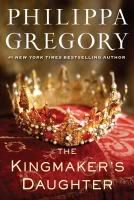
The Kingmaker's Daughter by Philippa Gregory

The fourth and final book in Gregory's Cousins' War series focuses on Isabel and Anne Neville, daughters of Richard Neville, one of the major powers behind the English throne during the Wars of the Roses. Our main character is Anne Neville, who spends the early parts of the book in awe of her father, who deposed "the sleeping king and the bad queen" -- the Lancastrian King Henry VI and Margaret of Anjou -- in favor of York's Edward IV. She's also in awe of Edward's glamorous wife, Elizabeth Woodville, a commoner who many felt was an unsuitable consort for Edward. Gregory uses her standard "naive narrator" voice in the early sections of the book, characterizing Anne as a young woman fully under the power of her father. If you've read Gregory before, you know this voice -- she employs it regularly, most memorably for Katherine Howard in The Boleyn Inheritance.

Like any powerful woman of the 15th century, Elizabeth Woodville was not to be trusted. Accusations of witchcraft follow her everywhere, and are blamed for her successes and her failures. Richard Neville begins as a staunch Yorkist, but when the king begins to follow the advice of the Woodville family rather than his, he changes sides, becomes a Lancastrian, and starts working to remove Edward from the throne. Anne is initially confused by this turn of events. She's spent her entire life hating and fearing the Lancasters, especially their queen, Margaret of Anjou. Now, she's not only a supporter of their claim to the throne, she's forced to marry the Edward, the Lancaster heir and presumptive king. Theirs is a loveless political marriage, and Neville's intent is to get close to whomever is to become king via his daughters. Further muddying the family's loyalties is Isabel's marriage to Edward IV's brother George, second in line to the throne at the time of their marriage. One sister is married to a York, the other to a Lancaster, which should put Richard Neville in a position of power. Neville's scheming backfires (his failure is blamed on Elizabeth Woodville's witchcraft, of course), he is executed, his son-in-law Edward dies, and his daughters are left to their own resources, forced to distance themselves from the father whose shadow looms large over their lives.

After some time as a widow, Anne marries Richard, the youngest of the York brothers. There's some foreshadowing of the marriage in earlier parts of the book -- they shared a flirtation as youths. This seems to tie Anne in strongly with the York cause; between her new marriage and her sister's marriage to Richard's brother George, their loyalties should be secure. But one of the most enduring lessons these sisters learned from their father was to strive for more, at any cost -- and they do, and the cost is devastatingly high. We watch Anne turn from an innocent whose life is fully controlled by her politically-connected father to a young woman whose life is poisoned by paranoia and jealousy. By the time Richard ascends to the throne, it's hard to recognize the young woman whose unquestioning, unwavering belief in her father's cause -- whatever it was at the time -- was the key characteristic of her personality. 

This is the Gregory treatment of the story, so women are the prime movers. It's their gossip that stirs up tales of Edward IV's illegitimacy and turns Elizabeth Woodville from beautiful queen to villainous witch; it's their advice that puts the princes in the tower and Richard on the throne. This is all speculation, but a seasoned author like Gregory knows that it makes a good story and uses it to her full advantage. Gregory teases with speculation; she offers several options but leaves it to her readers to make their judgment about what really happened. She absolves both Richard and Anne of responsibility, and insinuates that the princes are alive and well and living in exile somewhere. It's a very noncommittal approach to one of the great mysteries of English history, and a bit of a surprise given the drama inherent in this story.

There are facts, and there are speculations. We know that Richard was a third son, and therefore unlikely to inherit the throne. We know that the late King Edward's sons -- his heirs -- were locked in the Tower of London, never to be seen or heard from again. We know Richard became king, and we know he was defeated in battle by Henry Tudor, who became Henry VII after Richard's defeat and founded one England's most storied royal dynasties. But history hasn't been kind to Richard. He was a usurper, and it is widely believed that he murdered two innocent boys in the process. But Gregory spends most of the novel setting Richard and Anne up as heroes. Richard especially remains loyal and steadfast to his family's cause, succumbing to the scheming that puts him on the throne only after his mother gets in on the action. It's kind of a "The Princes in the Tower, and How They Got There" story. Richard is presented as a nice guy who loves his brothers despite their faults. His strings get pulled by some very conniving people, among them, his own mother, and he ends up benefiting, even though he never meant to do anything wrong.

Throughout the novel, there are numerous references to the wheel of fortune -- what goes up must come down. It's a fine metaphor for the lives of all of the women embroiled in this bitter battle.These women battle their way to the top in the ways that they can -- through marriage, childbirth, loyalty, and family ties -- and once they get there, they know there's nowhere to go but right back down. At a particularly poignant scene at the end of the novel, Anne says it herself: "You can go very high and you can sink very low, but you can rarely turn the wheel at your own bidding." Despite all that Gregory's Cousins' War heroines had to offer -- their intelligence, their shrewdness, their political savvy -- they were never able to really turn that wheel on their own.

Anne led a short but eventful life, and Gregory does her justice. Since this is the last in the Cousins' War series, I look forward to finding out which era she will write about next.

Wednesday, September 12, 2012

Nanette's Favorite Historical Fiction Set in the United States

When the topic for this week's posts came up, all of the contributors were enthusiastic about it. We're a geographically diverse bunch, as I'm sure you've noticed, and I suspect that you've found as many great books set in interesting locations as I have this week. My to-read pile, which is already extremely full, is about to topple under its own weight.

But I have something to admit: I don't really like reading historical fiction set in the United States. Given the choice between a novel set in the U.S. and a novel set anywhere else, I'd probably pick the novel set outside the U.S.

I've spent most of the time that I should have spent writing this post trying to figure out why I don't gravitate towards historical fiction set in the United States. I've narrowed it down to three basic elements: era, setting, and character.

My favorite eras and settings for historical fiction are Medieval and Renaissance Europe and Restoration-era England, and my favorite characters tend to be royalty or royal hangers-on. None of these preferences relate to the United States. The dramatic events of U.S. history that lend themselves to historical novels, such as the American Revolution or the Civil War, don't interest me very much.  In general, I have more of an interest in non-U.S. history than I do in U.S. history. (Blame that on oversaturation from school.)

This is not to say that I never read historical fiction with a U.S. setting. I do--and there have been a few titles that I've really loved! And here they are:

The Vanishing Point by Mary Sharratt. I read this years ago, and I remember being completely transfixed by it. The plot involves two English sisters, May and Hannah. May is sexually liberated for her time, and she flees her small English village for colonial Maryland in order to marry a distant cousin. Her sister, Hannah, travels to Maryland to join May, but when she arrives she finds that her sister is dead and that her husband has gone mad. Much of the novel involves Hannah's search for answers to her sister's mysterious disappearance, and it's quite dark at times, but I couldn't put it down.

Into the Wilderness (and its sequels) by Sara Donati. Someone recommended this to me when I was reading Diana Gabaldon's Outlander series, and in library readers' advisory circles, it's often mentioned as an Outlander readalike. Donati's books don't involve time travel, but they have the same epic scope, beautifully-realized characters, and timeless romance. I wasn't sure I would like these as first, given that one of the main characters is from James Fenimore Cooper's Last of the Mohicans (also known as one of my most-hated books from college). But I loved them. Sometimes I have vivid memories of where I read a book, and for this series, it's the comfy blue couch in the apartment I lived in right after I got married. I can picture myself sitting there, snuggled among a bunch of pillows, tearing through this series at a ridiculous pace.

The Heretic's Daughter and The Wolves of Andover by Kathleen Kent. Kent writes about outsiders: women who live on the fringes of society, generally by circumstance. The main character in The Heretic's Daughter is Sarah Carrier, daughter of Martha Carrier, the first woman to be executed in the Salem Witch Trials. Like her mother, Sarah is intelligent and rebellious--characteristics that won't get you very far in 17th century New England. Kent also provides an interesting perspective on the infamous Salem Witch Trials, showing how family turbulence combined with mass hysteria could have led to the execution of so many innocent women. The Wolves of Andover isn't a prequel per se, but it does contain another Carrier relation--in this case, Thomas Carrier--and features another headstrong, intelligent woman.

Caleb's Crossing by Geraldine Brooks. I'm noticing a theme here: apparently, I prefer colonial or early American settings. This is another one: set in late 17th century New England. Bethia Mayfield is the daughter of a Calvinist minister, and like most colonial girls in contemporary historical fiction, she's headstrong and curious. When Bethia is twelve years old, she meets a young Native American man named Caleb, and their mutual interest in the wild local flora and fauna leads to a strong friendship. Bethia's father recognizes Caleb's intelligence and becomes his tutor, and Caleb becomes the first Native American to graduate from Harvard University. Caleb's struggle to cross cultures is fascinating, as is the view of the early years of the U.S.'s most storied academic institution.