Today, I am thrilled to introduce James Lande from Old China Books to give us a fantastically comprehensive list of suggested reading about China!
~~~~~~~~~~~~~~~~
Historical Tapestry has invited me to guest post with a discussion of historical novels set in China. This in response to my comment (as Old China Books) on Mary Tod’s blog A
Writer of History that I find historical fiction about China to be indifferently represented in forums devoted to the historical genre (HT, however, has a category for Chinese History with five entries).
I assume the principle reason for this scarcity may be that we American readers are not so familiar with Asian history; in our schools Western history generally receives more emphasis – Athens rather the Warring States, Rome instead of the Han Dynasty, the Hanover monarchs and not the Manchu empire. So, the Far East is a longer reach.
Still, the reasons for reading historical novels about China are not unlike those for reading historicals set in the West or near East. The people invoked have similar troubles and triumphs, and the events evoked have similar storm and stress – but in different contexts often fascinating in their contrast. We gain some insight into people of another time, and perhaps into how our time came to be, by sharing in their drama. Adventure, war, hard times, love, understanding – they live in the pages of historical fiction about China just as they do in that about other places.
And what am I calling historical fiction? In addition to novels about events regarded as historical, events older than 50 years according to some forums, there are included here titles that, while not historical when published, are set in places that time has since changed enough to make them quite different now and, as such, have become chronicles of the vanished past (e.g. Hong Kong of the 1950s).
There are original English-language novels about China, and Chinese-language novels widely available in translation. There are older books rarely heard of now (besides Pearl Buck), and more recent novels (besides Lisa See). And there are novels about Chinese-American experience (besides Amy Tan) I’ve left off the list because they are not quite historicals yet. Some of these are about earlier history and others are about more recent events. This list starts with comparatively modern novels about China.
Modern Novels about China
 Pearl of China
, Anchee Min, 2010. A fictional tale of a Chinese woman and her friendship with novelist Pearl S. Buck, beginning when they meet as children at the end of the nineteenth century. “In the southern town of Chin-kiang 鎮江, in the last days of the nineteenth century, two girls bump heads and become thick as thieves. Willow is the only child of a destitute local family. Pearl, the headstrong daughter of zealous Christian missionaries, will become Pearl S. Buck, Nobel Prize-winning writer and activist. Their friendship will be tested during decades of great tumult, by imprisonment and exile, bloody civil war and Mao’s repressive Communist regime [
Anchee Min‘s website].” This book is a pleasant surprise for me, my first exposure to Anchee Min, and an extraordinary subject. See the
Pearl of China book trailer on YouTube.
 Peony in Love
, Lisa See, 2007. In 17th century China, young Peony attends a performance of the opera
Peony Pavilion on her 16th birthday and falls in love with a stranger. Already promised in marriage, she can only waste away with lovesickness for her beloved. Just before she dies, she learns that her betrothed and her beloved are the same man.
In any other story, that would be The End, but not in a Chinese story where the unfulfilled can return to the world as hungry ghosts and finish the cycle left incomplete by premature passing. “...spirits in the Chinese afterworld – whether beloved ancestors or ghosts – have the same wants, needs, and desires as living people. They need clothes, food, a place to live. They have emotions. [Peony] …can float, change form, and do many things that living people can’t do, but she is also inhibited – as all Chinese ghosts are – by things like corners, mirrors, and fern fronds [
Lisa See website]." Ms See proceeds to create an entire other world where Peony finds her destiny. See
Peony’s book trailer. Historical Tapestry also has a
post on Peony.
 Empress Orchid
, Anchee Min, 2004. “…Within the walls of the Forbidden City the consequences of a misstep are deadly. As one of hundreds of women vying for the attention of the Emperor, Orchid soon discovers that she must take matters into her own hands. After training herself in the art of pleasing a man, she bribes her way into the royal bedchamber and seduces the monarch. A grand love affair ensues; the Emperor is a troubled man, but their love is passionate and genuine. Orchid has the great good fortune to bear him a son. Elevated to the rank of Empress, she still must struggle to maintain her position and the right to raise her own child. With the death of the Emperor comes a palace coup that ultimately thrusts Orchid into power, although only as regent until her son's maturity. Now she must rule China as its walls tumble around her, and she alone seems capable of holding the country together…[
Amazon book description].”
 The Last Empress
, Anchee Min, 2008. “The last decades of the nineteenth century were a violent period in China’s history, marked by humiliating foreign incursions and domestic rebellions and ending in the demise of the Ch’ing Dynasty. The only constant during this tumultuous time was the power wielded by one woman, the resilient, ever-resourceful Tsu Hsi -- or Empress Orchid, as readers came to know her in Anchee Min’s critically acclaimed, best-selling novel covering her rise to power.
The Last Empress is the story of Orchid’s dramatic transition from a strong-willed, instinctive young woman to a wise and politically savvy leader who ruled China for more than four decades. In this concluding volume Min gives us a compelling, very human leader who assumed power reluctantly and sacrificed all to protect those she loved and an empire that was doomed to die [
Amazon book description].”
 Snow Flower and the Secret Fan
, Lisa See, 2005. This is the story of a
laotung 老同, a special bond between two women that creates intimacy even greater than that between husband and wife, and of the lifelong laotong between Lily and her friend Snow Flower. At the age of 80, Lily thinks back over the events of their lives they shared in letters written with secret writing called
nu shu女書, through the reigns of four emperors, foot binding, betrothal, marriage, childbirth, war, poverty and death. They flee to the mountains to escape the Taiping rebels, and then return through killing fields piled with dead bodies. Misunderstanding leads to betrayal, in anger Lily shames her laotung, and only when Snow Flower lies dying is Lily able to come to Snow Flower’s bedside to ask for forgiveness. “Snow Flower and the Secret Fan is a story about friendship and what it means to be a woman [Lisa See,
On Writing Snow Flower].” Historical Tapestry also has a post on
Snow Flower.
 The Rice Sprout Song
, Eileen Chang, 1955. “The first of Eileen Chang's novels to be written in English, The Rice-Sprout Song portrays the horror and absurdity that the land-reform movement brings to a southern village in China during the early 1950s. Contrary to the hopes of the peasants in this story, the redistribution of land does not mean an end to hunger. Man-made and natural disasters bring about the threat of famine, while China's involvement in the Korean War further deepens the peasants' misery. Chang's chilling depiction of the peasants' desperate attempts to survive both the impending famine and government abuse makes for spellbinding reading. Her critique of communism rewrites the land-reform discourse at the same time it lays bare the volatile relations between politics and literature [
Google Books].”
 Spring Moon
, Bette Bao Lord, 1981. Spring Moon begins in 1892, in the household of Chang, a wealthy Chinese family of Soochow. “At a time of mystery and cruelty...in an ancient land of breathtaking beauty and exotic surprise...a courageous woman triumphs over her world's ultimate tragedy. Behind the garden walls of the House of Chang, pampered daughter Spring Moon is born into luxury and privilege. But the tempests of change sweep her into a new world -- one of hardship, turmoil, and heartbreak, one that threatens to destroy her husband, her family, and her darkest secret love. Through a tumultuous lifetime, Spring Moon must cling to her honor, to the memory of a time gone by, and to a destiny, foretold at her birth, that has yet to be fulfilled [
Amazon book description].”
 The True Story of Ah Q
, Lu Hsun (tr. Gladys Yang), 1921. “Considered a masterpiece, this story was written in 1921, and is set in the China of 1911: the period of the old democratic revolution. It concerns the tragedy of Ah Q, a farm laborer who suffers a lifetime of humiliation and persecution, dreams of revolution, and ends up on the execution ground. The story colorfully reflects the rural conditions in semi-feudal and semi-colonial China, and brings to life the time's sharp class contradictions and the peasant masses' demand for revolution. Its simplicity and directness of style, and the beauty of Lu Hsun's language, place The True Story of Ah Q high among literary works of the time for both content and style [
Amazon book description].”
 Family
, Ba Jin (tr. Sidney Shapiro), 1933. The conflicts between young and old in Family mirrored the struggle in China following the May Fourth Movement of 1919. Five generations of the Kao family, upper-class Chinese living under one roof in 1920s Chengdu, are ruled over by autocratic elders who demand absolute obedience of the young brothers. The brothers yearn to break free of their narrow trappings and live lives of their own choosing, to marry as they wish, and to pursue opportunities in the New China. The elders see their family and the nation disintegrating together, youth throwing over the old customs that with the land made family the bedrock of their society, and fear what will happen when their children leave the village. Followed by Spring, and Autumn, in a trilogy called Torrents.
Rickshaw Boy (aka
Rickshaw: The Novel Lo-t'o Hsiang Tzu 骆驼祥子, tr. Jean M. James;
Camel Xiangzi), Lao She (tr. Evan King), 1937. “After Xiangzi’s parents die, he goes to the city of Beijing, bringing with him a country boy’s sturdiness and simplicity. He rents a rickshaw from Fourth Master Liu, who owns the Harmony Rickshaw-renting Yard, to make a living. Unlike the other rickshaw pullers, who are addicted to smoking, drinking, and visiting prostitutes, Xiangzi leads a decent, frugal life. His only dream is to have a rickshaw of his own. After three or four years of struggle and hardship, he saves enough money to buy a rickshaw, believing that the rickshaw will bring him freedom...[
eNotes].”
China from a Western View
My Splendid Concubine, Lloyd Lofthouse, 2009. [Concubine Saga]
From a Far Land, Robert Elegant
Noble House, Clavell
Oil for the Lamps of China, Alice Tisdale Hobart, 1934
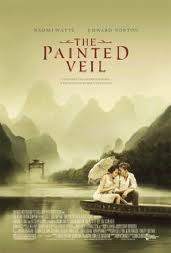
 The Painted Veil
, W. Somerset Maugham, 1925. A romantic period piece by an accomplished writer that tells of the marriage of an English bacteriologist Walter Fane on leave from China and a young and callow socialite Kitty who is completely at loose ends when taken to Hong Kong by her husband. Her affair with a local official revealed, Walter gives her a choice of leaving with him for a cholera district inland, or the scandal of divorce unless her lover will marry her. Heartbroken when her lover refuses her, Kitty accompanies her husband into China. “With beautiful China as a backdrop to this story of growth, The Painted Veil is a classic. It is beautifully written, the writing compact but amazingly detailed. Kitty is finely drawn and fully realized, Walter much more distant but still captivating [
Katie Trattner, Blogcritics.com].”
 A Single Pebble
, John Hersey, 1956. An American engineer travels up the Yangtze River to Chungking in the 1920s. “In a deceptively simple story, Hersey has captured all the magic, the terror and the drama of that extraordinary stretch of water.... Even in Mr. Hersey's hands, the American's discoveries of his own mind and of the Chinese people are dwarfed by the laws, the demands and the ageless vitality of the Yangtze [
The New York Times Book Review].”
The Mountain Road, Theodore H. White 1956. Journalist Teddy White's first novel tells of an American demolition unit behind lines in wartime China, charged with destroying bridges and ammunition dumps to delay advancing Japanese. In the midst of the American soldiers' struggle with their Chinese allies, and hoards of refugees crowding along mountain roads, the American major commanding falls in love with a Chinese woman and, through her, begins to learn profound things for which reading Pearl Buck had not prepared him.
 A Many-Splendoured Thing
, Han Suyin, 1952. “This is a book from a different age, when it was possible to develop a theme more slowly, but it remains a beautifully constructed many-layered novel. On the surface, it is a love story, but there is a fascinating historical perspective that is of particular interest as China's importance grows. Beneath those aspects is the insight into class and race prejudice that is as relevant today as it was in Hong Kong in the fifties. The book is strongly autobiographical yet remains a novel. Any reader would identify with or recognize characters from their own world [
Amazon review by P. Inez Erica].”
T
he Warlord, Malcolm Bosse
World of Suzie Wong, Richard Mason, 1957. Englishman Robert Lomax moves into the Nam Kok Hotel in the Wanchai native quarter of 1950s Hong Kong to paint for a year. The first night, he discovers the hotel is a brothel that caters to foreign sailors, but he stays on anyway because of the picturesque location. As a houseguest, Lomax is treated like an elder brother and soon becomes acquainted with the girls and their problems, in particular Suzie Wong, and learns that most of the girls are ordinary people like anyone else, except for the work they do. Then Suzie decides Robert should be her regular boyfriend. “…a beautifully written book that provides an intimate portrait of post-WWII Hong Kong. For anyone who has lived in the former British colony, I guarantee you will be fascinated by Mason's astute observations of life in the territory [
Amazon review by BJanis].”
 Man's Fate
, Andre Malraux, 1933 (translated from the French La Condition Humaine), is a suspenseful story of the failure in 1927 of the Communist insurrection in Shanghai, the brutal retaliation of the Nationalists known now as the Shanghai Massacre, and the consequences for the characters involved. A tense dramatization of a watershed incident in the history of Modern China that many of us in the West only learned about and began to understand by reading this novel Man’s Fate.
 The Sand Pebbles
, Richard McKenna, 1962. An American gunboat, the
San Pablo, on the upper reaches of the Yangtze River, is caught up in the anti-foreign violence fomented during the Nationalist march north, after the Shanghai Massacre, to purge the warlords and unify China. Woven into the story are romances between a San Pablo machinist and a young American missionary girl, and another San Pablo sailor and a Chinese woman ashore where the ship is stranded when the level of the river falls.
Taipan, James Clavell, 1966. A rousing tale of foreigners in South China at the time of the first Opium War in the early 1840s. Full of adventure and romance, the main characters are based on the British principals of Jardine Matheson, and Dent and Company, who manipulated England into war with the Chinese in order to protect their trade of opium for tea and silk, and to secure a foothold on the China coast where they could establish a trading entrepot.
 Mandarin
, Robert Elegant, 1983. A saga of extraordinary women of Shanghai Jewish families caught up in the events of the Taiping Rebellion and Second Opium War of 1860, Mandarin also follows the fortunes of the Last Empress, the dowager Ci-xi from her youth as concubine of the emperor to her palace intrigues and the coup that placed her on the imperial throne as regent. The sweep is broad, from 1854 to 1875, and all the principals of the era put in their cameos.
 Our Hart, Elegy for a Concubine
, Lloyd Lofthouse, 2010. [Concubine Saga] The subject of this novel is the British official Sir Robert Hart, known for his long service in China. The most balanced proponent of Lofthouse's treatment is, perhaps, one “Thomas Carter” who gives this in summary of Our Hart, Eulogy for a Concubine. “Robert Hart, as sketched by Lofthouse, was never, in fact, meant to be a hero. He is an admittedly flawed man with weaknesses.... But Hart's coming-of-age during his riotous first years in China, underscored by the tragic loss of one of his concubines, has now turned the boy into a man, and a bitter one at that, since ‘replacing the pain with anger made him feel like a thief and a liar.’ ...Just as our protagonist has matured, complete with a receding hairline, Our Hart… the novel is also a more mature read than its predecessor [see
Carter's complete review].” See also the Historical Tapestry reviews of
Lofthouse books.
Old Chinese Novels in Translation
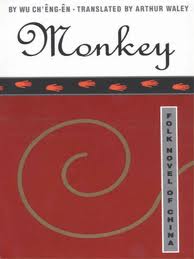
Monkey, tr. Arthur Waley, 1942. The Chinese novel
Journey to the West 西游记by Wu Ch’eng-en tells a picaresque tale of Sun Wu-k’ung, the mischievous Monkey King with magical powers, who is tasked by the Goddess of Mercy Kuan Yin to accompany a Buddhist priest and his friends on a legendary pilgrimage to India to bring back copies of the sacred scriptures. An adventure of the first water, the pilgrims are beset by all manner of fantastic challenges to their magical skills. Based on actual events of the early Tang Dynasty.

The Golden Lotus (aka
The Plum in the Golden Vase), tr. David Tod Roy, 2006.
Chin Ping Mei金瓶梅by Lanling Xiaoxiao Sheng蘭陵笑笑生 is an erotic novel set in the Sung Dynasty that relates the decline of the family of Hsi Men Ch’ing, a pawnshop owner and minor government official, due to his profligate ways. A procession of domestic and public life of the Sung period is depicted in detail – weddings, childbirth, funerals, birthdays, festivals, business deals, bribes to officials, brothel parties, songs and poetry. So is the procession of the great many women in Hsi-men Ch’ing’s life, lewd ladies who bring him to ruin. “…the greatest novel of physical love China has ever produced” – Pearl S. Buck.
 The Water Margin
 (aka
Outlaws of the Marsh, tr. Sidney Shapiro, 2002;
All Men Are Brothers, tr. Pearl S. Buck, 1937).
Shui Hu Chuan 水滸傳by Shih Nai-an. “…This 600 year-old epic tale of a band of patriots in the latter part of the Sung Dynasty is the story of a band of 108 outlaws (105 men and 3 women) who struggle to help the emperor rid himself of a despotic prime minister. Also involved in this work of classical Chinese fiction are ghosts, innkeepers who augment their groceries with the bodies of their guests, giants with superhuman strength, lovely ladies in distress, wily intellectuals, crafty merchants, and more! A sage replete with sorcery, action, beats, demons and heroes. All Men Are Brothers is a terrific read from beginning to end…. [Moyer Bell at
The Free Library]….”
The Romance of the Three Kingdoms, tr. Moss Roberts, 2000.
San Guo Yen Yi 三國演義, Luo Kuan-chung, Ming Dynasty. An epic historical novel with many episodes and characters that enjoys a stature in the East like that of Shakespeare in the West, Three Kingdoms tells of the struggle of three heroes to support the Han Dynasty emperor against rebels and warlords. Beginning with their oath of brotherhood in the Peach Garden, the three set forth to help put down the Yellow Turbans, then defend the throne against the ambitious prime minister Cao Cao. As events progress, first one of the sworn brothers falls, then another, leaving the third to pursue vengeance for their deaths. Ultimately, the kingdoms fall, the dynasty disintegrates, and the first sentence of the novel is borne out: The novels begins 话说天下大势,分久必合,合久必分It is said that in this world what is long divided will unite, and that what is united most certainly will break apart.
The Dream of the red Chamber (Hung Lou Meng 紅樓夢), tr.
Chi Chen Wang (abridged), 1927, 1958; aka
The Story of the Stone, tr.
David Hawkes, John Mitford, 1982-2006.
Hung Lou Meng, widely regarded as a book for the mellenia, is an episodic tale of two branches of the wealthy and influential Chia clan, who live in adjacent compounds in the capital and have enjoyed imperial favor for generations. The narrative centers on the dissolute youth Pao-yu and the captivating women of the household. The jealousies between them bring grief to the family and eventual downfall. “The novel is remarkable not only for its huge cast of characters and psychological scope, but also for its precise and detailed observation of the life and social structures typical of 18th-century Chinese aristocracy [
Wikipedia].”
The Chinese-American Experience
 The Woman Warrior
, Maxine Hong Kingston, 1975. Maxine Hong Kingston looks at Chinese history from the perspective of a Chinese girl growing up in America among ghosts of the past. It may be thin to regard this chimera as historical fiction, but the book begins in 1924 and, together with the vital spirit of Hua Mu-lan – the woman warrior who took her father's place in battle – gives the book its toehold on the genre. Maxine's mother told her the story of Mu-lan, in Chinese talk-story style, to encourage her daughter to grow up into a woman warrior, with courage and initiative, rather than as wife and a slave. Many other voices contribute to this talk-story, placing the anomalies of modern American life encountered by many of Chinese descent who grow up in America into the context of the old ways.
1000 Pieces of Gold, Ruthanne Lum McCunn, 1981. A true story of triumph over extraordinary hardship suffered by a young girl sold into sexual slavery in 19th century China, to a gang of Chinese bandits, then into a brothel. Transported into the American wild west by a slave merchant, she is auctioned to a saloonkeeper, and antied up in a poker game won by Charley Bemis. The irony of the title is bitter - 1000 pieces of gold, ch'ien-chin hsiao-chieh 千金小姐, was originally a Chinese endearment for the unmarried daughters of the rich that came to mean any unmarried girl, who in practice were maimed, sold into marriage, concubinage, or slavery, or drowned. “Granted, the writing is simple and spare, but it does not purport to be a work of great literature. Instead, it is a simple re-telling (if fictionalized) of a brave Chinese/Mongolian woman, a stranger in a strange land [comment by
wild-one on Amazon review].”
Transcendent Western Writers about China
House of Earth,
Pearl S. Buck. House of Earth is the title of Buck’s trilogy of life in rural China: The Good Earth, Sons, and A House Divided. Her style is simple and straightforward, almost biblical in places, which works well enough for stories set on farms and in the countryside, and her characters are individuals and the China around them is viewed through their eyes. Buck's portrayal of Chinese, and especially Chinese women, was regarded as a significant departure from the way they were depicted by American writers up to that time. This is less surprising considering that she grew up in China, spoke the language and, when she returned to China after graduating from college, and married agricultural expert John Lossing Buck, she spent the next five years traipsing about the countryside meeting Chinese farm families. She won the Pulitzer in 1932, and the Nobel for Literature in 1938.
The Good Earth, 1931. “It was Wang Lung’s marriage day.” Thus begins a classic novel of China revered for generations that tells of an honest farmer Wang Lung and his patient wife Olan and their life on the land. They raise sons and daughters, but drought and famine force them to sell everything except the land and their house and move to the city. Wang Lung pulls a rickshaw while Olan and the children beg in the streets. Riots break out and a mob sweeps Wang Lung into a rich man's house where he robs the owner of all his money. Wang Lung takes his family back home and they resume farming and even hire hands to work the land. Wang Lung prospers, sends his sons to school, and buys a concubine. Still, there is no peace for the old man, when Olan dies and his sons argue about selling the land.
Sons, 1932. The Wang Lung family saga continues after his death with the fate of his three sons, Wang the Landlord, Wang the Merchant, and Wang the Tiger, who has returned a soldier in a warlord army. Rather than pass on the land to the eldest son and keep it together, the land is divided between the three sons, which begins the dissipation of their inheritance. After selling his portion, Wang the Tiger goes off to war, builds his own army, and fights against other warlords for local control. As his own son Wang Yuan grows, Wang the Tiger prepares him to take command of the warlord army despite the son’s preference for farming the land. The son goes off for military training, but returns a soldier of a revolutionary army determined to wipe out all the warlords.
A House Divided, 1935. Wang Yuan, son of Wang the Tiger, returns to his grandfather’s old house of earth, t’u-fang 土房 , however the local farmers are afraid to allow him hide there. He returns home, then flees to his sister on the coast to avoid an arranged marriage. Wang Yuan settles down and starts classes in agriculture, which ironically take him out into the fields to learn from farmers what his grandfather could of taught him – and comes full circle. Revolution interferes, however, and Wang Yuan is arrested, his family pays to get him released, and he leaves for America. He continues his studies, flirts with romance, and six years later returns to a China still embroiled civil war. Through the many difficulties that follow, Wang Yuan’s longing to return to the old house of earth never wanes.
Imperial Woman, Pearl S. Buck, 1956. “The Empress Dowager…is the central figure of this enthralling biographical novel…. China, knew her as a figure of awe, virtually a goddess, and [Buck] has here told the story-book tale of her life, from concubine to one of the world’s most powerful and terrifying figures. …Tzu Hsi, concubine of the third rank, ambitious, beautiful, intelligent far beyond her time. She loved one man only, Jung Lu, a cousin to whom she was plighted at the time she was chosen for the weakling emperor. But once within the palace, the lust for power became her controlling guide, and nothing was allowed to divert her. Pearl Buck has embroidered her story with glamorous details of the aspects of the life of the fabulous court. She has drawn a wholly credible picture of the rivalries, and the plots that constantly threatened the Dragon Throne. …she never loses sight of Tzu Hsi in all her moods, in her brilliance and cruelty and ruthlessness, in her growing hate for the foreigners…[
Kirkus Reviews].”
Some other titles by Pearl S. Buck
Peony
Kinfolk
The Mother
Dragon Seed
Pavilion of Women
East Wing, West Wind
The Three Daughters of Madame Liangs
The
Judge Dee mysteries,
Robert van Gulik. These novels are a subcategory of historical fiction – “historical whodunits.” Van Gulik was a Dutch orientalist and diplomat who, during WWII, served with the Dutch mission to the Nationalist government in Chungking, where he began translating the 18th-century Chinese novel Dee Goong An狄公案, about a T'ang Dynasty detective Ti Ren-chieh. Van Gulik married a Chinese of the imperial line, had four children, and after the war lived four years in Japan, where he started writing tales about Judge Dee. The fictional Judge Dee was based on the historical figure Ti Ren-chieh of the novel Dee Gong An, and van Gulik developed a mystery formula in which the judge solved several cases in one novel and generally avoided supernatural features common in novels of the period that the author thought might confuse Western readers. The judge’s clerk Sergeant Hoong originally assisted the judge in Holmes-Watson fashion, but as the novels progressed, the judge converted various criminals who became his followers and brought their nefarious skills to bear on solving cases.

The Celebrated Cases of Judge Dee, 1948. There are three cases in this book. The first might be called The Double Murder at Dawn. The case describes the hazardous life of the traveling silk merchant and the murder, which is committed to gain wealth. The second is The Strange Corpse, which takes place in a small village, a crime of passion, which proves hard to solve. The criminal is a very determined woman. The third case The Poisoned Bride contains the murder of the daughter of a local scholar who marries the son of the former administrator of the district. This case contains a surprising twist in its solution. All three cases are solved by Judge Dee, the district magistrate - detective, prosecutor, judge, and jury all wrapped up into one person [
Wikipedia].
The Chinese Bell Murders, 1958. Judge Dee is a newly appointed magistrate to the town of Poo-yang. He has one case left over from the previous judge, a brutal rape-murder of a woman called Pure Jade. She was the daughter of a local butcher named Hsai who lived on Half Moon Street. The girl's lover stands accused but Judge Dee senses something in the case is not right, so he sets out, with his aids, to find the real murderer. He also has to wrestle with the problem of Buddhist Temple of Boundless Mercy, run by the abbot called "Spiritual Virtue." Rumor has it that the monks, who can cure barren women, are not as virtuous as they seem [
Wikipedia].
Some other titles by Robert van Gulik
The Chinese Lake Murders
The Chinese Nail Murders
The Haunted Monastery
The Chinese Gold Murders
The Red Pavilion
Poets and Murder
Murder in Canton
Judge Dee at Work
The Willow Pattern
The Lacquer Screen
The Emperor’s pearl
Necklace and Calabash
The Monkey and the Tiger
The Chinese Maze Murders
The Phantom of the Temple
About the author of this post, James Lande

Marg suggested I post in the “Why do I love…” section. So, why do I love historical fiction about China? Well, first of all, because that’s what I write and publish – let’s get that out of the way now. Sometime in the long lost past I decided “okay, let’s write about China,” and my first real effort was in 1970 when, at the age of 25, I returned to China to write The Cinnabar Phoenix (stop googling – it was never finished). I had a decent command of Chinese and some time on station in China, and still accepted with little qualification the imperative of my high school English teacher Mrs Jane Roy that I should be a writer. Since then I’ve been hacking away at it, for longer than I should have to admit, and have never got the Monkey off my back (Monkey is the title of a classic Chinese novel). Ultimately, my own experience led me to choose writing about the encounter, sometimes the clash, between Americans and Chinese.
Along the way, I have read quite a few novels about China and, as I believe them to be underrepresented in American forums of historical fiction, I’ve wriggled into Historical Tapestry on the pretext that I can introduce some interesting titles to this readership.
My own novel about China I call
Yankee Mandarin and I blog at the
Writer’s Corner of the Old China Books book blog.