Wednesday, June 30, 2010

Upcoming Releases - July 2010

This is a compilation of titles we have found in several places on the web, feel free to add your suggestions if we missed them. Historical Tapestry is now a Book Depository Affiliate and all commissions earned from sales through our links will be used to fund future giveaways.


July 1
A Different Sky by Meira Chand
Bunker Hill by Howard Fast (reissue)
The Cast Iron Shore by Linda Grant
The Dark Rose by Cynthia Harrod-Eagles
Legacy by Susan Kay
Butterfly's Shadow by Lee Langley
The Doctor and The Diva by Adrienne McDonnel
The Invisible Bridge by Julie Orringer
Two For Sorrow by Nicola Upson
The Dream Thief by Catherine Webb
Captive Queen by Alison Weir (US Release)

July 2
The Villa Triste by Lucretia Grindle

July 3
Inheritance by Nicholas Shakespeare

July 5
Lady Jane Grey, Queen For Sale by Caroline Corby
Emily's Ghost, A Novel of The Bronte Sisters by Denise Giardina

July 6
The King's Mistress by Emma Campion
The Scarlet Contessa by Jeanne Kalogridis
Red Rain by Bruce Markoff

July 8
Bliss, Remembered by Frank Deford
For The King by Catherine Delors
The Time's Legacy by Barbara Erskine
The Price of Glory by Seth Hunter
Hero of Rome by Douglas Jackson. UK release
Rebellion by James McGee
The Sacred Stone by The Medieval Murderers
What is Left The Daughter by Howard Norman
Pirates of The Levant by Arturo Perez-Reverte
The Children of Witches by Sherry Smith
The Blind Comtessa's New Machine by Carey Wallace

July 13
The Murder in the Tower by Jean Plaidy. US release

July 16
The Unfixed Stars by Michael Byers
Lady of The Butterflies by Fiona Mountain

July 22
Holy Warrior by Angus Donald
Whispers of Love by Rosie Harris
The Lion of Cairo by Scott Oden UK Release.
Warrior of Rome III by Harry Sidebottom
The Legacy by Katherine Webb

July 27
The Sixth Surrender by Hana Samek Norton

July 29
The Bloodstained Throne by Simon Beaufort
Strangers and Pilgrims by Maggie Bennett
Blotto, Twinks and the Dead Dowager Duchess by Simon Brett
The Masuda Affair by I.J. Parker
Sweet Sorrow by David Roberts

Seton Season Wrap Up


And it's time to conclude our Anya Seton Season.  We would like to thank all the authors and readers who contributed with guests posts and who participated in the comments making this celebration of Anya Seton's work a success. It was a whole month of reviews, guest posts, giveaways and even a casting suggestion for one of Seton's books. We hope you have enjoyed it as much as we did and if you haven't read Seton yet that you feel tempted to try one of her books. According to our recent poll Katherine is indeed her most beloved book so if you are unsure where to start that one may be a good choice.

This was our third Season here at Historical Tapestry,  after Georgette Heyer and Jean Plaidy, and we already have a list of authors to feature in future events but if there's someone you would like to see spotlighted here - preferably an author with a big backlist - feel free to leave us the suggestion in the comments.

So... thank you all and we hope you continue to enjoy the reviews we have coming up as we resume our usual schedule!

Tuesday, June 29, 2010

HT News

Susie Tudor Daughter has announced the Holt & Heyer Summer Reading Challenge where the idea is to read as many Victoria Holt and Georgette Heyer novels. You can find the details of the challenge here.

Current Giveaways

For the King by Catherine Delors at Historical-Fiction.com , The Maiden's Court, Hist-Fic Chick, and Historically Obsessed
The Dark Rose by Cynthia Harrod-Eagles (2nd Morland Dynasty book) at The Burton Review
The Confessions of Catherine de Medici by C W Gortner at The Eclectic Reader
Murder Most Royal by Jean Plaidy at Passages to the Past
Venetia Kelly's Travelling Show by Frank Delaney at Musings of a Bookish Kitty
Power of a Woman. Memoirs of a Turbulent Woman: Eleanor of Aquitaine by Robert Fripp (2 copies) at StevenTill.com
How to Mellify a Corpse by Vicki Leon at Historically Obsessed

Giveaway Winners

It's time to announce the winners  for the Anya Seton giveaways we were hosting during our Season. Without further ado congratulations to:


who wins a copy of Devil Water


who wins a copy of Green Drakness


who wins a copy of The Turquoise

and

who wins the Roet Coat of Arms necklace

Please contact us with your address details so we can get the prizes on their way to you. Thank you all for participating!

Monday, June 28, 2010

If You Want to Know More...

Photobucket


When we hosted our first HT Season we started with an author who not only had several websites devoted to her life and work but also two books had already been published about her. We thought of creating a post listing those other resources that readers could use to know more about the authors.

Sadly, although she certainly deserves one, we couldn't find a website dedicated to Anya Seton. However, there are several pages on the web mentioning her and dedicated to one or more of her books and that's what we are listing below:

The Author
Anya Seton biography - an entry from Contemporary Authors by Thompson Gale

Anya Seton on Facebook

Anya Seton's obituary at The New York Times

The Seton's at Home - article about Anya Seton and her family


The Books
Katherine, a foreword by Philippa Gregory

Michelle Moore's site about Katherine

Article about Devil Water

Margaret Evans Porter review of Devil Water

Love in the time of Green Darkness - Article about Anya Seton in The Austin Chronicle


Cover Art Gallery

Sunday, June 27, 2010

Anya Seton Season reminders

It's hard to believe that a month has gone by so quickly, but we are very nearly at the end of Anya Seton Season! We hope that you have really enjoyed the season that we have put together for you this year. We certainly have!

There are still a couple of things that you can do (if you haven't already!).

The poll to determine which Anya Seton book is everyone's favourite will remain open, so head on over to have your say!

Also still open for another couple of days are the two giveaways. You can enter to win the Roet Wheel Necklace, or for the chance to win one of three Anya Seton novels. Click on the links to go straight to the posts where you enter!

Friday, June 25, 2010

Poll: Which is Your Favourite Anya Seton Novel?

After having discussed some of her novels during this past month we are curious to know the actual favourites and whether Katherine will actually have the most votes. You can choose multiple titles. Thanks in advance for participating!

Thursday, June 24, 2010

Why I Love Anya Seton - Guest post by Carol (Cat)

My love affair with Anya Seton's historical novels began a long time ago when I was a teenager in the 1960's. Katherine was the first 'grownup' historical fiction I read and what better choice for a romantic young girl than this classic medieval love story, although at the end it wasn't the author who had captured my heart but the dashing John of Gaunt. The beginning of an allegiance to the Beauforts and the red rose of Lancaster that is as strong today as it was then.

I went on to read all of her books and love them all but have never until now had to ask myself why. What was it that appealed to me so much then......and still does now?

I love her characters and her ability to breathe life into historical figures that previously have only been names on a page, strange and stiff portraits or effigys on stone tombs. Her fictional characters are equally as interesting and created with a fine attention to detail of the period they lived in.

Anya Seton creates warm and real people I can relate to on an emotional level ; sharing their daily lives, their adventures , their love stories , their trials and tribulations.

I especially love the women in Anya Seton's books. Katherine, Elizabeth in The Winthrop Woman and Sante Fe Cameron in The Turquoise are examples of her strong , free thinking and independent protaganists yet who are also women desiring a relationship filled with passion and love. Considering the decades in which her books were written , the 1940 - 1960's, this was an important message she was passing on to her young female readers.

I love the fact that Anya Seton never restricted herself to one place or one period of time . Each of her books offers a new experience in both learning and entertainment as she moves effortlessly from medieval England to Puritan Massachusetts, from 10th century Cornwall to New Mexico.

I love knowing that her historical background was meticulously researched and I can trust what I'm reading is as accurate as possible. The two most important qualities of a good historical novel are a strong background and strong characterisation .........even more important is the ability to create a balance between the two so the result is neither too serious nor too frivolous. Anya Seton succeeded admirably in achieving this and, together with a few other writers of the time , deserves the recognition of being a forerunner of the fine historical fiction we enjoy today.

Nostalgia plays a role in why I love Anya Seton but I still enjoy rereading her books , I love seeing them available in new editions and hope she will continue to captivate readers for a long time.

Wednesday, June 23, 2010

HT News

The latest HFBRT event has started. This time the book to get the HFBRT treatment is For the King by Catherine Delors. You can see the schedule for the week here.

Giveaways:

Daughters of the Witching Hill by Mary Sharratt at Violet Crush
For the King by Catherine Delors at Enchanted by Josephine, at The Burton Review and also at Passages to the Past
Cassandra and Jane: A Jane Austen Novel by Jill Pitkeathley at Austenesque Reviews

Cover Story: Avalon


When your story is set in the 10th century and features some of the most famous names in history, I guess that the covers will reflect the two aspects seen here - either the romance, or the warrior aspects.

Once again, no matter how gorgeous the most recent releases covers are they again feel a little bit out of place amongst the others.

I am a little fascinated by the title of the French version. To my untrained eyes it looks like the Sister of the Vikings, but I could be totally off there! That alone makes me want to wonder how that could possibly fit in with the story of the characters.

Which ones are your favourites?

Tuesday, June 22, 2010

Avalon by Anya Seton

Merewyn lives in Cornwall with her dying mother when Rumon, nephew to King Alfred walks by asking for directions to England. He got more than he bargained for because Merewyn's mother's dying wish is for him to take Merewyn with him to England and hand her off to her aunt at a nunnery.

Rumon feels sorry for Merewyn, especially when he learns a secret about her, so he does decide to grant her mother's dying wish. They are quite the pair on the road. He is all dressed in the clothing of royalty while she is wearing what looks like a burlap sack.

Merewyn's mother told her that she is a descendant of King Arthur and has no reason not to believe this. When her and Rumon arrive in England, she is introduce to King Alfred and Queen , Alfrida as a descendant of the great king Author. The queen immediately takes her under her wing and gives her a dress more fitting to her station and makes her one of her ladies. Merewyn is very gentle at combing out the queen's hair and giving her a massage. The queen decides to offer her a permanent position among her ladies.

At the same time Merewyn is a lady for the queen, Rumon falls for Queen Alfrida. After King Alfred dyes suddenly, Rumon unknowingly gets raped up in the queen's evil plot. Merewyn tried to warn Rumon but he wouldn't listen. He was in love. Merewyn resigns her position with the queen because she doesn't want to be a part of the plot and goes to her aunt at the nunnery.  However, another dying wish makes her go back to Cornwall and it is there where her fate makes another turn.

This story takes place across continents and travels all the way to Iceland and back to England. It takes place in the 10th century during the turbulent time with the Vikings. It is packed full with secrets and deceptions.

Seton wrote a story vivid in imagery and well throughout characters. She wrote about a time that doesn't seem to be explored by other writers much and she did it with great historical detail.  I thought she could have done an easier transition through time.  Time changes we quite abrupt.

Anya Seton has been on my list to read for a very long time and I decided that it was finally time to read one of her books since the Spotlight is on her all month long. I enjoyed this book and have heard even better things about her other books, so I plan to read more by her.

Grade: 3.5/5

Monday, June 21, 2010

Katherine: the casting


After watching Dragonwyck, we start imagining who would play who if Seton's famous novel was adapted to the screen. We weren't brave enough to make a complete cast, but we are certainly curious to know which would be your choices.


You can also watch a wonderful video with different cast suggestions made by the Katherine Swynford Yahoo Group:


Two other videos based in the novel made by fans of Katherine.


Have fun !

Sunday, June 20, 2010

HT News

The winner of the inaugural Walter Scott Prize for Historical Fiction has been announced, and Hilary Mantel is again a winner thanks to her novel Wolf Hall, which has won quite a few major awards already this year.

Current Giveaways

Jane Eyre's Daughter by Elizabeth Newark at Laura's Reviews
The Last Leaf by Stuart Lutz at Historical Novel Review
Daughter's of the Witching Hill by Mary Sharratt at Violet Crush
The Last Letter by Jeane Westing at Tudor Book Blog
The King's Rose by Ailsa Libby at Damsels in Regress
Shadow of the Sword by Kamran Pasha at Historical-Fiction.com

To Katherine on her Fiftieth Anniversary by Tamara Mazzei

-originally published in The Historical Novels Review Magazine of the Historical Novel Society (HNS) and at Trivium Publishing.

Katherine, the story of the mistress and later, the wife of John of Gaunt, was the sixth of the ten popular novels* written by Anya Seton. All of Seton’s novels were best sellers, yet in the fifty years since its original publication, Katherine stands apart, showing the longevity of a classic. This is illustrated most clearly by the book’s inclusion in the listing of the top 100 favorite books in the BBC Big Read (2003).

I first read Katherine as a teenager—around the time of her 25th anniversary. I was not yet the devoted lover of historical fiction that I would later become, but even then, I was captivated. Twenty-five years later, I’m still captivated, so much so that I’ve tried on more than one occasion to learn more about the “real” Katherine Swynford.

As Seton pointed out in her author’s note, historical interest in Katherine Swynford, of which there isn’t much, has mainly centered around her connections to Geoffrey Chaucer, who is said to have married Katherine’s sister Philippa, and to the legitimation of the children she had with John of Gaunt, the Duke of Lancaster, prior to their marriage.

In the intervening years since the publication of Katherine, little has changed. Apart from a pamphlet by Anthony Goodman published by Lincoln Cathedral Publications in 1994, Katherine Swynford is as much an enigma today as she was when Seton was writing. The tide of feminist scholarship that might have brought more information to light, instead, turned away from scholarly biographies, leaving Anya Seton’s portrayal of Katherine as the most comprehensive to date. University of Huddersfield undergraduate Jeannette Lucraft, in a persuasive article called “Missing From History,” published in History Today, argues that Katherine Swynford is deserving of more attention by historians (11). Lucraft’s article, which won a joint Royal Historical Society and History Today prize, once again sparked my interest in Katherine: both the real one and the fictional one created by Anya Seton.

There are traces of the real Katherine in castle ruins, archives, and chronicles, but my present interest lies more in the realm of the “why” than of the “where” or the “when.” Specifically I wished to understand the reasons for which Seton selected Katherine Swynford as the subject for a novel, the reasons why she has never been of interest to historians, and finally, the reasons why her story has continued to hold so much resonance for generations of readers.

Why Katherine Swynford?

It’s easy to speculate why Seton chose Katherine as the subject for a novel. As the mistress, and then the wife of the Duke of Lancaster, Katherine played an important role in the lead-up to the Wars of the Roses; she lived in interesting times and little had been written about her. More importantly, Katherine’s story had a romantic conclusion in her marriage to John of Gaunt—Seton admitted herself that she needed to make money—a romantic story sells books! It’s also possible that Seton’s rather unconventional upbringing played a role in her choice of subject.

Anya Seton was the only child of naturalist, artist, and author Ernest Thompson Seton (Wild Animals I Have Known) and travel author Grace Gallatin (A Woman Tenderfoot in the Rockies, Nimrod’s Wife). Ernest was the co-founder of the Boy Scouts of America, the founder of the Woodcraft League, and with Grace, the co-founder of the organization later known as the Campfire Girls, as well as a prolific artist and writer of nature stories (Austin 223). Ernest, born in Durham England in 1860, emigrated to Canada in 1866 with his parents, though he returned to England in 1879 to study at the Royal Academy of Painting and Sculpture. He met Anya’s mother on a later journey; on a ship bound for Paris, where he intended to continue his art studies at the Julian Academy. Grace was the daughter of wealthy socialite Clemenzie Rhodes Gallatin, who moved from California to New York City following a divorce from Grace’s father. A large part of Grace’s childhood was spent in travels with her mother, and throughout her life she continued to travel in much the same way. Ernest Thompson Seton and Grace Gallatin were married in 1896 (Gale 327). In between their travels, they made their home in the northeastern United States, primarily in Connecticut. Their daughter Ann (Anya) was born in 1904 (Allen 147).

Anya’s unconventional childhood was not simply due to the background of her parents; it was also influenced by their lifestyle as she was growing up. In addition to his writing, art shows, and nature studies, her father designed several large, impressive homes, requiring the family to move house frequently. During World War I, Anya’s mother took an ambulance corps to France, leaving Anya with governesses when her father was away.

Rather than continuing her education, nineteen-year-old Anya married Rhodes scholar Charles Cottier; they spent the first two years of their marriage in England while he completed his studies at Oxford (Allen 205). After five years of marriage and two children, Seton and Cottier divorced. In 1930, Anya married again, this time to investment banker Hamilton Chase. Around the time of Anya’s second marriage, her parents separated. Her father sold his East Coast properties and moved to New Mexico with the woman who had been his secretary for more than ten years. Ernest Thompson Seton married his former secretary, Julia Moss Buttree, in 1935, after his divorce from Anya’s mother was finalized (Allen 223). Three years later, they adopted a daughter, Beulah; he then declared that Beulah would be the sole heir to his considerable property. Disinherited and married to an investment banker in the middle of the Great Depression, the stage was set for Anya Seton Chase to embark on a new career: author.

Anya’s first book, My Theodosia, the tragic story of Aaron Burr’s daughter, was published in 1941. She continued this success with a string of gothic romances: Dragonwyck in 1944, The Turquoise in 1946, The Hearth and the Eagle in 1948, and Foxfire in 1951. She returned to a more biographical format with the publication of Katherine in 1954.

The lives of her chosen heroines were somewhat tragic, often involving divorce and forbidden love, in some ways echoing the life of Seton herself, and the lives of her parents. It would not have been surprising if Seton had been attracted to the character of Katherine Swynford because her story had a “happy” ending.

Why Not Katherine Swynford?

I suspect that the same factors that inspired Anya Seton to write about Katherine Swynford may also be responsible for removing Katherine as a subject for further historical study. The problem? Romance. Katherine’s story had a happy ending; she was dismissed as a romance novel stereotype. Comments by popular culture and literature professor Kay Mussell, who used Seton’s Katherine as an example of the historical biography version of a romance, illustrates this attitude:

Romances are primarily concerned with the process of mate selection and, secondarily, with those domestic activities—nurturing and homemaking—traditionally assigned to women in Western culture (6).

Many romantic biographies feature the marriages or illicit affairs of royalty. In addition, plots include anachronistic ideas about marriage--for example, voluntary choice of mate—that conflict with conventional historical interpretations (50).

Though it’s worth noting that Mussell has since changed many of her views on romance novels, her views on “anachronistic ideas about marriage” are repeated frequently, yet while it cannot be generalized across society, there is evidence that women did sometimes choose (or reject) a mate. One example of this (among many) is the case of Margery Paston, who, to the dismay of her parents, married the family bailiff in a clandestine ceremony in 1469. Margery’s family tried to intervene, but in the end, the marriage stood. The circumstances of Katherine’s life were not typical, but neither were they stereotypical—unless they were the origins of the stereotype itself!

Dubbed a strumpet by chroniclers of her own day, and more recently, a stereotypical romance-novel heroine, is it any wonder Katherine Swynford’s life has not been studied in more detail?

Why Seton’s Katherine?

My final question, “Why has Katherine showed such staying power?” is answered easily by reading the comments posted on various websites that feature book reviews. Katherine has not only stood the test of time (with no advertising!), it meets the standard of excellence in fiction, historical and otherwise. Though parts of the narrative show gothic overtones, and others have the rosy glow of the variety of romance that was popular in 1954, Seton’s prose transcends formula. Considering the lack of readily available sources, Seton’s research is really quite impressive, and more importantly, her conception of the major characters allows us to find value in Katherine’s role, leaving us to feel that we have seen the world through Katherine’s eyes; to feel that we can truly appreciate the trials of Katherine’s life; to feel that Katherine is not, after all, “missing from history.”

* Seton also wrote several novels for young adults—see below.


References


  • Anderson, Allen, H. The Chief: Ernest Thompson Seton and the Changing West. 1st ed. College Station, TX: Texas A&M University Press, 1986.

  • Austin, Mary Hunter. Literary America, 1903-1934: The Mary Austin Letters. Ed. T. Matthews Pearce. Westport, CT: Greenwood Press, 1979.

  • Gale, Robert L. The Gay Nineties in America: A Cultural Dictionary of the 1890s. Westport, CT: Greenwood Press, 1992.

  • Lucraft, Jeannette. "Missing from History: Jeannette Lucraft Recovers the Identity and Reputation of the Remarkable Katherine Swynford," History Today, Vol. 52, May 2002, pp. 11-17.

  • Mussell, Kay. Fantasy and Reconciliation: Contemporary Formulas of Women's Romance Fiction. Greenwood Press, 1984.

Books By Anya Seton

NOTE: Chicago Review Press has reissued many of Seton's books since the original publication of this article. The following list of books is included for reference only.

My Theodosia, Houghton (Boston, MA), 1941.
Dragonwyck, Houghton, 1944.
The Turquoise, Houghton, 1946.
The Hearth and the Eagle, Houghton, 1948.
Foxfire, Houghton, 1951.
Katherine, Houghton, 1954.
The Winthrop Woman, Houghton, 1958.
Devil Water, Houghton, 1962.
Avalon, Houghton, 1965.
Green Darkness, Houghton, 1973.


Young Adult Books

The Mistletoe and Sword: A Story of Roman Britain, Doubleday (New York, NY), 1955.
Washington Irving, illustrated by Harve Stein, Houghton, 1960.
Smouldering Fires, Doubleday, 1975.

Saturday, June 19, 2010

Cover story: Katherine


Katherine is Anya Seton's most famous novel. The love story between the beautiful Katherine Swynford and the powerful Duke of Lancaster, John de Gaunt is definately a must read. I really enjoy these book covers, except for two: the third one, too yellow for my taste and the last one, the Turkish cover who got the historical period completely wrong.
I have a soft spot for the oldies, like the first cover or even the French ones (number 6 is soo Brigitte Bardot-ish!). Dante Gabriel Rossetti's Veronica Veronese was used in one of the most recent copies of Katherine, and I have to confess that it really draws my attention.

Which one is your favorite?

Friday, June 18, 2010

Katherine by Anya Seton

It's impossible to be an historical fiction fan without hearing about Anya Seton's Katherine. For years I only read good things about it and several of my friends couldn't stop recommending it. Like many of those great books you intend to read for ages, but the right occasion never seems to show up, Katherine waited quite a while in my dusty TBR pile. When the Historical Tapestry team decided to organize a season about Anya Seton I jumped of joy. I couldn't ask for a better excuse!

The story begins with young Katherine de Rouet leaving the nunnery where she lived for several years after her father's death. She is to join her sister, Philippa, at court. Beautiful and shy, the young woman soon attracts the attention of two men, the creepy Hugh Swynford and the mysterious John de Gaunt. The first one is completely obsessed with her and does everything in his power to marry her, to Katherine's great despair. The marriage is unsurprisingly unhappy and soon Katherine and John meet again under other circumstances.

John of Gaunt is a man of his time. Duke of Lancaster, the third son of the King Edward III, he is ambitious, arrogant and surprisingly fragile. When he meets Katherine, it's clear he doesn't know what to do about her. He is attracted and repulsed at the same time to that breathtaking beautiful and earthly young woman who looks so different from his ethereal blond wife, Blanche.

After spending years in an unhappy marriage with Swynford, Katherine find herself free to be with John, who meanwhile also lost his spouse to the Black Death. With the passing of years and four children later - the Beaufort - the couple seems to have created a perfect harmony between them. But Katherine starts to doubt about her lover's affections and his constant absences seem to confirm her fears...

Katherine Swynford and John of Gaunt are very human and that's what makes them so interesting. There were some moments where I wasn't very fond of John and his excessive ambition. He was so intense that I kept waiting for Katherine to get burned. Same for the young woman's overzealous religiousness but those are my modern opinions getting in the way, and I didn't have any troubles setting them aside for a while.

While this book is about John and Katherine relationship, I never felt that Anya Seton used any love story cliches. If some scenes between them are very romantic, others are painstakingly real. John marries for power and political alliances, like most of the men of his station. Katherine knows that her low birth makes it impossible for her to be a suitable spouse for the King's son. The only way they could be together was as lovers and, at first, they seem both content with the situation. The fact that many years later, John defies all social conventions and marries his long ago mistress makes me love even more this man who was always ready to fight for what he wanted.

Once again, the historical research is done carefully which will immediately seduce all history lovers. Seton will make you travel back in time gracefully never failing to hold your interest, showing you how remarkably talented she is. Her portrayal of the English 14th century is masterfully weaved with its court intrigues and machinations, giving us glimpses of crucial events as The Hundred Years War, the Peasant's Revolt or even the impact of the merciless Black Death. For several hours I truly felt I was living in Medieval England.

Katherine is definitely a book who deserves a special place among my keepers. I'm off to search for Anya Seton's entire back list.

Grade: 5/5

Thursday, June 17, 2010

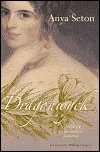
Cover story: Dragonwyck


Almost all Dragonwyck's editions have the mysterious Gothic manor in their covers, which couldn't be more appealing to me. You suspect only by looking at them that something strange will happen in that house. The most recent edition in English language (number 7) is beautiful but somehow out of place. The French edition from the 60's (cover 8) is in perfect harmony with the other covers.
My favorites are the two first ones featuring the couple, Miranda Wells and Nicolas Van Ryn with Dragonwyck in the background. Actually, the second cover seems to be the movie tie-in with the actors Gene Tierney and Vincent Price.

Do you have a favorite?

Wednesday, June 16, 2010

HT News

Over at  Wordsmithsonia you can win ARCs of Creation of Eve by Lynn Cullen or Watermark by Vanitha Sankaran (closes 17 June so be quick)

NPR are having The Ultimate Summer Getaway focussing on Historical Fiction. Check out their choices here.

Are you going to be in the UK in October? If yes, you might want to consider registering for the Historical Novel Society conference which is going to be held on October 17 in Manchester. Full details at the HNS website.

Other Giveaways

Confessions of Catharine de Medici by CW Gortner at Writing the Renaissance, and also at Savvy Verse and Wit.
Days of Grace by Catherine Hall at The Girl from the Ghetto

Dragonwyck by Anya Seton

I always had a soft spot for Gothic novels like Rebecca and Jane Eyre, so Dragonwyck seemed like a must read to me, especially when a brooding and mysterious character like Nicholas Van Ryn is involved. Nothing could be more perfect!

Honestly, in the beginning, I had some troubles warming up to Miranda Wells. In the movie adaptation, she's more sympathetic and we easily relate to her wish to see the world, where in the book I found her a tad unpleasant and extremely snob. I wasn't very sure I was going to like her, but slowly she became a much stronger woman, someone definitely more interesting.

Nicholas Van Ryn seduced me as easily as Miranda. After reading the final page of Dragonwyck, I couldn't stop thinking about him, the last of a long line of patroons, and also the last of a long line of cruel men. His heavy heritage combined with a dark past (both always hinted, never really explained) create a very intriguing character. He is charming and generous, but his attitude towards his first wife, Johanna, and later, Miranda, reveal how deeply disturbing he could be. His final scenes came up as a surprise... Somehow, I was expecting a different end.

The captivating historical background researched by Anya Seton is undoubtedly one of the strong assets of Dragonwyck. I knew next to nothing about the middle 19th century New York and the Dutch community. I did remember reading about the strong Dutch presence in the state in the short story The Legend of Sleepy Hallow by Washington Irving, which was set about 60 years before Seton's novel. But other than a reference here and there, I never had the opportunity to read any other stories who fully explored this interesting part of American history.

Dragonwyck can sometimes be a little predictable but the author's delicious writing style, the historical research and the wonderful characterization make this book special. This is definitely a keeper!

Grade: 4/5 stars

Tuesday, June 15, 2010

Dragonwyck (1946)

The story starts in 1844, Connecticut in a farm who belongs to the Wells, a God-fearing and modest family who are satisfied with their fate. All except for the 18 years old, Miranda, the older daughter. The girl dreams of a completely different life from the one she has, always fussing about her physical appearance and her clothes. This perpetually annoys her father who sees her ambition and vanity with suspicion and disappointment.

Everything changes with the arrival of a letter from Mrs Wells cousin, the patroon Nicholas Van Ryn. He invites one of the couple daughters to live in his manor – Dragonwyck - and become the governess of his young child. Miranda sees this as the perfect opportunity to escape her unexciting life. After some discussion and some warnings it is agreed that she will accept their cousin invitation.

Accompanied by her father, she leaves to New York where she is supposed to meet this mysterious and wealthy cousin. Nicholas is surprised with Miranda's lovely physique and manners. And the young woman is immediately in awe in front of her handsome and worldly cousin. They both leave to Dragonwyck shortly after, but the arrival of a pretty and young cousin feels like a treat to Nicholas's wife, Johanna. The newcomer is completely oblivious of the new tension between husband and wife.

Johanna ends up dying under mysterious circumstances and Nicholas asks Miranda do marry him and become the new Mrs Van Ryn. The young woman sees all her dreams come true but rather quickly she learns that her husband is not who she believed...

After reading Anya Seton's book Dragonwyck, I knew I had to see the movie , especially when I found out that Vincent Price was playing the brooding aristocrat Nicholas Van Ryn. The adaptation is quite good, Mankiewicz really managed to capture the gloomy atmosphere from Seton's Gothic novel, even if some plot holes did confuse me at times.

Vincent Price interpretation of Nicholas Van Ryn is perfect! He can be amazingly charming and chill you to the bones at the same time. It's obvious why Miranda feels attracted to him, but his icy and distant look also makes you believe him capable of the worst cruelties. The scene where he collects his tenants payments, sitting in his chair like a feudal lord is magnificent. Van Ryn is the last descendent of an aristocratic line who ruled those lands for centuries and tries to hold to them while the world changes. It's more than clear that Vincent Price had fun playing this role and his acting stands out since his first scene.

In the beginning, Miranda can come across as a snob and rather silly chit, but sometimes you can feel that underneath all that fluff, there's some deep of character. Gene Tierney is a lovely and dreamy Miranda. She feels completely out of place among her family and hopes to get an opportunity to experience the life she wishes for herself. We follow her in her new journey watching her grow and become wiser. I enjoyed the interactions Price-Tierney and there's definitely some chemistry going on between these two actors, even if Price's talent overshadows almost everyone.

A little note about Walter Hudson who gives us a wonderful performance playing Ephraim Wells and Glenn Langam, the laid back Doctor Jeff Turner who will have an important part in the downfall of Nicholas Van Ryn.

As I mentioned before, the adaptation is quite good and follows the novel rather closely. But there are some plot holes that leave you wondering the fate of some characters. The creepy servant Magda or the Van Ryn's young daughter, both disappear after Johanna Van Ryn's death and we don't know what happened to them. Other aspects of the story also remained unexplored, like Nicholas' drug addiction who is, at my eyes, an essential part his character and only mentioned quickly during the movie.

Dragonwyck is certainly entertaining, especially for Vincent Price, but I do recommend reading the novel before watching the movie.

IMDB: http://www.imdb.com/title/tt0038492/


Monday, June 14, 2010

HT News

Welcome to a jam packed edition of HT News. This time it is a combination of news about Historical Tapestry itself, as well as a few things about giveaways etc going on in blogland. I am however way behind in my blog reading, so expect another big post when I do catch up!

Just a reminder that because of Anya Seton Season, you have until June 29 to get your post up for the letter M in the Alphabet in Historical Fiction challenge.

Speaking of the Anya Seton Season, we are just about half way through Anya Seton Season, and having a fabulous time. There is still more to come. More guest posts, more reviews, and don't forget that there is still time to enter into our book giveaway, and also the fabulous necklace and pendant set.

I have posted a couple of these giveaways already, but I thought I had seen another opportunity to win a Silver Phoenix pin in conjunction with the launch of M J Rose's book The Hypnotist. Now I remember where! It was at Beth Fish Reads, so head on over for another chance to get your name in the draw to win.

Over at Page Turners, Becky is celebrating her first blogiversary with a giveaway, and two of those three books have a historical setting (Picnic at Hanging Rock by Joan Lindsay and The True History of the Kelly Gang by Peter Carey). All of the books are set in Australia, so head on over to get your entry in!


Other Giveaways

The French Blue by Richard Wise (including interview) at Historical-Fiction.com
The Help by Kathryn Stockett (includes interview (5 copies)) at BookRabbit.com

Dragonwyck by Anya Seton

Originally published in 1941, this book is classified as a gothic romance. It reminded me of Rebecca by Daphne du Maurier in tone in several ways. Having read and loved Seton's classic Katherine, I am hoping to read a few more of her books.

Among the easy correlations to make between Rebecca and Dragonwyck are the darkness and Gothic nature of both homes where the majority of the action is set, the aloofness of both main male characters, the hint of murder and tragedy. I suppose that these are characteristics of gothic romance as a whole, however it is a genre that I have not personally read a lot of so these were quite striking to me.


Miranda Wells, an 18-year-old farmer's daughter, is, one afternoon in 1844, suddenly invited to live at Dragonwyck, the Hudson Valley estate of her distant relative, the great Nicholas Van Ryn. Falling under the strange and passionate spell of both the mansion and its owner, she becomes part of Dragonwyck, with its gothic towers, flowering gardens, acres of tenant farms, and dark, terrible secrets.


In this exquisite and compelling novel, Anya Seton, with her customary attention to detail paints a marvelous portrait of an America torn between ideals of freedom and feudal traditions. We meet not only the poor tenant farmers at Dragonwyck and the European royalty that visits there, but in finely crafted New York City scenes, Edgar Allan Poe, Herman Melville, and the Astors. Above all, Seton masterfully tells the heart-stopping story of a remarkable woman, her remarkable passions and the mystery and terror that await her in the magnificent hallways of Dragonwyck.


I wasn't really quite sure what to expect from this novel when I started it, but almost from the beginning I was drawn into the story, in fact surprisingly so, given the broad generalisations that are given to our main characters. When we first meet our heroine, the very naive and innocent Miranda Wells, she is reading a romance novel instead of completing her farm chores. Our first glimpse of our villain, Nicholas Van Ryn, is of a very charismatic, dashing, darkly handsome man, whose wife, the unfortunate Johanna is a gluttonous, extremely overweight woman. Our first glimpse of her is as she asks Nicholas if he remembered to bring her pastries for her from New York.

Miranda has just received an invitation to act as the governess to the Van Ryn's child. The Van Ryns are distant relatives on her mother's side. Her father, the dour Ephraim, is not keen for this to happen, but through a tricky manipulation of The Test, where the family bible is opened at a random page, to pick a verse and see what light it adds to the matter under consideration, the decision is made that Miranda is to go. She therefore sets out for the brightness that is New York City in the 1840's, where Miranda feels completely inept and out of fashion in what she had felt were her smartest and most fashionable clothes.

After meeting the dashing Nicholas, she is literally swept up river on a paddlesteamer, fearing greatly as the paddlesteamer races against another steamer during the trip. Here we get our first real glimpse of Nicholas, a man who appears to be extremely passionate about things like paddlesteamer racing, but who also vacillates between tremendous charisma and terrible internal darkness.

As we progress through the novel we are introduced to the big issues of the day. The rights of tenant farmers to own their own land for example, the looming war with Mexico, issues of which Miranda is completely in ignorance about. Miranda is introduced into a world where she doesn't belong, feeling completely out of depth, and not being accepted by any, it seems, except Nicholas, despite her ethereal beauty and her lovely new wardrobe.

Eventually, Nicholas' wife dies, and Miranda is sent back to her home, but she goes with a secret. She is betrothed to Nicholas, and once the obligatory year of mourning is over, he will be coming to claim her, which he does, much to Ephraim Well's consternation.

So Miranda returns to New York, and during this time we see short glimpses into New York's social scenes with visits to Edgar Allan Poe, who Nicholas greatly esteems. However it seems that part of the reason that Nicholas wanted Miranda is that he can mould her into his perfect wife, a woman without her own social networks (Nicholas actively discourages her from making any friendships with anyone), her own opinions, existing only to appear to be perfect to all around her, a sign of his own power and control.

Of course, if there is a heroine and a villain, then there must be a hero, and in Dragonwyck, our hero is Doctor Jefferson Turner, the doctor from the nearby town of Hudson. Dr Turner is a man of many faces. Not only is he a doctor, he is also very involved in the movement to allow tenant farmers to own their own land, and in due course he also goes off to fight in the Mexican war. If there is a shortcoming in any of the major characters, then Jeff is probably it. Whilst he is likeable, and integral to the plot, his growing attraction to Miranda is not given a terrible lot of page time, maybe because the fact that an attraction to a married woman was something that wouldn't have really been talked about openly when the book was first written.

Another thing that is not talked about much compared to if this novel had been written today is that of the marital relations between Miranda and Nicholas. There are hints of violence at various points in the novel, particularly as we begin to see the disintegration of Nicholas Van Ryn the man as he descends into his own personal darkness with chilling results.


Overall this is an entertaining read that kept me engrossed from beginning to end, giving glimpses into both people and events from New York and America in the 1840's. I look forward to tracking down more of Anya Seton's books. Some of her more popular books are currently being rereleased with forewords by popular historical fiction author, Philippa Gregory.

Rating 4/5

This review originally appeared at Reading Adventures in March 2006

Sunday, June 13, 2010

Cover Story: The Winthrop Woman


It is interesting to follow the evolution of a cover through the years from original release date to more recent releases and see how much covers have changed.

Given that the main character of The Winthrop Woman is an Puritan woman, I am glad to see that there is nothing overly shocking in any of the covers, although the first is probably a bit more colourful than I would have expected to see. The fourth cover does a good job of indicating some of the events that are portrayed in the novel, and is the closest to being any where near bawdy.

The version I have is number 6, which matches with a lot of the rereleased cover, but it really is slightly boring really. I love the title of the French version - Betsy the Rebel!

Which is your favourite cover for The Winthrop Woman? If you have read the book which cover did you have, or did you have a different cover?

Saturday, June 12, 2010

The Winthrop Woman by Anya Seton


This bestselling novel - Anya Seton's follow-up to Katherine - concerns Elizabeth Winthrop (nee Fones), a real historical figure who married into the family of Governor John Winthrop of the Massachusetts Bay Colony and moved to the wild New World in 1631. This perceptive, authoritative, and thoroughly documented account portrays the fortitude, humiliation, and ultimate triumph of a Puritan woman who dared to live and love as her heart commanded.

I know I am not the only one who buys books and doesn't read them. I also know that I am not the only person who then reads one of those books, and then wonders why on earth I hadn't read it before. I initially bought this book back in 2007 when it was chosen as book of them month at the forerunner to Historical Fiction Online, and now here I am nearly 3 years later finally reading it for Anya Seton season here at Historical Tapestry.

If I was going to be brutally honest with you all, I didn't have particularly high hopes for this book. I thought I would read it, and move on. I am not sure why I thought that because I loved Katherine when I read it years ago, and I really liked Dragonwyck too. Maybe it was the pretty uninspiring synopsis? Whatever it was, it was a really pleasant discovery for me to find that when I opened the book I actually was very interested!

Another reason why I didn't really anticipate this read all that much is that I have a kind of overview understanding of American history. I know that about the Mayflower, and there were Puritans, and then there were witch trials, and about the American Revolution and the Civil War. That is probably an oversimplification, but key to this book is the fact that I didn't realise how there came to be different Puritan colonies, and certainly don't recall hearing about John Winthrop before.

So if the synopsis above is a little dry then what is The Winthrop Woman about? The main female character is Elizabeth Fones, member of the prominent Puritan Winthrop family.  From a very young age, Elizabeth displays tendencies towards rebellion against the strict religious rules imposed by her family, and particularly find her relationship with her uncle John very difficult.

With the family's fortune waining due to religious persecution, John Winthrop is looking towards America for a new start, freedom in a new land. Elizabeth's impulsiveness has led her into marriage with one of her cousin, despite the fact that her heart belongs to another. In a very short period of time she is widowed and a young mother on her way to the Massachusetts Bay Colony along with her Winthrop relations.

Through the eyes of Elizabeth we get to see the difficulties enveloping the young colony including political turmoil, religious divisions between different Puritan sections, relationships with the Siwanot . Elizabeth herself is an engaging main character who we get to see for all her faults and her strengths. She is a woman who could be seen to have been dealt a difficult hand in life - a settler working hard, some times pariah of her community, unlucky in love and marriage for most of her life, but whose inner core of strength ensures that she does what it takes to survive and to rise above the challenges facing her.

This was a fascinating character study of a very interesting woman. I will also endeavour to read more Seton without expecting to be unengaged.

Rating 4.5/5

Friday, June 11, 2010

The Power of Place and Story—Remembering Anya Seton by Brenda Rickman Vantrease

In my youth I enjoyed a genre of popular fiction called the Gothic novel. These novels essentially featured a female protagonist and a troubled but oh-so-appealing hero or sometimes anti-hero (after the tradition of Emily Bronte’s compelling character of Heathcliff in Wuthering Heights.) A foreboding setting such as a neglected mansion, isolated light house, derelict castle etc. provided the backdrop and added to the tension of these tales. They vibrated with brooding atmosphere, smoldering passions, unanswered desires, which usually were answered before novel’s end, and enough suspense to keep the reader up at night. Although this genre fell out of favor—probably because of a glut of inferior novels put out by publishing houses anxious to capitalize on a trend—the best of these I remember with fondness: Charlotte Bronte’s Jane Eyre, Daphne DuMaurier’s Rebecca and Anya Seton’s Dragonwyck. As much as the romance and danger that my young heart craved, I think I was attracted by the strong narrative arc of these stories and the heightened sense of place. These same characteristics also drew me as a reader—and later as a writer—to the historical novel.

Unlike the Gothic genre, the historical novel did not collapse into formula—or if it did, it offered enough variety—the historical mystery, the historical romance, the regency, the family saga, etc.—to keep many of us reading it and loving it. Of all the wonderful historical novelists whose works I devoured in my youth, Anya Seton stands out for me as a master story-teller whose eye for detail, both historical and natural, could deliver a setting firmly grounded in the history it explored. Her historical settings, both English and American, shaped the fate of fully developed characters who grew organically, as did her plots, from those settings. Anya Seton did not write costume dramas.

Katherine (1954) Seton’s richly imagined telling of the powerful love story between John of Gaunt and Katherine Swinford in Chaucerian England has been mentioned by some authors and readers as having kindled their interest in English history. By the time I discovered Seton, I was already very much a fan of England’s storied past. Green Darkness was my introduction to Anya Seton. While the time-slip convention of Green Darkness (1972) attracted me—I also have a fondness for fantasy—it was the sixteenth-century English setting that sucked me in. I went on to read The Winthrop Woman and Devil Water, but Green Darkness was always the story that I recommended whenever someone mentioned Anya Seton. It still remains my favorite. I never forgot the rich Tudor setting or the compelling story of two lovers caught in the crucible of the religious wars between the Catholics and the Protestants.

In recently rereading Green Darkness, I was struck again by Seton’s ability to evoke mood and place with only a few words: She sat down on the stump and looked towards Boston, then beyond it to the sea. Drifts of fog were blowing in, yet the damp air was very still. She felt, as so often, especially at gloaming as though something were going to happen, and yet it never did. This vast gray monotony oppressed her tonight. I envied also her ability to perfectly capture an historical character in a cameo as in this description of Mary Tudor, How small the royal lady was, Celia thought, . . . small and pinched-looking under a glitter of jewels and gold-threaded brocade. You’d never look at her twice if you saw her dressed in jersey. . . Her mouth was stubborn. Her eyes sunken and set in a frown of pain.

I was struck too that my own work shows a clear influence of having read Seton’s. I can see vestiges of her love of story, her fascination with just the right detail—either from history or nature—to advance her story, even some of her prose rhythms, in my own work. I would be flattered to think others might see it too.

I have a favorite quote from Alfred Lord Tennyson’s Ulysses, “I am a part of all that I have met.” I could not agree more. Whether we are talking about real adventures or literary ones, we absorb by a kind of osmosis those writers we read. Anya Seton died in 1990. It was about that time that I first began to transition from fiction reader to fiction writer. Maybe she was on to something in her ideas concerning reincarnation—at least to the extent that writers we read live on in us and, in some unique and mysterious way, become part of our writer’s voice. We are indeed a part of all that we have met. I am glad that I met Anya Seton.


Brenda Rickman Vantrease is the author of The Heretic’s Wife.

Thursday, June 10, 2010

HT News

Today was the announcement of the Orange Prize for Fiction. I thought that we were going to be congratulating Hilary Mantel for winning every major literary prize this year, but alas it wasn't to be!  Instead those congratulations go to Barbara Kingsolver for her book The Lacuna, which is set in Mexico and America during the 1930s.

Congratulations to the nominees of the Sue Feder Historical Mystery prize , which is one of the Macavity Awards which will be announced at Bouchercon (via Jeri Westerson)

◊ A Trace of Smoke by Rebecca Cantrell
◊ In the Shadow of Gotham by Stefanie Pintoff
◊ A Duty to the Dead by Charles Todd
◊ Serpent in the Thorns by Jeri Westerson
◊ Among the Mad by Jacqueline Winspear


Have you been thinking about reading Naomi Novik's excellent His Majesty's Dragon, which is the first book in the Temeraire series? If yes, and you don't mind reading digital versions, you can get a free download at Suvudu.

Not too long ago I posted about a chance to win a limited edition Silver Phoenix pin as part of contests linked to the release of M J Rose's book The Hypnotist. There is now a further chance to win this pin at She Read a Book.

Cover Story: Green Darkness

Green Darkness is one of Anya Seton's most famous books along with Katherine. The colour green in the title has served to influence quite a lot of covers along the years, from the 1972 first edition to more recent ones.


Set in two different time periods the action jumps between the 1960's and the Tudor period. The main characters are having trouble in their current lifetime that is a connected to a tragedy in the past.
Another strong presence in the story is the house where the events took place, Ightham Mote, and some of the covers do portray a Manor House in the background. In yesterday's post Tamara Mazzei provided some interesting information about Ightham Mote and its history.

Others show figures dressed according to the time of the past action, also with a house in the background. This cover belongs to a set, the whole list of Seton's books were published in the same collection and we already saw the matching cover for My Theodosia in a previous post. I can't say this is my favourite this time. I think I much prefer those covers with a greenish colour that we see above, they look more mysterious...
I do like the new tendency to use art, namely paintings, to embellish the covers and that happens in the last two covers shown here but I'm not too sure that the portrait shown in the first (the Chicago Review edition of 2006) can really be Celia in her past and future incarnations. and the last cover (Hodder & Stoughton from 2006) also doesn't appeal to me. Not because it's not beautiful but because all that red clashes in my mind with the green in the title and my favourite greenish covers. Finally, the Italian cover is very plain and not very attractive, while the Spanish has a very intriguing design.

What about you? Do you have a favourite or a least favourite to share? If you own a copy does it have a different cover art?

Wednesday, June 9, 2010

HT News

I was very excited to learn that we finally have a release date for the 6th book in the Earth's Children series by Jean Auel. The book is going to be called The Land of Painted Caves and will be out on March 29 next year.

Just a few more days to enter into our giveaway of The Lady's Slipper. You can find out all the details here.

One of my absolute favourite reads of 2009 was Susanna Kearsley's The Winter Sea, which was also published in some places under the name Sophia's Secret. There are two chances for you to win a signed copy of this book. One is at The Bookaholics and the other chance is at Friends and Family.


Giveaways

Power of a Woman (Memoirs of a Turbulent Life: Eleanor of Aquitaine) by Robert Fripp at Historical-fiction.com (includes guest post)
The Confessions of Catherine de Medici by C W Gortner at The Book Connection
The Silver Eagle by Ben Kane at Luxury Reading

The Tempest: A Guy of Gisborne story by Charlotte Hawkins at Fly High!
Cousin Phillis by Elizabeth Gaskell at Fly High!

Following the Trail of Anya Seton's Green Darkness by Tamara Mazzei

Ask a fan of historical fiction for a list of favorite books and, almost inevitably, one by Anya Seton will be somewhere on the list. Green Darkness and Katherine are definitely near the top of my own list.

I read Green Darkness as a teenager and never thought of it as anything other than fiction until I was planning a trip to England in 1993 and learned that many of the places in the book exist and can still be visited.

The Story

The story begins with Celia -- a young American woman, recently married to an English baronet who has feelings of deja vu when she visits certain places. After a disturbing incident with her new husband, she is cast into a physical state in which she relives a previous existence in 16th Century England.

There is danger for Celia in both her current physical state as well as the unresolved difficulties of her previous life, and in both lives, there is a somewhat knowledgeable and sympathetic character who tries to help her.

The Spread Eagle

My first realization that the places in Green Darkness were not fiction came when I was making hotel reservations and ran across a listing for the Spread Eagle hotel in Midhurst. Though it had been nearly 20 years since I'd read the book, the hotel name caught my eye. In her past life, the character of Celia had worked as a tavern maid at the Spread Eagle in Midhurst.

The hotel brochure said the hotel had been around since the 15th century. It was in the right place -- so I made reservations to spend a night there (I was going to be in Sussex anyway, or so I told myself),
though I wasn't really sure it was the same place. There was no World Wide Web to check things easily in 1993!


The hotel itself was wonderful. They say they have been serving travelers as a coaching inn since 1430 and I can believe it. We had a room on the top floor in the oldest part of the hotel, with a low beamed ceiling and casement windows looking out over a bank of roses. We had breakfast in the restaurant, which has an immense fireplace and what (I think) were some sort of puddings hanging from the ceiling.

And it was, indeed, the same Spread Eagle as the one in Green Darkness. Even better, Cowdray House, Celia's later home, was just down the road!


Cowdray House

Cowdray House is now in ruins, but there is enough left to imagine the place as it must have been when it was owned by Sir Anthony Browne, the first Viscount Montague -- another character in Green Darkness.

The ruins are haunting and evocative and it's easy to see how they may have inspired Anya Seton when she wrote Green Darkness -- especially the legend of Viscount Montague's curse.

Nigel Sadler has written a detailed history and description of Cowdray House and if you are interested in the place, his website is well worth a visit.


There are numerous other places from the novel that you can visit, but Ightham Mote, the final home of the medieval Celia, is probably the most intriguiging. It is a medieval moated manor house, now owned by the National Trust.

Ightham Mote does indeed have a ghost story -- the body of a woman discovered in a walled up room--just as the story is presented in Green Darkness. The woman is thought to have been Dame Dorothy Selby whose misdirected warning letter alerted Parliament to the Gunpowder Plot.


I did not get to visit Ightham Mote when I was there, but it makes a good excuse for another trip to the area. (As if I needed one!) All in all, the short time I spent in Midhurst was one of the unexpected highlights from my first trip to England; I definitely intend to visit again!

Resources


  Originally posted at   Trivium Publishing

  © Blogger template 'Neuronic' by Ourblogtemplates.com 2008

Back to TOP