Friday, April 30, 2010

Upcoming Releases - May 2010

This is a compilation of titles we have found in several places on the web, feel free to add your suggestions if we missed them.


May 1
Triumvirate by Bruce Chadwick
Envious Casca by Georgette Heyer (rerelease)
The Loving Spirit by Daphne Du Maurier
Hue and Cry by Shirley Mckay
She Wolves: The Notorious Queens of England by Elizabeth Norton
Brothers of Gwynedd by Edith Pargeter (rerelease)

May3
Pearl of Chine by Anchee Min

May 4
Blue-Eyed Devil by Robert B. Parker

May 6
To Defy a King by Elizabeth Chadwick
Winter on The Nile by Anthony Sattin
The Pursuit by Peter Smalley
Diamond Ruby by Joseph E. Wallace

May 11
The Astronomer - Lawrence Goldstone
Raiders From the North by Alex Rutherford. US release

May 13
Heaven Hell and Mademoiselle by Harold Carlton
The Thousand Autumns of Jacob de Zoet by David Mitchell
My Name is Mary Sutter by Robin Oliveira
Bedlam, The Further Adventures of Charlotte Bronte by Laura Joh Rowland
May 15
The Long Ships - Frans Gunnar Bentsson (reissue)

May 18
By Fire, By Water by Mitchell James Kaplan

May 21
Virgin Widow - Anne O'Brien

May 25
The Favourite: Ambition, Politics and Love - Sir Walter Raleigh in Elizabeth I's court by Mathew Lyons
Stealing Fire by Jo Graham. US release

May 27
A Better Quality of Murder by Ann Granger
The Confessions of Catherine de Medici by C W Gortner.
Siege by Jack Hight
31 Bond Street by Ellen Horan
What The Day Owes The Night by Yasmina Khadra
A Pig of Cold Poison by Pat McIntosh

May 31
Floating Gold by Margaret Muir

Thursday, April 29, 2010

A Mortal Bane by Roberta Gellis

Magdalene la Batarde is the madam of the Old Priory Guesthouse in Southwark. She and her women are expected to engage in a number of sinful delights, but bloody murder isn't one of them--until Baldassare, the messenger, dies.Though Baldassare wasn't a regular client of the Old Priory Guesthouse, Magdalene and her women refuse to allow his death to go unavenged. Of course, their efforts aren't completely altruistic. Chances are if they don't find the killer, they will be assumed guilty because they are whores, and they will be gutted and hanged.Into this sea of intrigue steps the handsome Sir Bellamy of Itchen.


The bishop of Winchester, who was served for many years by Baldassare, orders Bellamy, his most trusted knight, to investigate the murder and tells him that Magdalene has been accused of the crime. Bellamy is instantly captivated by his chief suspect but is also convinced that she is hiding something. Sure that she is involved in the messenger's death right up to her beautiful eyebrows but unable to believe she's a killer, Bellamy must find out how and why Baldassare died--or watch the mysterious Magdalene meet her fate on the gallows.

As you probably already know I am one of those people who thinks Roberta Gellis cannot write a bad book, some less good yes but never a bad one. I am glad to report then that I really loved reading A Mortal Bane and it definetely joins the group of her good books.

It is a medieval murder mystery set in a whorehouse located in an old priory that the Bishop of London has let to Magdalene La Batarde. Magdalene was once a whore herself but now she just controls the business, checks that everything is in order for her "guests" who come and visit her women. All of the women have some disability, one is deaf, another is blind and so on... Madalene provides them with a ceiling and they all seem reasonably happy with their lot. But one day one of their visitors is murdered in the church next door. Magdalene just knows that the whores will be the first ones to be blamed so she decides to conduct a private investigation. When the victim is revealed as a papal messenger even the Bishop of London is called upon to discover the culprit.

I really enjoyed reading about these people, Magdalene was a bit reserved at first and we get to know her better as the action progresses. The whores are treated more superficially and we don't know all of them all that well although I suppose that can happen in future books. Sir Bellamy of Itchem is the Bishop of London' man, charged with investigating the crime he starts to feel a bit jealous of the visits to Magdalene's house till he discovers she only manages the business. And there's also William of Ypres, Stephen's man in the war against Matilda which gives us a glimpse of the politics of the period, he is also Magdalene's protector which pleases Bellamy a bit less... The characters were interesting and engaging and I couldn't wait to find out what happened next.

I have no idea if whores could rent from the church but I think Gellis wrote a compelling story that seemed to me with a believable medieval atmosphere. The morals of the time, from church members and otherwise are called into question and there are several twists and turns before the culprit is finally found. As a whole a really interesting story. I will be looking forward to read the next books in the series.

Grade: 4/5

Tuesday, April 27, 2010

Bellfield Hall by Anna Dean

1805. An engagement party is taking place for Mr Richard Montague, son of wealthy landowner Sir Edgar Montague, and his fiancee Catherine. During a dance with his beloved, a strange thing happens: a man appears at Richard's shoulder and appears to communicate something to him without saying a word. Instantly breaking off the engagement, he rushes off to speak to his father, never to be seen again. Distraught with worry, Catherine sends for her spinster aunt, Miss Dido Kent, who has a penchant for solving mysteries. Catherine pleads with her to find her fiance and to discover the truth behind his disappearance. It's going to take a lot of logical thinking to untangle the complex threads of this multi-layered mystery, and Miss Dido Kent is just the woman to do it.

Miss Dido Kent is a spinster, she never married but she comes from a big family and her brothers occasionally ask for her help when dealing with their children. She has a special fondness for her niece Catherine who lived with her for a while when she was a young child and when she asks for her help Dido runs to her side.

Catherine had just become engaged when, during the celebratory ball at his parent’s estate, Bellfield Hall, the fiancĂ© is approached by a mysterious man who, without a word being spoken, makes him break the betrothal and run away. On the next day the body of a young woman in found murdered in the shrubbery. Although Catherine is more concerned with being reunited with her beau, Dido can't help but think that the two events may well be connected. Is the unwavering faith that Catherine has in Richard well deserved?

I really enjoyed the world that Anna Dean has created; Miss Dido Kent is a very believable maiden aunt, with a great deal of curiosity and a keen eye to observe the world around her. I thought it interesting that part of the story is told through the letters that Dido is writing to her sister relating what happens and how she sees the events. Garnering knowledge not only from the other guests but also from the servants of the house Dido soon realises that all is not as it should be with the family and that some of the guests are not what they appear.

Set in the Regency period Bellfield Hall is a wonderful cosy mystery where an amateur detective has to uncover the truth and find the villain before the house party is over. Dean created a suspenseful plot where the danger increases with each chapter and where the clues are cleverly inserted in the plot in the form of little details... I look forward to revisit Miss Dido Kent and her world in future books of the series.


Grade: 4/5

I would like to thank Karyn Marcus at Thomas Dunne Books for sending me a copy of this book.

Monday, April 26, 2010

HT News

Elizabeth Chadwick has unveiled a new look for her website. To celebrate she is giving away 5 copies of her upcoming UK release To Defy a King.

Speaking of To Defy A King, Alaine from Queen of Happy Endings is coordinating an Around the World tour for this book, so if you want to read it now instead of waiting for it to be released in other countries (maybe), then head on over and sign up. There are a strictly limited number of places so be quick.

Allie from Hist-Fic Chick attended an author event for Stephanie Cowell, and has shared some videos that she took for those of us who couldn't attend.

Other current giveaways:


Mistress of Rome by Kate Quinn at Hist-Fic Chick
The Green Bronze Mirror by Lynne Ellison at Enchanted by Josephine
Eleanor the Queen by Norah Lofts at Historical-Fiction.com
Pemberley Manor by Kathryn Nelson or First Impressions by Alexa Adams at First Impressions
Claude and Camille by Stephanie Cowell at Catherine Delors' Versailles and More (includes guest post)
The Highest Stakes by Emery Lee (including guest post) at Passages to the Past

Sunday, April 25, 2010

Birds of a Feather by Jacqueline Winspear

The spirited heroine of Maisie Dobbs (Soho, 2003) is back to solve another puzzle in post-World War I London. Having been trained by a master detective, the former serving girl now a Cambridge graduate is hired by grocery magnate Joseph Waite to find his wayward daughter, Charlotte. What begins as a simple missing-person case evolves into the investigation of three murders, all of young women who were friends during the war. Charlotte may be the next target. Chock-full of period details such as how to start a 1920s-era MG, what to buy at the grocer's, what to wear in the country, soup kitchens, and heroin use, the novel follows Maisie's progress as she uses detection, psychology, and even yogalike centering to clear her mind. There is much substance to this mystery, which mines the situations brought about by the horrors of the war–both on the front and at home, and its still simmering aftermath–plus a hint of romance and the beginning resolution of two father-daughter rifts.

Birds of a Feather is the second book in the Maisie Dobbs series. Set after WWI Maisie is a young girl of the working class who had the fortune of being protected and educated by the Lady her father worked for. After the war she decides to become a private detective following in the footsteps of her mentor, Maurice Blanc.

In this second installment of the series Maisie is hired by Joseph Waite, a self made millionaire, to find his missing daughter Charlotte. Joseph seems a hard man only interested in the business and in keeping his daughter in line and, from what Maisie finds out, Charlotte was a deeply troubled and unhappy woman. When she tries to find out more about Charlotte she discovers that her school friends are being murdered and that the reasons behind Charlotte's actions may be connected to what is happening to them.

I really like Maisie has a heroine, she is nice and sensible, sometimes too perfect, but she is an interesting character and the series provides a very interesting glimpse of the life after WWI and how the war affected both the high and lower classes. I have a bit of trouble believing the paranormal side of Maisie's investigations but that is really the only down side. In this particular story I really liked how the mystery developed, I was kept intrigued and in suspense till the last page. I also liked that the motivations were so well connected to the period; I learned quite a few things.

I also enjoyed revisiting the characters we got to know in the first book, like Lady Rowan, Maurice, Maisie's father and Billy. Maisie still visits Simon, her former fiancé who was wounded in the war and that now lives in a hospital unaware of the reality around him but Winspear seems decided to give her a new love interest in this story. Although love triangles are not a favourite with me this might make her more human as Maisie is usually too emotionally contained.

Looking forward to the next book now...

Grade: 4/5

Friday, April 23, 2010

Brenda Rickman Vantrease on Why I Love Hampton Court Palace

While doing early research for what was to become my third novel (The Heretic’s Wife, St. Martin’s Press, April, 2010), I made my first visit to Hampton Court Palace. Although I had visited England several times over the decades of my life, I am ashamed to say I had never taken the time to explore what the guidebooks call “the finest and grandest Tudor building in England.” I prefer poking around old ruins where my imagination is free to shape-shift with floating spirits, ears attuned to history’s echoes, over the guided tours of sterile museums. The lure of an ancient cemetery, a crumbling abbey, or a splendid medieval cathedral stirs my sleepy muse. Even a crumbling Roman ruin can ignite my imagination. I assumed whatever emotional resonance might have once been present at Hampton Court Palace had long been erased by centuries of renovation and preservation. But in the early fall of 2005, I was once again in London, and now was the time to test that theory. If I was going to write about Henry VIII and Anne Boleyn and Archbishop Wolsey and Thomas More, I needed to visit the most splendid palace in all of Tudor England. Wolsey built it. Nobility coveted it. Henry claimed it—and I needed to see it. Books and websites simply would not do.

“It’s only a twenty minute train ride,” the concierge said, “or a short boat ride.” I chose the train thinking it would be quicker. I had a 3:00 appointment back at the hotel. My agent had arranged it and I did not want to be tardy. I left the hotel early, braving the rush-hour traffic in Waterloo Station. I should be back at the hotel in plenty of time to change into something suitable for my appointment. But what the concierge neglected to tell me was that the train only runs on the hour. Two hectic hours later, I disembarked at the lonely station beside the Thames, marked the last departure time in my head that I could reasonably make it back, and looked up with a gasp to see Hampton Court sitting proudly on the shoulder of the Thames—as it would have appeared to Sir Thomas More arriving at the jetty from his beloved Chelsea.


View from the bridge

With the clock ticking inside my head, I sprinted across the bridge, through the trophy gate, past the parking lot, and into the ticket office where I bought a book to facilitate the best use of my limited time. Spurning the main entrance for the maze and gardens on the left, I spotted a sign promising the kind of convenience I needed most after my hurried morning’s journey. I guess one could say that my first real encounter with Hampton Court was a colorful sign on the door of a toilet stall informing me of the much coveted appointment to the fortunate lord who was named “Groom of the Stool.” Boundless ambition required, I thought, as my mind conjured Henry VIII’s ample bottom ensconced upon a more mundane throne. But I quickly banished that image as I was looking for another Henry, a younger Henry still in his prime.

The maze slightly behind and to my left tempted. Had Henry walked with Anne Boleyn there? But all I could afford was a peek. One could lose time and oneself in such a place. Maybe Anne had lost something else there and that thought set my imagination into overdrive as I moved on past the royal tennis courts, through the East Front Gardens, wondering as I wandered at how empty and vast the grounds appeared.
The Great Fountain Garden was replanted with these clipped yew trees during Queen Anne's reign.  In Henry's time it would have been a horse paddock.
One lone tour guide in period costume held forth with her clutch of listeners in the Clock Court. Shunning this group experience, I followed the signs to the Tudor Kitchens, blissfully empty. Oh joy! It was like wandering through time to stroll the tiny rooms and cavernous halls that once comprised the kitchens of Henry VIII’s grand Renaissance Court. In these very rooms a horde of servants would have prepared food for 600 or more at least twice a day. I inhaled deeply, awakening my senses to imagined smells. The smoke from the fires in the many open hearths stung my nostrils as grease dripped, hissing, from the turning spits. The smell of bread baking in the small wood ovens along one wall sweetened the smoke, and the sharp smell from baskets of herbs and spices resting on the floor pricked the heavy haze.


A couple of roasted peacocks redressed in their plumage awaited on a ledge in the dressage room for the liveried footmen who would deliver them to the great hall. Suddenly I was surrounded by a cacophony of shouts, as servers and cooks collided and cursed, “more wood. We must have more wood for the ovens,” and “Your Eminence, I would have a word?” Was that Sir Thomas More following Cardinal Wolsey into the cellar rooms where big fat wine casks rested like giant larvae on the stone floor. What could possibly bring these two worthies into the kitchen? And who was that burly man stoking the bake ovens as he whispered with Sir Thomas More? Why would the king’s great lawyer be plotting with a common laborer in the Tudor kitchens?

Footfalls on the stone floors, real footsteps, and the guide’s high-pitched voice, returned me to the present with its attendant time pressure. I made a quick decision. The centuries had done their work, each monarch in his turn tearing down and rebuilding to the whimsical tastes of the era—William III and Mary II being the worst offenders—until little of the original survived. Touring the whole palace would be like a tour through English history, but I only had time today for the Tudor rooms. The Clock Court now being vacant, I crossed it and climbed the staircase under Anne Boleyn’s Gateway (below the Astronomical Clock the guidebook instructed) to the Great Hall. It is a splendid hall, its most striking features being the hammer-beam roof that in Henry’s time would have been gilded and the Flemish tapestries commissioned by the king after he took possession. I wondered idly if the Cardinal who had first dreamed the palace would have approved Henry’s improvements. But this room did not speak to me as the kitchens had. I moved on through The Horn Room, (decorated with stag antlers) originally a waiting place for the servants carrying dressed peacocks and subtleties from the kitchens below, and the Great Watching Chamber, the only chamber of the sixty or so palaces and lodges belonging to Henry that survived in anything like its original form. But even here, where the yeomen of the Guard were stationed to control access to the king, the muse did not speak as in the Tudor kitchens. Perhaps it was because Sir Christopher Wren’s “modernizing” had swept away the echoes for which my imagination listened. Or perhaps it was the clock that was ticking inside my head. A quick tour of the rest of the state apartments, the Haunted Gallery, named for Catherine Howard who was kept under house arrest at Hampton before her beheading, and the Royal Chapel, both spaces, which given the themes in all three of my books, should have called to me. But the real time in which I moved and the many modifications had chased my muse away. I hurried through the rooms at the top of the stairs, the Wolsey rooms, named for the infamous cardinal who lost everything to his king, pausing to admire one of the few remaining features, the original and exquisite linenfold wood paneling.

Probably the window through which Wolsey watched Anne Boleyn plotting
with his enemies in the garden below.

Then I exited, pausing only to take one last photograph—one of Henry’s many pond gardens before William and Mary transformed it into a baroque paradise.


By 3:00 I was sitting in the lounge at my hotel hoping that the meeting I was about to have was worth what I had given up. But whatever the outcome of the meeting, I was fairly certain I had enough to inspire a Tudor story. As it turns out, I was right. That Tudor story is The Heretic’s Wife, in stores now.
It contains many of the scenes I first imagined as I wandered alone through the Tudor kitchens of Hampton Court.

Wednesday, April 21, 2010

HT News

Rowenna from Hyaline Prosaic is giving a way a couple of books that she has read for our Alphabet of Historical Fiction. Head on over for your chance to win The Day the Falls Stood Still by Cathie Buchanan and Haweswater by Sarah Hall.

Dar from Peeking Through the Pages has a lot of historical fiction giveaways at the moment. Check out this awesome list of giveaways:

Daughters of the Witching Hill by Mary Sharratt (including guest post) 
Claude and Camille by Stephanie Cowell (including guest post)
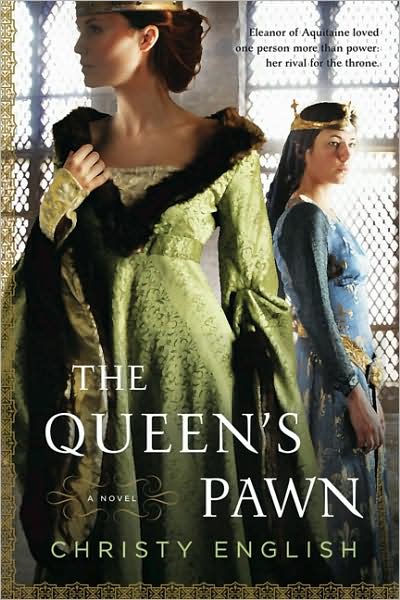
The Queen's Pawn by Christy English (including guest post)
Mistress of Rome by Kate Quinn (including guest post)
Sugar by Bernice L McFadden

Other giveaways

The Darcy Cousins by Monica Fairview at The Burton Review
A Cruel Harvest by Paul Reid at Historical Novel Review
Stay a Little Longer by Dorothy Garlock at So Many Precious Books, So Little Time
The Book Thief by Markus Zusak at XO.Sorcha.XO
Conviction by Skylar Hamilton Burris (signed copy) at Austenesque Reviews
The Stolen Crown by Susan Higginbotham (signed copy) at Confessions of a Book Hoarder

Band of Brothers - A Mini-Series Review


Based on the bestseller by Stephen E. Ambrose, the epic 10-part miniseries Band of Brothers tells the story of Easy Company, 506th Regiment of the 101st Airborne Division, U.S. Army. Drawn from interviews with survivors of Easy Company, as well as soldiers' journals and letters, Band of Brothers chronicles the experiences of these men who knew extraordinary bravery and extraordinary fear. They were an elete rifle company parachuting into France early on D-Day morning, fighting in the Battle of the Bulge and capturing Hitler's Eagle's Nest at Berchtesgaden. They were also a unit that suffered 150 percent casualties, and whose lives became legend.
Over the years I have seen an episode here and there of this show, but this is the first time I have actually sat down and watched all the episodes from beginning to end. I am a bit rusty on writing reviews, but I do know enough to say one simple world about this show: Bravo! They did such a fantastic job with this series. I knew I was going to like it and I am kicking myself that it took me so long to watch it! It shouldn't surprise anyone that it is good, though, because the executive producers are Steven Spielberg and Tom Hanks. The two of them together is like magic. I don't think Spielberg would ever put something out that didn't exceed all expectations. Tom Hanks is good, too, but I am still sitting here thinking about him talking to a volleyball.

The best way to describe this show is that it could be real. The action is so believable and the acting so exceptional you felt like they were really there and you were really watching the events of World War II through their eyes. The research was obvious and the interviews at the beginning of each episode were a wonderful touch. Some of the scenes from this show will stay with me forever, I think. The second to the last episode was about the Holocaust and it was so compelling. I watched it and knew it was actors, but I was still horrified. I also got sad when people died. You got to know them through the episodes and it was sad that they were gone. There is a scene in a church where a narrator speaks and it starts with everyone and the narrator slowly tells all those that died. I think that was a very good memorial to all those men that never made it home.

I do have to say that there was so much going on that I am not always entirely sure of the characters and I know I missed some of what was going on. It's a show that I could probably watch again right now and discover a lot of things that I missed the first time around. I think it is a show that I am happy that I owe, so I have that chance to go back through it. This is television at its best. A documentary in fiction form. I strongly recommend it!

Monday, April 19, 2010

HT News

Robin Maxwell has announced winners of her O'Juliet Love Games. Head on over to have a look at the winning poems!

I love looking at covers, (hence our Cover Story feature), and I love it when we get a bit of insight into the process behind creating a new cover. Elizabeth Chadwick has given us just that over at her blog - a look at the process of developing the cover for her upcoming UK release To Defy a King.

Sarah from Reading the Past has posted about the best selling historical fiction of 2009. How many have you read, or more pertinently how many have you bought!

Chris from Book-a-rama has announced a new challenge that may be of interest to some of our readers. Starting on May 13, you can participate in the Daphne du Maurier challenge. Click on the link for all the details.


Nymeth from Things Mean A Lot has also announced a 1930's mini-challenge.

Maria from Fly High! is featuring Laurel Ann from Austen Prose in her My Blogger Buddies event. There is also a chance for two people to choose from a selection of books in the associated giveaway. By the way, our very own Ana was featured last week, so if you want to find out more about Ana head on over and see what she had to say!

Charles from Ten Pages (or More) is hosting a Wolf Hall live book readalong, disecting sections and providing quotes and more relevant to the book.

Wonders and Marvels are thinking about redesigning and they are looking for your input! Head over here to let them know what they should or should not change!

Current Giveaways

Claude and Camille by Stephanie Cowell at Susie of All Things Royal, at Hist-Fic Chick and also at Jenn's Bookshelves
Historical Fiction Book of Your Choice at Teddy of So Many Precious Books, So Little Time
Mistress of Rome by Kate Quinn (includes an interview) at The Burton Review, and at Passages to the Past (including a guest post)
Golden Web by Barbara Quick at Enchanted by Josephine
Monet, 25 Masterpieces also at Enchanted by Josephine
No Will But His by Sarah Hoyt (including a guest post) at Passages to the Past
Marrying Mozart by Stephanie Cowell at Passages to the Past

Roses by Leila Meacham

In the tradition of The Thorn Birds comes a panoramic saga of dreams, power struggles, and forbidden passions in East Texas.

Spanning the twentieth century, Roses is the story of the powerful founding families of Howbutker, Texas, and how their histories remain intertwined over the span of three generations.

Cotton tycoon Mary Toliver and timber magnate Percy Warwick fell in love, but because of their stubborn natures and Mary's devotion to her family's land, they unwisely never wed. Now they must deal with the deceit, secrets, and tragedies that surround them, and the poignant loss of what might have been - not only for themselves, but also for their family legacies.

With expert and unabashed big-canvas storytelling that reads like a Texas Gone With the Wind, Leila Meacham pens an epic of three intriguing generations. A deeply moving love story of struggle and sacrifice as well, Roses is steeped with nostalgia for a time when honor and good manners were always the rule: it is destined to be cherished and read again and again.
I hadn’t heard anything at all about this book, until suddenly it was there were mentions of it all over the blogosphere. As soon as I saw what it was about, and the comparisons to books like Gone with the Wind and The Thornbirds, I wanted, no, had, to read this book! You see, I have a weakness for big juicy sagas, especially cross-generational family sagas, and that is exactly what I got with this book.

The Toliver, Warwick and Dumont families founded the small town of Howbutker in East Texas, and have become the mainstays of the town. The Tolivers are cotton plantation owners, the Warwicks are lumber barons and the Dumonts are merchants. When the town was founded there were strict rules put in place to ensure that each of the families did not become co-dependant on the others which included the use of roses as symbols of forgiveness, or otherwise.

The central character of the novel is Mary Toliver. When the book opens she is an old, and unwell, woman who has only weeks to live. As she reflects on her life, she remembers back to when she was a young lady in the days just before WWI. She loves Somerset, the cotton plantation that her family runs like no one else in her family, except her father. When he dies, she is determined to hold onto Somerset, no matter what it means to her future life, and no matter that her father’s decision pretty much destroys her family life.

The author touches on many of the major events of the last century – World War I, the depression, the commercialization of farming through the 1970s and 1980s amongst other things and does it with a deft touch. It is however Mary and her life that is the core of this novel. Her loves, the choices she makes as she fights to hold on to Somerset, often with great personal cost, and her determination that no other member of her family should suffer from the Toliver curse.

For me though, the character that will stay with me the longest is that of Percy Warwick. He is portrayed as being a dashing, honourable man, who struggles with the social expectations of his time as he tries to be with the woman he loves, despite the fact that he knows that she will always choose her family land rather than what he wants. Through a series of near misses, he and Mary don’t get their happily ever after, and so they have to make the best of the life they have chosen. The thing about Percy is that he is not perfect, he doesn’t always make the right choices, but he knows it and tries to do something about it, even when it appears to be too late to make amends.

When the storyline is focused on Mary and Percy, the author shows an assuredness and confidence that shines through the writing, but when she moves into the last third of the book and the focus shifts to Mary’s grand niece Rachel, the story stumbles a bit. Mary’s decisions about the future of Somerset cause untold grief for her family, and devastation for Rachel who must try to understand the decisions that were made, and that will effect her life dramatically. For example, when the Toliver curse again strikes, I thought it was a bit heavy handed and somewhat unnecessary. With Percy’s grandson, Matt, the reader is shown the parallels between their lives and those of the earlier generation, but it didn’t always work for me.

At 608 pages, this is a chunkster, but the story just flew by for me. I would be more than happy to see more of these saga style books published. In the meantime I will just have to reread my copies of The Thorn Birds, Gone with the Wind, and yes, this book, to satisfy my addiction to these kinds of novels.

I rated this as a 4.5/5 read. This review has been adapted from a review originally posted at Royal Reviews.

Saturday, April 17, 2010

Cover Story: Lady Julia Grey series by Deanna Raybourn

Deanna Raybourn has just announced the cover for her next Lady Julia Grey book, Dark Road to Darjeeling, which is due out in October 2010. I am really looking forward to getting my hands on it and seeing what happens next with Julia and Brisbane, and I am excited at the prospect of at least some of the action taking place in India.

The cover is another new direction for this series. We had previously done a Cover Story post for this series a while ago, but this cover is so different again, I thought it would be a fun idea to have a look at the variety of different styles of cover that this series has had. Given that it is only the 4th book in the series, in a way it seems that they are still looking for a direction for the covers, and I hope they find one soon, because a set of matching covers looks so much better sitting on the bookshelf!

So here is the original cover that Silent in the Grave (Mira Books 2007 hardcover)


And then there were the cartoon covers (Mira UK 2008 paperback)


And the Australian cartoon covers (Harlequin trade paperback)


And the there were the half headed woman covers which seemed to have a more romancey feel to them (Mira Paperback 2009)


And now we have the cover for Road to Darjeeling:


I actually do really like this cover. I think it is eye-catching and different from most other historical fiction out there. I do wonder though if it is a nod to the Twilight style covers that it all the rage in other genres. Either way, I really hope that there is going to be a style that the publishers stick with at some point in time.

So, what do you think? Do you like the new cover? Prefer the older ones. Don't like any of them?

Thursday, April 15, 2010

Challenge: The Alphabet in Historical Fiction

It's time for a new letter in The Alphabet in Historical Fiction but first let's take a look at our entries for the letter I:


1. Marg (The Adventures of an Intrepid Reader) - The Postmistress by Sarah Blake
2. Cat (Tell me a Story) - The Italian Woman by Jean Plaidy
3. Ana T (Aneca's World) - I Serve by Rosanne E. Lortz
4. Sarah (Reading the Past) - I is for India
5. Stephanie (Stark Raving Bibliophile) - I is for Italy
6. Heather (Epoch Tales) - I is for Isobel Gunn
7. Teddy (So Many Precious Books) - 1916 by Morgan Llywelyn
8. Carrie C. - Inez of My Soul by Isabell Allende
9. Rowenna - The Blood of Flowers by Anita Amirrezvani
10. Lucy (Enchanted by Josephine) - Indiscretions of The Queen by Jean Plaidy
11. Leya (Wandeca Reads) - Strongbow by Morgan Llywellyn

And now it's time to remember the rules and introduce the new letter!

Each fortnight you have to write a blog post about an historical fiction book of your choice (it might even be something you already read before), but it MUST be related to the letter of the fortnight.

You have several possibilities:

- the first letter of the title
- the first letter of the author's first name or surname
- the first letter of a character's first name or surname
- the first letter of a place where an historical event took place

You just have to choose one of them and participate.

Please check our blog each 1st and 15th of the month to find out our new letter, and then link your post (not your blog) back to our page through Mr Linky (see below). Then come and check to see who else has posted and visit their blog to find out all the details of the book they were reading.

You have until April 14th to complete your mission, the next letter will be published on May 1st and it is the letter J:


Wednesday, April 14, 2010

HT News


Rebecca of Rebecca's Book Blog has an interview with author Barbara Quick on her blog about her new release The Golden Web.

Amy at Passages from the Past has an interview with author Stephanie Cowell about her novel Claude and Camille, she also has a guest post by Mistress of Rome's author Kate Quinn with a giveaway.

Current Giveaways
Daughters of the Witching Hill by Mary Sharratt at Passages to the Past
Mistress of Rome by Kate Quinn (with guest post) at Historically Obsessed and also at Peeking Between the Pages
The Sunne in Splendour by Sharon Kay Penman at Fly High
The Queen's Pawn by Christy English at Muse in The Fog
Golden Web by Barbara Quick at Enchanted by Josephine
Stay a Little Longer by Dorothy Garlock at So Many Precious Books So Little Time

Tuesday, April 13, 2010

Why I Love Times of Monumental Change by Gabriele Wills


Imagine yourself as an Edwardian debutante with servants to tend to your needs and chaperones to ensure that ardent swains don’t try to steal a kiss. Or as a young gentleman with the leisure and means to race the new-fangled motorboats or be daring enough to fly a flimsy aeroplane. After all, this was the heyday of that famous tune, “Come Josephine in My Flying Machine”.

Now imagine yourself suddenly thrust into the horrific arena of war.

This is what happened to countless men and women during the Great War as they became part of the “lost generation”. What fertile soil for an author, not only in being able to illustrate the contrast between the “Age of Elegance” and the war years, but also in taking characters through the physical and emotional turmoil of one of the most cataclysmic times in modern history.

Young men went eagerly and patriotically off to what they thought would be a short-lived adventure. Millions now lie in silent cemeteries where row upon row of headstones are a moving reminder of sacrificed youth.

Women did “their bit” by stepping in to take over traditional men’s jobs, and also by working as Voluntary Aid Detachment (VAD) nurses and ambulance drivers. The nurses were hastily trained, but learned quickly on the job. While VADs spent much of their time changing linens, sterilizing equipment, and serving meals, they were just as readily asked to hold down the exposed intestines of a mortally wounded soldier, as was Canadian Doreen Gery on her first day in a British military hospital. Her protest to the Nursing Sister that she would rather die than do that, earned the retort, “Well, die then! You’re no good to me if you can’t do the work!” Like other VADs, Doreen stoically got on with the job. Giving up was considered the equivalent of cowardice in a soldier.

These newfound responsibilities and freedoms for women had a profound effect on them and on society. In her classic autobiography, Testament of Youth, VAD Vera Brittain wrote, “Short of actually going to bed with [the men], there was hardly an intimate service that I did not perform for one or another in the course of four years.” She stated that this gave her an "early release from the sex-inhibitions... [of] the Victorian tradition which up to 1914 dictated that a young woman should know nothing of men but their faces and their clothes until marriage."

Like Vera, VADs were generally from genteel and sheltered backgrounds. Some were aristocrats, like Lady Diana Manners - the "Princess Di" of her day - reputedly the most beautiful woman in England and expected to marry the Prince of Wales. Her mother was very much against Diana becoming a VAD, as Diana states in her memoir, The Rainbow Comes and Goes. "She explained in words suitable to my innocent ears that wounded soldiers, so long starved of women, inflamed with wine and battle, ravish and leave half-dead the young nurses who wish only to tend them," The Duchess gave in, but "knew, as I did, that my emancipation was at hand," Diana says, and goes on to admit, "I seemed to have done nothing practical in all my twenty years." Nursing plunged her and other young women into life-altering experiences.

I’m enthralled by the memoirs, letters, and journals written by people who lived during a time when life was intense, and death, unpredictable and unprecedented, when even those who survived the war were forever changed. So I draw heavily on these fascinating primary sources for incidents, attitudes, morality, and other details in order to bring that era to life in my novels.

Beginning in 1914 in the renowned lake district of Muskoka - the playground of the affluent and powerful for well over a century - The Summer Before The Storm takes readers on an unforgettable journey from romantic moonlight cruises to the horrific sinking of the Lusitania, regattas on the water to combat in the skies over France, extravagant mansions to deadly trenches. Its sequel, Elusive Dawn, continues to follow the lives, loves, and fortunes of the privileged Wyndham family and their friends through the tumultuous war years.

For Book 3 in this “Muskoka Novels” series, I am now discovering the radical “Roaring 20s”… and all that jazz. For more information, visit theMuskokaNovels.com.

******************

Born in Germany, Gabriele emigrated to Canada as a young child.  She is currently working on her fifth novel, which is Book 3 in "The Muskoka Novels" series. 

Monday, April 12, 2010

HT Recommends- WWI and WWII

Recently TB contacted us saying:

I have just read Gifts of War by Mackenzie Ford and Winter of Our World by Carol Ann Lee. Can you recommend other novels set during World War I / World War II?
World War I and particularly World War II are some of my favourite eras to read about, but I haven't read either of the two books that TB mentioned, so after adding both of those to my TBR list I think set about thinking about which books to mention. Where we have reviewed the books mentioned I have linked to the reviews.

WWI

Three Day Road by Joseph Boyden
The Summer Before the Storm by Gabriele Willis
The Crimson Portrait by Jody Shields
Barbed Wire and Roses by Peter Yeldham (Australian author, so not sure how accessible he will be for TB)
Birdsong by Sebastian Faulks
Flanders by Patricia Anthony
A Very Long Engagement by Sebastian Japrisot


For WII

The Book Thief by Markus Zusak
Night by Elie Wiesel
The Postmistress by Sarah Blake
Hotel at the Corner of Bitter and Sweet by Jamie Ford
The Guernsey Literary and Potato Peel Pie Society by Mary Ann Shaffer and Annie Barrows
The Winston Churchill series by Michael Dobbs (Winston's War, Never Surrender, Churchill's Hour, Churchill's Triumph)
Night of Flames by Douglas W Jacobson
Briar Rose by Jane Yolen
Ten Cents a Dance by Christine Fletcher
Maus: A Survivor's Tale Vol 1 and 2 by Art Spiegelman (graphic novels)
Snow Falling on Cedars by David Guterson
Coventry by Helen Humphreys
The Boy in the Striped Pyjamas by John Boyne
The Persimmon Tree by Bryce Courtenay
Sarah's Key by Tatiana de Rosnay
The Bronze Horseman by Paullina Simons
Tales of the South Pacific by James Michener
The Winds of War and War and Remembrance by Herman Wouk
A Town Like Alice by Nevil Shute
Suite Francaise by Irene Nemirovsky
The Diplomat's Wife by Pam Jennof
The Kommandant's Girl by Pam Jennof
My Enemy's Cradle by Sarah Young
The Kissing Gates by McKenzie Ford
The Wedding Officer by Anthony Capella
The Other Side of Paradise by Margaret Mayhew
Charlotte Gray by Sebastian Faulks

An excellent resource for finding out about books set in WWII is the War Through the Generation challenge blog. This year it is focussed on the Vietnam War, but last year the focus was WWII, and there are many excellent reviews, articles and posts to be found there.

Another excellent lists of reads from this period was composed by Danielle from A Work in Progress and can be found here.

There are so many good books around. Hopefully this gives you a good starting point TB. If there are any must reads that I have missed, please, leave a comment on this post. I am always looking for more books with this setting.

Saturday, April 10, 2010

Why I Love to Write About Eleanor of Aquitaine


By Christy English
Author of THE QUEEN’S PAWN

I love to write about Eleanor of Aquitaine because she always surprises me. Even though she is an historical figure and the events of her life are set in stone, the character of Eleanor as she comes to life in my novels always shows me something new. On the pages of history books her life was dynamic enough: Duchess of Aquitaine at the age of fifteen, Eleanor finished brokering her own marriage to Louis VII of France. Years later, Eleanor rode at her husband’s side on Crusade, and on her way home, sick of being married to Louis, she began working to annul her marriage. Only months after she earned her freedom, Eleanor married her second husband, Henry of Normandy who became King of England only two years later…and that is just the first half of her life. So you see what I mean when I say Eleanor of Aquitaine was a dynamic woman.

Nothing stopped Eleanor from achieving her goals. For decades, she wanted the County of Toulouse back under the control of her family. After sending both husbands’ out to reclaim it through warfare (and after both men failed), she simply arranged her daughter’s marriage to the Count of Toulouse, effectively putting her family in line to inherit that county, and thus to take control of it once more. Eleanor would wait for years for what she wanted. Tenacious and single minded, she was an amazing politician.

Much to both her husbands’ annoyance: Louis would have been perfectly happy if Eleanor had settled down to raise her princesses quietly, if she had left the political machinations of the day to him. And her second husband, King Henry II of England, married her for her brains and beauty as well as her land, but even he came to regret her brilliance as the years wore on. For after ten years of partnership, Eleanor began to want more power of her own. And in 1173, she reached out for that power, setting her sons against their father so that she might gain indirect control of the duchies of Brittany and Normandy, in addition to the duchy of Aquitaine.
Henry locked Eleanor away in 1174 to keep his crown and to keep his sons at bay. Henry always knew that if he set Eleanor free, she would stop at nothing to take his Continental holdings from him. And she was the one person on Earth who had a fighting chance of doing it; so he kept her locked away for fifteen years, until his death.
Once Henry was dead, Eleanor ruled through her favorite son, Richard. Richard the Lionheart rode off to Crusade to seek the Holy Grail of Jerusalem, leaving the Continental holdings inherited from his father in Eleanor’s hands. She was technically regent of England, too, while Richard was on Crusade, but she had spent more than enough time locked away in England during the last 15 years of Henry II’s reign. She left that cold, rainy land to the tender mercies of her youngest son, John, for she finally had what she wanted: control over most of what is now modern France.

Eleanor was unstoppable. She was brave and beautiful and so full of fire that both her critics and her admirers agreed: she was stronger than any woman they had ever seen. She is the strongest woman I have ever had the pleasure to write about, and the most dynamic. She is a woman who would be renowned in any age. Which is why, over 800 years later, we still remember her.

****
Christy English is the author of The Queen's Pawn, which is out now. The sequel, To Be Queen, is expected out in April of 2011. Her books focus aroud Eleanor of Aquitaine, obviously, and the 12th century Plantagenets. You can visit her website by clicking here.

Thursday, April 8, 2010

Why I Love Psychotic Emperors

I was eighteen years old, and I had decided to write a book set in ancient Rome. Not my first book by any means – I’d had novel projects since the age of ten – but my first foray into the ancient world. Thanks to a lifelong love for Kirk Douglas in Spartacus, I knew my hero would be a gladiator; my heroine, by contrast, a slave girl. But beyond that I was stuck. Rome’s history spans everything from enlightened republic to despotic tyranny; frontier wars to private assassinations; religious persecution to casual idolatry. Where to begin?

“Start with a psychotic Emperor,” my mother said when I moaned about my plotting problems. “You can do a lot with a psychotic Emperor.”

“So who were the worst Emperors in Roman history?” I asked. “The ones who stayed in power long enough to do some real damage?”

“Caligula, Nero, Domitian, Commodus, Caracalla . . .” my mother began reeling off effortlessly from her ancient history degree. A trip to the library later, I had my Emperor and the beginnings of a book. Domitian was a piece of work: The man was in love with his niece, threw all-black dinner parties, stabbed flies out of the air on a pen, and liked to personally wax the body hair of his concubines. This was someone who could provide a lot of grist for fiction. Six months later I had a finished novel, Mistress of Rome.

Domitian was a lot of fun, but I could have written a novel around any of the other Emperors on my mother’s list. Rome was ruled by many good men, but the bad ones achieved a truly memorable level of lunacy. Caligula thought he was a reincarnated god, married his sister, and made his favorite horse a Senator. Nero wrote the world’s worst poetry and murdered his mother. Commodus was strangled in his bath by a wrestler (not by Russell Crowe, as the movie would have it). Caracalla slaughtered his bride and wedding guests at the reception. There is material there for a hundred books – just give me a historical psychotic with a crown, and I’m in business. Of course, I have to remember to include a disclaimer at the end reassuring readers that I didn’t make up the more outrageous details. I would not have dared make up many of the details about Emperor Domitian, such as the fact that this affable paranoid took time out of his busy schedule of persecuting rivals and executing Vestal Virgins to write a manual on hair care.

See, that’s why I have such a fondness for psychotic Emperors: in their unparalleled flashy weirdness, they’ve been good to me, and to many novelists before me. I never have to make up flamboyant villains to chew the scenery in my novels. All I have to do is create decent people struggling against these madmen, and that is always a struggle worth writing about – because every one of those bad Emperors my mother listed off died violently, when some brave person in ancient Rome finally said “Enough.” Sometimes it was a group of brave people and sometimes only one; sometimes their identities are known to history and sometimes (as is the case with Domitian’s assassin) history clouds their names and leaves me to draw my own conclusions. But it’s always a fight worth a story.

I’m currently writing a sequel to Mistress of Rome, and I have to say it’s hard going. After Domitian, Rome enjoyed a relatively stable period with five sane and intelligent Emperors. Their achievements included a steady economy, a building boom, a reliable coinage, the conquering of several new provinces, and historically low execution rates.

How am I supposed to get anything good out of that?

*****
Mistress of Rome is Kate Quinn's first novel. It was released on April 6, 2010. According to her website, and the post above, Quinn is currently working on both a sequel and a prequel. She is also a blogger and you can visit her blog here. You can also visit her website to learn more about her, her books, and read an excerpt from Mistress of Rome.

Tuesday, April 6, 2010

HT News

Syrie James' novel The Secret Diaries of Charlotte Bronte has been optioned by a British film maker. They are looking for feedback, and so there is a quick poll up at Syrie's website. Go ahead and have your say!

The next Historical Fiction Bloggers Round Table event has been announced, and this time it is Claude and Camille by Stephanie Cowell which is being given the HFBRT treatment. Check out the full schedule of events and giveaway details here. As part of HRBRT, Arleigh from Historical-fiction.com is hosting another of her imaginative giveaways. Not only can you win a copy of the book, there are also two art books and two postcards, all with a Monet theme.

Sandra Gulland was recently interviewed at My Inner French Girl, and now we can also listen to the podcast, including a few hints about her next book.


Current Giveaways

First Impressions by Alexa Adams at Fly High!
The Queen's Pawn by Christie English (including interview) at Passages to the Past
Mistress of Rome by Kate Quinn (including guest post) at Enchanted by Josephine
Claude and Camille by Stephanie Cowell at Passages to the Past
Daughters of the Witching Hill by Mary Sharratt (3 copies) at Reading the Past
A Golden Web by Barbara Quick (including interview) at Tanzanite's Shelf and Stuff
Mistress of Rome by Kate Quinn at Confession and Ramblings of a Muse in the Fog
Grant's Indian by Peter Norman at Historical Novel Review

Roselynde by Roberta Gellis


A Woman Of Passion, A Man Of Honor... A Sweet Burning Love Yearning For Fulfillment.

In an era made for men, Alinor is at no man's mercy. Beautiful, proud and strong-willed, Alinor is mistress of Roselynde and of her own heart as well--until she meets Simon, the battle-scarred knight appointed to be her warden, a man whose passion and wit match her own.

Boldly Alinor defies lionhearted King Richard's command to marry one of the land-greedy nobles swarming around her and shrewdly maneuvers through Court intrigues and alliances to be near the man who has awakened her to tender yet volatile love. Their struggle to be united against all obstacles sweeps them from the pageantry of the Royal Court to a daring Crusade through exotic Byzantium and into the Holy Land. As they plunge into the events of a turbulent age, they endure bloody battles, political treacheries and heart-rending separations before their love conquers time and destiny to live forever.


Roselynde is the first book of the famous series The Roselynde Chronicles by Roberta Gellis. I've been reading excellent reviews about it for ages and Ana T. is always recommending me this series (she is such a patient and persistent friend!;-)). I finally followed her advice.

One Saturday afternoon, I picked up the book and just couldn't stop until the very last page. No need to say that I immediately read the second one, Alinor, even if I dreaded some aspects of the story, especially the fate of our heroine's 1st husband.

Normally, I'm not very fond of very young heroines, they are often immature and very childish. At the first sight, Alinor seems to fit in this category, but just for some seconds. She might be young, but she is far from being the usual spoiled aristocratic young miss. She knows her value and her strengths. Since her birth she was taught by her grandfather how to manage her lands and business without relying in a man. This is quite unusual for these times but not unheard of. Strong women like Nicola Lahaye or even the ruthless queen Alinor were perfect examples of amazing women who wanted much more than men (and the Church!) allowed them to have.

Her relationship with Simon is quite unusual. Some might think that the age different is a bit too much, but these two are good for each other. There's a good symbiosis going on since the beginning, and despite Simon's objections concerning their age (he really is disturbed by his attraction to a much younger woman), I could hardly imagine anyone else at the side of someone like Alinor.

What pleased me the most in Roselynde? The politically incorrect view of the Middle Ages. Roberta Gellis isn't afraid of talking about subjects that normally would hurt our modern sensibilities but who were considered perfectly normal in those times, like the common use of camp whores or some physical abuse from husband to wife. Not that I would ever approve of such behavior, of course, but it makes me admire even more these women who stood up for what they wanted in times when their rights were close to nothing.

The historical background is also very rich and entrancing. Following the Lionheart in his quest along the Mediterranean and also some aspects of his life immediately remind me how little I like this English king. The author also mentions several times his possible homosexuality but even today historians are not convinced and mostly believe he was simply an asexual man who was more interested in his quests than actually have sex with everything that moved (like so many sovereigns before and after him). Prince John is, like always, the creepy and vindictive character who we all hate passionately. I often wonder if he really deserves it...

To be honest, I don't know if I would have picked this book only looking at the cover. Roselynde is not a historical romance, it's pure historical fiction with some strong romantic elements. It's also one of my best reads of 2010!

Grade: 5/5

Sunday, April 4, 2010

Mistress Shakespeare by Karen Harper, Narrated by Anne Flosnik

Anne Whateley was a childhood friend of William Shakespeare. They fell in love and got married in secret. Then he was forced to marry Anne Hathaway because she was pregnant. The other Anne, Anne Whateley was devastated but went on with her life. She worked for her father and then, after his death became a business woman in her own right.

The next time she happened upon Will Shakespeare he convinced Miss Whateley that it was her that he truly loved and she became his mistress. They sold his plays together and Shakespeare became a household name.
Spanning a half a century, in Elizabethan history, this book is a love story of WillShakespeare and "the other Anne"

There is very little known about Will Shakespeare but there was a discrepancy on his marriage certificate. Harper took this little discrepancy and turned it into a very enjoyable novel. It is well written and character driven. I especially liked that Harper made Anne a strong female character, able to take care of herself and not rely on Will's income.  She captures this time in history well.

I listened to the audio version of this book and Anne Flosnik's narration added to my enjoyment of the book. This is the first Karen Harper novel that I have read but it won't be the last.

4/5

HT News

The Shortlist for the Walter Scott Prize which is the new major prize for historical fiction writers in the UK has been announced. The books that made the list were:

Wolf Hall by Hilary Mantel  - Thomas Cromwell and Henry VIII
The Glass Room by Simon Mawer - 1930s Czechoslavakia
Lustrum by Robert Harris - Rome
Sacred Hearts by Sarah Dunant - 16th century Italy
The Quickening Maze by Adam Foulds - Two poets in the 1840s
Stone's Fall by Iain Pears - early 20th century England
Hodd by Adam Thorpe - retelling of the legend of Robin Hood

No prize list seems to be complete without Wolf Hall this year! I haven't read any of these! Have you? Are they worthy of winning the inaugural prize?


Current Giveaways

The Queen's Pawn by Christy English at Scandalous Women
 The Greatest Knight, The Scarlet Lion and The Time of Singing, all by Elizabeth Chadwick at A Reader's Respite
The Conqueror by Georgette Heyer also at A Reader's Respite
The Stolen Crown by Susan Higginbotham at So Many Precious Books, So Little Time
The Queen's Pawn by Christy English at The Queen of Happy Endings (along with two other books)

In other news, Ana recently reviewed Rosanne E Lortz's novel I Serve: A Novel of the Black Prince. Rosanne also guest posted for us, and now she has just announced that her book trailer is complete, and Ana's review has been quoted as part of the trailer! Well done Ana, and well done to Rosanne!

Friday, April 2, 2010

HT News

You may have noticed that I haven't been around, so that means a bumper edition of HT News to catch up on, so we'll get on with it!

Fans of medievals might be interested to read the interview of Elizabeth Chadwick by Sharon Kay Penman. Two of my favourite medieval authors chatting to each other certainly made me happy!


Author Brandy Purdy (or rather her cat!) is giving away a signed copy of The Boleyn Wife!

Sarah from Reading the Past is celebrating her fourth blogiversary with a giveaway. You could win Mistress of Rome by Kate Quinn, The Rose of Sebastopol by Katherine McMahon, The Postmistress by Sarah Blake, The Queen's Pawn by Christy English, The Creation of Eve by Lynn Cullen or Heresy by S J Parris. Happy Blogiversary Sarah!

Another celebratory giveaway is being held at Tanzanite's Shelf and Stuff. There you also have a choice of books from the following list - Devil's Brood by Sharon Kay Penman, Hand of Isis by Jo Graham, The Queen's Dollmaker by Christine Trent, The Boleyn Wife by Brandy Purdy, The Stolen Crown by Susan Hibbinbotham, O, Juliet by Robin Maxwell, or The Secret of the Glass by Donna Russo Morin.

Are you all reading challenged out yet? No. Glad to hear that because Marie from The Burton Review has announced the Tudor Mania Challenge, which will run from May 1 to July 31. Check out all the details here.


Other current giveaways:

The Kitchen House by Kathleen Grissom at The Burton Review
Impatient with Desire by Gabrielle Burton at Passages to the Past
All Other Nights by Dara Horn (3 copies) at Wonders and Marvels

Why I Love Rebellious Women by Nancy Means Wright

I LOVE REBELLIOUS WOMEN: A Tale of Three 18th Century Rebels.

How did they become rebels, these three amazing women: Mary Wollstonecraft in England (1759-1797, Margaret King (1772-1835) in Ireland, and Annette Vallon (1769-1844) in France, all brought up to be members of a proper 18th century society? For Mary Wollstonecraft, eldest but shortest-lived of the three, and heroine of my new series, the answer is obvious. She had neither the education offered her older bullying brother nor a room of her own to write and dream in. Her father was a drunkard who abused his wife and daughters. When her submissive, unloving mother died, he married his mistress, and Mary left home, still in her teens.

Who wouldn’t rebel under those circumstances? Impecunious and desperate, Mary settled for one of the few respectable female positions: teaching children. The school she began failed when Mary took ship to Portugal to help her consumptive friend Fanny Blood through childbirth. Fanny died, and on the way home through turbulent waters, a grieving but fiery Mary threatened to take the ship’s captain to court if he didn’t stop to save the sailors of a sinking French ship (he did). Angry at any injustice, Mary subsequently “kidnapped” her sister Eliza, then in a post-partum state of delirium, from an abusive husband. They leapt from carriage to carriage on their mad dash to a rented room, husband in pursuit, while the crazed Eliza bit her wedding ring into pieces.

Two years later, in 1786, Margaret King came into Mary’s life, when the still penniless Mary took a position as governess at Mitchelstown Castle, home of the aristocratic Kingsborough family—Mary called it a Bastille. Her devoted pupil Margaret was then fourteen, a bright girl who, like firebrand Mary, was deeply concerned with the plight of the oppressed Irish peasants. (My novel, Midnight Fires, is set in Ireland during this year of Mary’s governessing.)

Several years after a jealous Lady Kingsborough dismissed Mary for teaching her daughter to “think for herself”—an impediment, according to Milady, to a girl’s modesty!—Margaret went through with an arranged marriage to a boring aristocrat. But seeing herself as simply Irish, not Anglo-Irish like her family, she joined the United Irishmen and secretly used her husband’s estate to shelter hundreds of Irish rebels. Though a Protestant, she advocated universal toleration, and like a handful of other female spies, carried secret messages into prisons, along with knives and ropes. Six-feet-tall and dressed in breeches, she mingled with the men with impunity, and published anti-establishment pamphlets. She ultimately bore six children—four out of wedlock when she renounced the aristocracy to live with a middle class man. She later wrote that much of her life’s philosophy was due to the teaching of her mentor, Mary Wollstonecraft, for whom she felt an “unbounded admiration.”

The pair corresponded after a dismissed Mary left for London and in 1792 wrote her controversial A Vindication of the Rights of Woman. Surely Margaret read it with a grin! Mary weathered the storms of protest, and went to Paris—“Neck or nothing!” she declared. There she fell passionately in love, and with France and England at war, risked her neck walking the streets during the bloodiest days of the Great Terror when heads were rolling. She faithfully visited her imprisoned friends Thomas Paine, Manon Roland, and Olympe de Gouges, and wept as the latter two were guillotined. She bore a child out of wedlock—and devastated by her lover’s betrayal, a pariah in London society, she went to Scandinavia alone (unheard of in those days) to recoup her feckless lover’s funds for him. Her sole conventional act was perhaps her marriage to Willliam Godwin, whom she genuinely loved; she died, aged thirty-eight, after giving birth to their daughter (future Mary Shelley of Frankenstein fame).

Perhaps Mary passed by Annette Vallon’s brother in Paris’s latin quarter during the Revolution; and she knew Annette’s lover, poet William Wordsworth, through their publisher’s dissenting circle back in London. But the two women had much in common: their fight against oppression; the bearing of a love child. Annette met Wordsworth in Orleans, France, where she was his language tutor, and then lover; after his escape to England during the Reign of Terror, she gave birth to his daughter. Alone with her child, she became a heroine in the resistance movement against Robespierre and the Terror—and later against Napoleon’s secret police. She was a female Scarlet Pimpernel: mother—and underground fighter. A surviving document describes her selflessness and “courage without any thought of personal gain…Annette has for the past 25 years, hidden and aided a great number of Ă©migrĂ©s and other persecuted persons. She has engineered escapes from prisons and has saved many loyal subjects from death.” Wordsworth came to visit Annette and their daughter in later years, but always returned to his wife, while she died as she had lived: a rebel and single mother.

I love these rebellious women. They have been role models for me, daring women whom I could never hope to emulate in my quiet writerly life. I can only try to relive their lives through my reading, writing—and my imagination.


Facebook page: “Becoming Mary Wolstonecraft”

Nancy Means Wright novel Midnight Fires will be released on April 10th

  © Blogger template 'Neuronic' by Ourblogtemplates.com 2008

Back to TOP