Showing posts with label Victorian. Show all posts

Friday, March 28, 2014

Fact Fiction Friday ~ Crimea and Florence Nightingale

Continuing our new and regular feature here at Historical Fiction.  

Each Friday we will publish an historical fact based upon the date. Each fact will be accompanied by a book(s) title and perhaps a review or other snippet.

28th March 1854 - France and Britain declare war on Russia in the Crimean War.

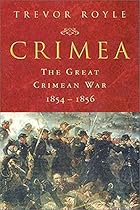
Crimea: The Great Crimean War, 1854-1856 by…For those who like the historical aspect of this period how about this comprehensive book by Trevor Royle which features the duration of the War (1854 - 1856).

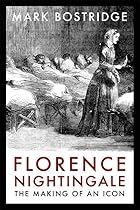
Probably one of the most famous Victorians to have lived is Florence Nightingale. This book, The Making of an Icon by Mark Bostridge looks a promising read.


Florence Nightingale: The Making of an Icon…

Friday, March 7, 2014

Fact Fiction Friday ~ Alexander Graham Bell

Continuing our new and regular feature here at Historical Fiction.  

Each Friday we will publish an historical fact based upon the date. Each fact will be accompanied by a book(s) title and perhaps a review or other snippet.

Reluctant Genius: Alexander Graham Bell and…7th March 1876 - Alexander Graham Bell is issued with a patent for the item we know as the telephone.

Reluctant Genius by Charlotte Gray Is the story of the great inventor.

Thursday, March 14, 2013

Lady of Ashes by Christine Trent


In 1861 London, Violet Morgan is struggling to establish a good reputation for the undertaking business that her husband has largely abandoned. She provides comfort for the grieving, advises them on funeral fashion and etiquette, and arranges funerals.

Unbeknownst to his wife, Graham, who has nursed a hatred of America since his grandfather soldiered for Great Britain in the War of 1812, becomes involved in a scheme to sell arms to the South. Meanwhile, Violet receives the commission of a lifetime: undertaking the funeral for a friend of Queen Victoria and Prince Albert. But her position remains precarious, especially when Graham disappears and she begins investigating a series of deaths among the poor. And the closer she gets to the truth, the greater the danger for them both…

After the adventures of a dollmaker, a cloth merchant and a waxworker, Christine Trent brings us a new story about a female undertaker. I enjoyed her previous books and was very excited to read this one too since Lady of Ashes is an historical mystery set during Victorian England, one of my favourite historical period. Also, I have to say that the title and cover caught my attention right away.

Violet Morgan is an independent and strong willed woman who is married to an undertaker, Graham Morgan. While Violet is completely taken by her profession, Graham seems to be much more worried about their social status than anything else. This is often a topic of heated discussions between spouses. Slowly, Violet feels that the man she is married to is not the same anymore…

The heroine clearly knows that she is good at her job and she isn't afraid to show it, despite her husband's patronizing manners. I couldn’t help but to feel proud of her, a woman in a world lead by men who only see her as a wife. She feels real, strong with just enough sensitivity and warmth to make you cheer for her. The scenes where Violet takes care of the deceased and their families always providing the best care are quite moving.

The historical details about mourning and funerals are completely fascinating and made me even understand some of the modern customs. Honestly, I never thought much about the subject before and it wasn't something that would usually draw my attention. Since reading this book I cannot stop searching for more information, especially about mourning jewelry.

Having very little knowledge about the American Civil War, it was interesting to read about the British and American relationship during this conflict and how fragile those ties were with both the North and South. The tension was palpable through the pages!

Lady of Ashes became my favourite book by Catherine Trent and certainly one of my best reads this year.

Grade:  4.5/5


_______________________________________

To read more about Christine Trent and her books, you can visit her website:


Saturday, February 23, 2013

The Ruling Caste by David Gilmour

Recently, I have been focusing my genealogical time on India as I work on a book about part of my family who spent time in India. Nothing special, except the research has unravelled some real surprises and I felt the stories were worthy of being shared through a wider audience.

The Ruling Caste: Imperial Lives in the…As part of that research I wanted to fully understand India during the Victorian period and I came across The Ruling Caste by David Gilmour.

As always I turned to the index and was delighted to see a reference to another family connection.

It is those references I thought I would share here -

"Lewin Bowring felt that the great void in his life was travel. In 1854 he therefore set off on a long journeys through Rajputana, China (where his father, whom he had not seen for 10 years, was Governor of Hong Kong), France, Italy and Central Europe (which he toured three times), and the British Isles, where he inspected seventeen cathedrals" (page 276 Source Unpublished Memoirs).

"Lewin Bowring, who joined the Bengal Civil Service in 1843, won several prizes at Haileybury for Persian, Sanskrit and Hindustani. Yet on arrival in India he found his proficiency in these languages was "nearly useless" "(Page 40 Source Unpublished Memoirs)

I think we always assume that those who travelled to overseas destinations did so with little chance of returning home. That is a inaccurate. The amount of travel depended on your means in terms of financial and your status. The family whom I have been researching made several journeys, yet the time it took to travel and the conditions must have been very trying.

Saturday, November 24, 2012

Oh Those Victorians! (Guest post by Enid Shomer)

What does the phrase “Victorian Age” conjure for you? Hooped skirts and sexual repression? The industrial revolution? Darwin, Marx and Freud? Clearly it is a period rich in social change, and flavored with an air of moral supremacy that produced inevitable contradictions and hypocrisy. Because the era had such a profound impact on our own times, I have always found it fascinating. I thought I knew something about it before beginning my novel, The Twelve Rooms of the Nile, but nothing I had read prepared me for the cabinet of curiosities that I discovered.

In my novel, Florence Nightingale (the “Lady with the Lamp” and heroine of the Crimean War) and Gustave Flaubert (the author, most famously, of Madame Bovary) travel together through Egypt in 1850. In real life, they took separate, nearly-identical tours, sailing for months up and down the Nile, and visiting ancient monuments. We know that they were towed on the same boat and on the same day from Cairo to the navigable portion of the river. Flaubert records seeing an Englishwoman with a “hideous green eyeshade attached to her bonnet” and we know that Nightingale wore such a contraption.

There were other similarities. They were both in their late twenties, considered themselves failures, and were desperately unhappy. Both left an extensive written record of their travels and of their inner turmoil. The more I read, the more convinced I became that despite their obvious and striking differences, they shared a deep connection. Why were they both in a state of despair and why did they consider Egypt a “cure” for their misery? If they had met, I thought, they might have had a life-altering relationship.

Research uncovered rare tidbits about them and the Victorian period. In order not to give away any of the novel, I‘ll focus here on minor characters, and on information that fell beyond the scope or timeline of my book but which is interesting in its own right.

Before Nightingale left for Egypt, much to her family’s dismay she refused her only serious marriage proposal. Richard Monckton Milnes, her suitor, was widely known for his poetry, for writing the first biography of Keats and for being a member of Parliament. His fashionable Sunday brunches attracted everyone of import in London. But he also had a secret obsessive life known to only a few confidants. He amassed England’s largest collection of pornography (now housed in the British Library) and was also part of a group of prominent Victorian men who wrote pornography together as a hobby. They composed it round-robin style and published it under pseudonyms, always attributing the books to fictitious publishers in exotic locales—Constantinople, Cairo or Aleppo in Syria. While Florence Nightingale was daring and open-minded, I feel certain she would have been appalled.

Two other characters are Selina and Charles Bracebridge, Florence’s actual traveling companions in Egypt. A childless couple, they were Florence’s best friends and staunchest supporters, conspiring to help her achieve her goals despite the opposition of her family. Only a year before they had taken her to Italy, plucking her from one of the worst of the Nightingale family wars. But there is more to the story of these loyal friends, facts that are rarely mentioned in retellings of the Nightingale legend. Most of us know that Nightingale went to the Crimea, worked herself to a nub, became ill, nearly died, and yet managed to cut the British mortality rate by two-thirds by inventing what we recognize today as modern nursing. But how many people know that the Bracebridges went with her, facing horrific conditions and constant danger, and doing whatever scutwork she asked of them? There is no doubt in my mind that they are unsung heroes of the Crimean War.

Finally, there is Trout, the maid who accompanied Nightingale to Egypt, often serving as her chaperone. Other than a few mentions in Nightingale’s diary, the real Trout left no footprints in the historical terrain. I had to invent her from scratch.

In the Victorian Age, nearly one in four persons was “in service,” though almost none of them wrote about it. Fortunately, the maidservant Hannah Cullwick, who lived a bit later, kept a diary of her working life. For the fictional Trout, I borrowed Cullwick’s unusual relationship with a gentleman poet whom she clandestinely married. Literature about the pair mentions foot fetishism, infantilism, mysophilia, erotic gaming, ageplay, and other psycho-pathological terms. Despite these modern diagnoses, in my novel, Trout’s is a poignant love story whose eccentricities gives pause to anyone who thinks they understand Victorian attitudes toward sex.

Still on the subject of sexuality, I found significant differences between France and Britain. In Britain, even the medical textbooks were coy about the female body, using blank spaces or rough cartoons instead of realistic and anatomically correct drawings. In France, the doctors were unfettered by such Puritanical squeamishness. Again and again, I discovered diversity where I expected uniformity. Because Flaubert was French and Nightingale was English, there were opportunities to dramatize these differences, sometimes humorously, in the novel.

However, as interesting as these details are, I don’t want to give the impression that I chose to write this book for rational or intellectual reasons. What caught me by the throat and kept me going during the seven years I worked on the novel were not the resonances of the Victorian Age in our time but this: I kept thinking how amazing it would have been if these two geniuses had met. In the end, I wrote the book because I wanted to see what would happen when they did.


To find out more about The Twelve Rooms of the Nile, visit Enid Shomer's website or find her on Facebook.

Tuesday, July 31, 2012

Why I Love Researching the Victorian Royals of England by Mary Hart Perry

I’m a people person. I’ve always been fascinated with the ways in which individual members of families, throughout history, have interacted, sometimes in healthy and supportive ways…and other times in destructive ways. Why do I love looking back in time at family groups? It struck me, even before I started doing research for my most recent novel, The Wild Princess, that our families today are not so very different from people who were related to each other, often living together, in the past.

While focusing on the royal offspring of Queen Victoria and Prince Albert, this tendency to help or hurt those closest to us became shockingly evident. Of the nine children this royal couple produced, five princesses and four princes, there was rich and varied mix of personalities, good and bad. At times they came to each other’s aid and support. More often they seemed to work against each other, and the relationships became painful--much as in our own families in the 21st century. What family can claim that they never experience conflict?

For instance, Louise, the fourth princess, dreamt of becoming a professional artist. However, this was a time when girls simply weren’t educated in the same way as boys. Queen Victoria absolutely refused to allow her daughter to attend art school and mix with commoners. Her refusal to grant permission was shattering to Louise, who happened to be a very promising young artist. However, Louise being a very spirited young woman, persisted in arguing with her mother and pressing her case. She eventually won…but at high emotional cost to both herself and her mother.

Later in the queen’s life, Victoria determined that her youngest child, Princess Beatrice should remain unmarried, living with the queen as her constant companion until her death. That meant Beatrice likely would never have a family of her own. It was a sacrifice that Beatrice at first acquiesced to. Possibly because her mother kept her so much to herself she had become awkward in social situations and felt she was unappealing to men. It wasn’t until she met Henry Battenberg, at her niece’s wedding, that she regained her self-esteem enough to believe she might find a husband and marry. Victoria, however, stuck to her guns and refused to give her blessing. She went a step further, according to several accounts. Apparently she was so angry with her daughter for pressing the issue of the forbidden marriage that she refused to speak to Beatrice for months, insisting upon communicating with her only through written notes. Not only did Beatrice suffer the separation from her beloved Henry, she felt terribly distraught at the way her mother was treating her—after she’d been so loyal to the queen for so many years. Eventually, Beatrice and Henry did marry—but again, the emotional trauma within the family was immense.

I think about my own family and the families of my friends, and then about the people I love to read about from the past. One hundred years ago…three centuries ago…or even in antiquity. How little we’ve changed! We fall in love. We worry about each other. We support or try to interfere with each other’s dreams and destinies. The interactions are so complex; human nature is amazing. And that’s what I love about reading and writing about families throughout history. I feel so very close to these people, and I learn to care so very deeply for them, because they are just like us. My warmest wishes to you and your family…Mary Hart Perry

*********

The Wild Princess by Mary Hart Perry is out now.

You can find out more about Mary and her book at her website, on Facebook and on Twitter.

Tuesday, December 20, 2011

A Christmas Grace by Anne Perry

With Christmas approaching, Emily Radley, Charlotte’s sister is suddenly called from London to be with her dying aunt.  Alone, she makes the journey to Connemara, on the west coast of Ireland.  A tragic legacy haunts this close-knit community and a lone shipwreck survivor threatens to unlock old wounds, but also to offer a solution to an old crime and bring peace and resolution to the community.

For a couple of years now that Anne Perry's Christmas books have been a favourite read of mine during the Holiday Season. They are historical mysteries, usually featuring characters of her most famous series, and they deal with themes like redemption, forgiveness, love, family bonds... all those feelings usually related to the festive period.

In A Christmas Grace the main character is Emily Radley, Charlotte Pitt's sister (from the Charlotte and Thomas Pitt series). Despite looking forward to the Christmas season in London, she finds herself travelling to Connemara in Ireland at the request of  an estranged Aunt who is gravelly ill.

Aunt Susannah leaves in a coastal village and soon Emily gets to meet its few inhabitants. There's a general sense of fear over a coming storm and Emily can't help but wonder why they are so worried. When the storm finally comes there is a shipwreck and only one man is saved. The villagers reaction leaves Emily puzzled until she finds out that 7 years before another ship was wrecked and another man was saved... one that was later murdered by someone from the village... Susannah's request is that Emily discovers who did murder that man 7 years ago so that peace can come to te village once more.

Emily, who had been missing the mysteries she was involved in with her sister in the past, starts her own investigation of who the victim was and what might have lead to his murder. She gets to know the people and their secrets and eventually follows a trail left by Susannah's late husband to know more about what really happened.

Although this was an easy and fast read I have to say that I found it less moving and interesting than previous stories in this same series. The mystery was a bit thin, we don't get to know the victim very well, there was little suspense involved and in the end it felt a bit unresolved. Perry's description of the scenery was ver interesting but the characters never really came alive. I think there should have been more about Aunt Susannah, her past with her husband and something about the celebration of Christmas.

Grade: 3/5

Sunday, April 3, 2011

India Black by Carol K Carr


In the red light district of London, India Black is in the business of selling passion her clientele will never forget. But when it comes to selling secrets, India's price cannot be paid by any man...

In the winter of 1876, the beautiful young madam India Black is occupied with her usual tasks - keeping her tarts in line, avoiding the police, and tolerating the clergyman bent on converting her girls. But when Sir Archibald Latham of the War Office dies from a heart attack while visiting her brothel, India is unexpectedly thrust into a deadly game between Russian and British agents who are seeking the military secrets Latham carried.

French, the handsome British spy, discovers India disposing of Latham's body and blackmails her into recovering the missing documents. Their quest takes them from the Russian embassy to Claridge's Hotel, from London to the English coast, all the while dodging Russians intent to do them harm.

But it is their own tempestuous relationship they will have to weather as India and French attempt to resist the mutual attraction between them - an attraction that can prove as deadly as the conspiracy entangling them...

What is it about the Victorian era that gives us such smart, sassy, witty and readable women with a knack for amateur sleuthing? Move over Lady Julia Grey. Shove along Amelia Peabody and dance off towards the sunset Emily Ashton, because there is a new girl in town - India Black.

I thought from seeing the cover that this looked like a book that I might like. Right from the start of the prologue, I knew I was going to enjoy it mainly because of the voice. Here are the opening two sentences:

My name is India Black. I am a whore.

If those words made you blush, if you hand fluttered to your cheek or your harrumphed disapprovingly into your beard, then you should return this volume to the shelf, cast a cold glance at the proprietor as you leave, and hasten home feeling proper and virtuous.

The main question was whether the voice could be maintained through the novel without becoming annoying, and I am glad to say that it was.

So what is the book about? India Black is the madam at the Lotus House. As she says herself "I'm out of the game myself  these days, but can set you up with a nice girl, any night after seven". One of the clients taking advantage of this deal is the man India calls Bowser, otherwise known as Sir Archibald Latham, important figure in the Disraeli government. When he dies in her establishment, India knows that it is bad new all round. With the assistance of the very enterprising urchin Vincent, India comes up with a plan to dispose of the body, but as she is disposing of the body she is approached by the spy only known as Mr French. A quick bit of banter and blackmail later and suddenly India finds herself involved in the spy game.

It seems that Bowser had bought some important government papers with him to her house of ill repute, but now they are missing and it is a matter of vital national importance that they are recovered. The government wants them, the opposition wants them, and the enemy (in this case the Russians) definitely want them. And so India suddenly finds herself in all kinds of unlikely situations.

It would be remiss of me to go much further without mentioning Black. Strong, intelligent, handsome, relatively quiet, gets things done type of guy - be still my beating heart! I am so glad that this is the first of a series because I can't wait to find out more about Black. At this stage he is so mysterious that neither the reader or India even know his first name. We are assured that it is not a run of the mill name like John or William and not totally outlandish. Perhaps we will find out in future books.

I did notice in the back cover blurb (above) that it talks about a relationship between Black and India but I didn't really feel the mutual attraction all that much. It was definitely there, and it is a good foundation to build the tension in future reads, but I didn't think it was as strong an influence on the storyline as it could have been or that it is inferred to be in the blurb.

When a book has you laughing out loud on the train, you know that it is a good one, and it would be a perfect pick me up book! I will definitely be putting a request in for the next book as soon as I can, and the cover for the next book is gorgeous too!


I was prompted to read this book in order to participate in the blog tour being run by Premier Virtual Author Book Tours, although I got my copy of the book from the library. To visit other stops on the tour, click on the link above. Thanks for the push. I really enjoyed the book!

Friday, February 25, 2011

The Arrow Chest by Robert Parry

In London, 1876, the bones of three females were discovered under the chapel in the Tower of London.  They were said to be the remains of two of Henry VIII's wives, Anne Boleyn and Katherine Howard and those of Lady Jane Grey.  The painter, Amos Roselli was summoned there to do sketches of the remains.

Amos didn't want to be left in the tower alone and asked for someone to be there with him.  In a short while, a yeoman warder, came in and they had a friendly chat.  When Amos finished the sketches, the warder was gone and the man who gave him the commission showed up with his wife.  He knew nothing about the yeoman warder.  When Amos made inquiries about the warder he was told the man had been dead for many year.  This started the strange sightings and creepy feeling which plagued Amos throughout the novel.

Amos recently hired a new maid, Beth for his humble home.  He didn't pay her much as he was a struggling artist.  However, Beth took to her work and master and did the best she could. 
Things were looking starting to look up for Amos.  Amos's inspiration/muse and childhood  friend, Daphne had married a very wealthy man, Oliver Ramsey, one year ago and Amos had just been commissioned to do a portrait of Oliver.  Amos knew that if Ramsey liked the portrait he would most likely gain more commissions.

Amos was happy that he was finally going to see Daphne again and once he arrived, their friendship continued like it was never interrupted.  Daphne confides in Amos that her marriage wasn't what she expected and the Oliver was very disappointed that she hadn't produced an heir yet.  Poor Daphne was stuck in a loveless marriage and it soon became apparent that Ramsey had his sights on another woman.  He wanted to get rid of Daphne one way or another.

During his visit with the Ramseys' many strange things happened.  He keeps seeing a woman from a distance that appears to be Daphne but couldn't be.  Later, Beth said that Daphne had dropped off some flowers while he was gone however, Daphne had been with him that entire day.  To add fuel to this strangeness, Daphne like to hold séances with her guests after dinner and there were some cryptic messages from the dead.

Robert parry's poetic prose painted a haunting portrait of Victorian England and his characters.  He deftly weaved the story in with the story of Anne Boleyn .  It felt very authentic.  The characters were so well developed that I felt as if I was transported to Victorian England every time I picked up the book.  I felt like I was one of the characters.  There were a couple slow places in the book but those were minimal and then the book picked up again.   I loved The Arrow Chest and did not want it to end. 

4.5/5
 
Note: there are giveaways happening by the following blogs:
Let Them Read Books, ends March 5th

Wednesday, November 10, 2010

The Suspicions of Mr Whicher by Kate Summerscale


The fascinating story of a famous Victorian murder case - and the notorious detective who solved it It is a summer’s night in 1860. In an elegant detached Georgian house in the village of Road, Wiltshire, all is quiet. Behind shuttered windows the Kent family lies sound asleep. At some point after midnight a dog barks.

The family wakes the next morning to a horrific discovery: an unimaginably gruesome murder has taken place in their home. The household reverberates with shock, not least because the guilty party is surely still among them. Jack Whicher of Scotland Yard, the most celebrated detective of his day, reaches Road Hill House a fortnight later. He faces an unenviable task: to solve a case in which the grieving family are the suspects.

The murder provokes national hysteria. The thought of what might be festering behind the closed doors of respectable middle-class homes – scheming servants, rebellious children, insanity, jealousy, loneliness and loathing – arouses fear and a kind of excitement. But when Whicher reaches his shocking conclusion there is uproar and bewilderment.

I was very curious about this book. I enjoy historical mysteries very much and that this one about a true crime seemed perfect to my tastes. Unfortunately that was not so... I found it very interesting in terms of analysis of the Victorian mind, in terms of early detective work but I ended up finding it a bit dry and too cluttered with information that while important to the real investigation dragged the story.

The crime in question is the murder of three year old Saville Kent. In 1860, in the middle of night and in a locked house someone removed him from his bed, took him to an outside privy and slashed his throat. The first suspects are his family and their servants. The local police couldn't come up with answers and the Scotland Yard sends one of their best detectives, Mr. Jonathan Whicher.

Whicher arrives two weeks after the crime and some of the evidence is already lost. But careful analysis of what he could find and the family history led him to the conclusion that one of the family members was indeed guilty but the evidence was not conclusive and the case almost brought him to ruin.

I thought, from what I had read about it, that the book would be about his investigation, finding the clues and analysing them to reach a conclusion. Instead it ended up being more about the family relations, class system and mental illness. Which is also very interesting but it doesn't make for a fluid reading when it is described with as great detail as it is here.

One interesting aspect is when Summerscale mentions how Mr. Whicher influenced the detective fiction of the time and the works of writers such as Wilkie Collins and Charles Dickens. Readers who enjoyed The Moonstone or Bleak House will find this a very interesting read. Other shocking murders of the time are also mentioned, some with motivations more material and, to me, easier to understand than this one.
In the end it is clear that the author did a great deal of research about the Saville Kent murder and her explanation of what might have happened to the two Mrs. Kent sounds like a plausible one but I think that is terms of resolution, despite the fact that Mr. Whicher's suspect confessed half way through the book, we are still left with many questions.
This book is very interesting for people wanting to find out about the family life in the Victorian world, about the crimes of the time, the motivations and the beginning of the forensics methods that led some of the criminals to justice. As for people wanting to find out just about this murder, the information is there but you need to filter through all the other details provided.

Grade: 3.5/5

Wednesday, August 25, 2010

Bluegate Fields by Anne Perry

Inspector Pitt was shocked. The body was found in the filthy sewers of Bluegate Fields, one of London's most dangerous slums, but the dead boy was clearly from high society. And he had been violated before he was murdered. So vile a case was hardly a proper topic for drawing room conversation. But when the Waybournes, the boy's family, refused to answer the police's questions, Inspector Pitt began to wonder what secrets they were trying to hide. His wife and co-sleuth, Charlotte, was determined to find out--even if it meant tearing, down the facades of an oh-so-proper family....


Bluegate Fields go a bit deeper in the Victorian underworld than most of Charlotte and Pitt's stories. Unlike the previous story where Charlotte and her family took center stage, in this one it is Pitt, his boss and his young colleague who are the primary investigators. Charlotte is still a much needed figure though as she is the only one who can find the answers needed in society's salons.

The story opens with a body being found in the sewers. Called to the occurrence Pitt eventually concludes that the naked body is of a young gentleman, a teenager really, and the police doctor tells him that there is evidence of homosexual activity. And so starts an investigation that first is about who is the dead boy, and secondly what happened to him and who killed him.

There were several things that I really enjoyed about this book. There were the class distinctions that are present in every story, but here more so because we are dealing with those with the lowest status in Victorian society - the ones who sell their bodies for a few pennies. Who live in misery, either because they are born to it or because fate brought them there. After the first body is found with signs of what was then a hanging offence it was immediately obvious that almost everyone was happy to let the matter rest. How in society's eyes it was preferable to find an easy scapegoat that would allow closing the subject with relative discretion, instead of looking for the real culprit.

Pitt refuses to stop investigating, despite his superior's orders, and with Charlotte's help he eventually finds the murderer. I was disappointed in that we never have a clear idea of the victim. If he had indeed been a victim of abuse or a willing participant. And in that we never have a final confrontation with the killer. As it had happened previously I ended up asking myself if that was another cover up or indeed the real thing.


Grade: 4/5

Monday, August 9, 2010

Rutland Place by Anne Perry

London's most unusual sleuthing team, Inspector Thomas Pitt and his wife, Charlotte, could not stay away from trouble.


When Charlotte learned of her mother's distress in losing a locket with a compromising picture, she did not know it was the beginning of several bizarre events that would end in sudden death.

For hidden behind the sumptuous elegance of Rutland Place were terrible secrets. Secrets so horrifying that only murder could conceal them.

But the dangerous persistence of Charlotte and the quiet patience of Inspector Pitt made it possible to unwind this most macabre and chilling mystery....


It never ceases to amaze me how well Perry conveys my idea of Victorian society - or maybe I should say how well she convinced me with her portrayal. Small worlds where everyone knows everyone else and their worth. Where everyone believes they know each other's secrets but where most manage to conceal strong passions, hidden desires and, sometimes, hideous crimes.

In this fifth installment of the Pitt series, Charlotte and Thomas have moved to a new house with their daughter Jemima. Charlotte is pregnant again, and more worried about the house chores than going about in society, when a letter from her mother requests her presence and her help.

Caroline has misplaced a jewel with a compromising picture and, unsure of what to do but feeling threatened by an invisible presence asks Charlotte to give her some assistance. While on society calls it is apparent that more trinkets have been stolen from the neighbouring houses and the visits give Charlotte the opportunity to get to know her mother's friends and acquaintances. When one of them is found dead they can't help but wonder whether her death is connected to the thefts and whether Caroline could be in danger of a blackmailer or a murderer.

With Thomas being called upon to investigate the murder, and Charlotte working within society to discover the secrets that might have been hidden from a common policeman, it is no wonder that soon some of the secrets start to be revealed.

I particularly liked the ladies detecting skills and how everything seems to fall into place with each new secret uncovered. I also enjoyed the subplot about Caroline's feelings and how it made Charlotte examine her own feelings and look at her mother as a woman. I thought that the explanation for the first missing girl was rather funny - as was Charlotte's discovery of her fate - and it certainly contributed to lighten the mood of an, otherwise, dark and gloomy novel. Some books you close thinking that all will be well afterwards but that is not the case here, there's more pain and despair than actual justice in the end and Charlotte, who uncovers the whole truth, decides to let it rest.

Although I can't disagree with the ending I also can't help but feel that this was the easy way out in terms of a solution. I think that Pitt, unlike Charlotte, wouldn't have let it lie.

Grade: 4/5

Tuesday, August 3, 2010

Elinor Jones: Le bal d'hiver (The Winter Ball) by Algesiras and Aurore

A few weeks ago I was looking for new historical comics in my local bookstore when I noticed the lovely cover of Elinor Jones by Algesiras and Aurore. I confess that I had a shallow moment there and picked up the book without even reading the blurb or anything else and returned straight home.

Set during the Victorian era in England, Elinor Jones is the story of a young girl who is hired as a seamstress to the famous fashion house – Tiffany. It was Elinor's wildest dream to be part of such a prestigious team who created the most beautiful gowns in all England.

The company is ruled by Mrs Tiffany who is often traveling around the world looking for the most extraordinary fabrics. Meanwhile, it's her young daughter Bianca, considered a prodigy, who designs and leads the creation team. After several days working for the family, Elinor notices some strange things happening around her... Also, Mrs Tiffany oldest son, the mysterious Abel, seems to keep some secrets that he tries to hide at all costs.
Elinor knows she has to work hard to keep her place. Will she be strong enough to follow her dreams?

The story is funny and the characters are easy to like, even if very predictable. After some pages, we end up learning more about the lives and the work of Tiffany's intriguing seamstresses. Fashion is the main theme here!

Everything made me think about the animated series I used to watch as a child: Candy, Candy or even The Rose of Versailles. Maybe it's why I picked it up without caring about the rest. Everything is very girly and feminine, but not without humor.

The graphics are attractive but again, girly is the keyword here. Don't even expect any historical accuracy in these clothes or surroundings, this is just for fun and it's clear the authors really enjoyed creating this particular atmosphere. These are the dresses we all dreamed of when we were little girls.

I was not looking for something quite like this but I don't mind a big lump of sugar in my reads times to times. If you don't mind either, this is a book for you.

Grade: 3.5/5

Thursday, March 25, 2010

Silent on the Moor by Deanna Raybourn

This is a wickedly witty Lady Julia Grey mystery. 'There are things that walk abroad on the moor that should not. But the dead do not always lie quietly, do they, lady?' It is England, 1888. Grimsgrave Manor is an unhappy house, isolated on the Yorkshire moors, silent and secretive. But secrets cannot be long kept in the face of Lady Julia Grey's incurable curiosity. In the teeth of protests from her conventional, stuffy brother, Lady Julia decides to pay a visit to the enigmatic detective, Nicholas Brisbane to bring a woman's touch to his new estate. Grimsgrave is haunted by the ghosts of its past, and its owner seems to be falling into ruin along with the house. Confronted with gypsy warnings and Brisbane's elusive behaviour, Lady Julia scents a mystery. It's not long before her desire for answers leads her into danger unlike any other that she has experienced - and from which, this time, there may be no escape.

Silent on The Moor, the third Julia Grey mystery is a gothic and, it seemed to me, an homage to Wuthering Heights and the Brontës (they are mentioned…). There’s a big house partly in ruins, family secrets and a villain working in shadows.

This third installment of the series starts with Lady Julia Grey determined to follow Brisbane and force him to acknowledge his feelings for her. To do so she decides to accompany her sister Portia when she leaves for Brisbane’s new estate in Yorkshire, after being invited to help him organize the house.

On arrival they discover that the former owner’s mother and sisters are also living in the house and that Brisbane seems more remote than ever. Julia does get him to acknowledge some feelings for her but on the next day he lives on business leaving them alone in the house with its inhabitants. There’s an oppressive atmosphere in the house – Grimsgrave – and Julia’s curious nature soon leads her to try to find out more about the former owners - the Allenbys. They seem an odd family, too proud of their once royal blood that they preserved by marrying within the family. The last Allenby men were totally careless of their duty to protect and provide for their tenants. As for women, Lady Allenby is very devout and full of dignity, her daughter Ailith is a beautiful mysterious woman who shows Julia around and Hilda, the youngest daughter, is a bit of a wild child who only gets along with Julia’s brother Valerius.

Then Brisbane returns and an attempt is made on his life. Who tried to murder him and why? Was it really the person who confesses to the poisoning? There are a lot of secrets to uncover before they find the true culprit…

I really liked the atmosphere of the story, suspenseful and intriguing and I also liked that we got to know a lot more of Brisbane’s past. He has seemed a bit illusive in the previous books and now we know where he is coming from and what happened to his mother. I also liked Julia, she was sensible (most of the time) and determined to have him and proceeded accordingly not even letting the occasional jabs of the Misses Allenby get in the way of what she wanted. What I didn’t like was that in the end it felt that the only reason Brisbane was staying away from Julia was the money. And that that problem was too easily solved. I wished for a different solution, maybe his acceptance of their different status and fortunes.

I won’t say I liked this one as much as book 2, which was a really engaging murder mystery with a very fast pace but, I also enjoyed reading it with all those secrets from the past that kept affecting and tormenting everyone involved…

I can say that I'm looking forward to the next book but by now it is as much because of Julia's siblings as it is because of her and Brisbane. I quite liked them!

Grade: 4/5

Tuesday, March 9, 2010

A Fatal Waltz by Tasha Alexander


At her friend Ivy's behest, Emily reluctantly agrees to attend a party at the sprawling English country estate of Lord Fortescue, a man she finds as odious as he is powerful. But if Emily is expecting Lord Fortescue to be the greatest of her problems, she is wrong. Her host has also invited Kristiana von Lange, an Austrian countess who was once linked romantically with Emily's fiancé, the debonair Colin Hargreaves. What Emily believes will be a tedious evening turns deadly when Fortescue is found murdered, and his protégé, Robert Brandon - Ivy's husband - is arrested for the crime.

Determined to right this terrible wrong and clear Robert's name, Emily begins to dig for answers, a quest that will lead her from London's glittering ballrooms to Vienna's sordid backstreets. Not until she engages a notorious anarchist in a game of wits does the shocking truth begin to emerge: the price of exonerating Robert can be paid only by placing Colin in deadly peril. To save her fiancé, Emily must do the unthinkable: bargain with her nemesis, the Countess von Lange.

I have really enjoyed Tasha Alexander's first two books of Victorian Mysteries featuring Lady Emily Ashton as the amateur sleuth. In this third story lady Emily has to solve a murder to help the, wrongly accused, husband of her friend Ivy and that leads her to travel to Vienna in the aftermath of Kronprinz Rudolph's suicide and embroil herself with some unsavoury people from the anarchist movement.

One of the things I like best about this series is that it has a very cosmopolitan feel. Lady Ashton travels abroad in each book and sees different societies. I really like Emily although sometimes she comes across as a bit too fearless. But she is mostly sensible, likes art and history and had the good taste of falling in love with Colin Hargreaves... clearly a very intelligent woman!

Emily and Colin are attending a house party hosted by the disagreeable Lord Fortescue. Emily is feeling somewhat insecure as Colin's former mistress is also in attendance and it is obvious she has not forgotten him. When Lord Fortescue is murdered Ivy's husband, Robert Brandon, is the main suspect and she asks for Emily's help in finding the real murderer. While Colin is off doing secret work Emily follows a lead to Vienna in the company of Cecile du Lac and Bainbridge.

I did like how Alexander described the Viennese society and it's underworld of plots and secret societies fighting for different political alliances. I'm not sure I was effectively convinced by her portrayal of Sissi but I also wasn't annoyed by it. I also liked that the answer to the mystery was not too obvious; it wasn't in his recent enemies or in his current behaviour although you could say it was due to his general behaviour towards people. My only complaint is that I think the story lacked more Emily / Colin scenes. I think it would have brought more depth to the characters. Hopefully that will happen in the next book.

Grade: 4/5

Saturday, February 6, 2010

D - Lord Faureston (vol. 1) by Bruno Maïorana, Alain Ayroles and Thierry Léprevost


Richard Drake is an adventurer, dark, bold, even if a bit of a brute. During an high society ball, he meets the charming but strong-willed Catherine Lecombe. The young woman is not at all attracted by the arrogant man who is always seeking her attentions. In the other hand, the mysterious Lord Faureston seems to have quite a powerful effect on her... Driven by jealousy, Drake is determined to know more about the man and how he claimed fortune and title after some tragic deaths. Especially when he senses that Catherine might be in danger...

This is the first volume of a story for all paranormal fans who always enjoy a new vampire tale.
Catherine Lecombe is the typical romantic young woman who is looking for the perfect passionate man. Her distaste for Richard Drake is visible for the instant they meet. She cannot stand the man or even hear about his incredible stories set in exotic lands. For her, he is just another rich man who explores the weaker and who never misses an occasion to brag.

Of course, we also feel there's more about her excessive feelings than scorn. And Drake seems to have the same opinion since he uses all his charm to convince her that he is much more interesting than she seems to think. But then, the blond and elegant Lord Faureston enters the game for Miss Lecombe attentions.


There's no secret about Faureston's nature. Quite quickly we know what he is, but his past or even his true relationship with another attractive woman remains more or less clouded. He is undoubtedly an intriguing character, even if he is cruel and ruthless.

I really enjoyed the drawings and the color palette used in this volume. They have many interesting details and the authors manage to create a very misty and sometimes creepy scenes, especially those with Lord Faureston. Nonetheless, I have some difficulties with the leading man, Robert Drake (character inspired by the 19th century explorer Richard Francis Burton). He immediately made me think of Gengis Khan with those eyebrows and heavy mustache. A big no-no for me.

D - Lord Faureston was a nice read but not as exciting as I wished it would be.

Grade: 3.5/5


Tuesday, January 19, 2010

The Curse of the Pharaohs by Elizabeth Peters


When Lady Baskerville’s husband Sir Henry dies after discovering what may have been an undisturbed royal tomb in Luxor, she appeals to eminent archaeologist Radcliffe Emerson and his wife Amelia to take over the excavation. Amid rumors of a curse haunting all those involved with the dig, the intrepid couple proceeds to Egypt, where they begin to suspect that Sir Henry did not die a natural death, and they are confident that the accidents that plague the dig are caused by a sinister human element, not a pharaoh’s curse.

Since I read A Crocodile in the Sandbank, I became a big fan of Amelia Peabody. She’s unlike any other sleuth heroine I ever read about before.

The second book, The Curse of the Pharaohs starts 4 years later after the end of the 1st book. Amelia and Emerson are quietly living in Kent with their son William, nicknamed Ramses. After his birth, his parents felt they couldn’t continue their career as Egyptologists until he had grown and could accompany them to Egypt.

While they are trying not to get bored with their smooth English life, they follow in the newspapers the story of Lord Baskerville and how he possibly died of a curse after digging some pharaoh’s tomb. They are immediately interested and both surprised when Baskerville’s widow pay them a visit and asks Emerson to finish the work of her husband. He immediately refuses not wanting to leave his wife and son in England, but Peabody, knowing how excited he is for a new adventure, convinces him it’s for the best if he accepts the mission. In no time, they are both ready to leave for Egypt.

When they arrive, they are faced with many problems and treats that make their work even more difficult and feed even more the rumors of an ancient curse. Tired of this situation, the Emersons finally decide to get involved in this investigation and find the responsible behind the mystery.

The second book of this series is as delicious as the first one. Amelia Peabody continues to exude intelligence and sharp humor. Her reflections about her son are hilarious! The child is a little genius and develops very quickly to the amazement of both his parents. Peters does an excellent job describing him and I can perfectly imagine the little boy’s “chilling and calculating look” when he tries to manipulate his parents. I get the feeling this little Ramses is going to have some extraordinary adventures!

The chemistry between Peabody and Emerson is intact. All their conversations and disputes produce sparks. It’s like watching an extraordinary final at Roland Garros. They know each other well but they still can surprise each other.

The story is fast-paced and the descriptions of the Egypt of those times are magnificent, making you feel as you were present during the events.

Highly recommended to any reader who enjoys a good mystery and must-read to all Amelia Peabody fans.

Grade: 4.5/5

Saturday, January 9, 2010

Silent on the Moor by Deanna Raybourn


This is a wickedly witty Lady Julia Grey mystery. ‘There are things that walk abroad on the moor that should not. But the dead do not always lie quietly, do they, lady?’ It is England, 1888. Grimsgrave Manor is an unhappy house, isolated on the Yorkshire moors, silent and secretive. But secrets cannot be long kept in the face of Lady Julia Grey’s incurable curiosity. In the teeth of protests from her conventional, stuffy brother, Lady Julia decides to pay a visit to the enigmatic detective, Nicholas Brisbane to bring a woman’s touch to his new estate.
Grimsgrave is haunted by the ghosts of its past and its owner seems to be falling into ruin along with the house. Confronted with gypsy warnings and Brisbane’s elusive behavior, Lady Julia scents a mystery. It’s not long before her desire for answers leads her into danger unlike any other that she has experienced – and from which, this time, there may be no escape.


While I really enjoyed the first two books of the Lady Julia Grey mysteries, Silent on the Moor didn't give me the same satisfaction.

In the final pages of Silent in the Sanctuary, we learned that Lady Julia was going to visit Brisbane’s mystery house, Grimsgrave Manor, with her sister, Portia. The later was invited by the young man to help him set up a more pleasant household on his recently acquired house in Yorkshire. Of course, Brisbane isn’t aware of this sisterly plan and when he sees Julia at his doorstep, he is somehow surprised and reluctantly agrees to shelter both sisters.

Julia and Portia find themselves living in an old crumbling house with the almost constantly absent Brisbane and the former owners, the Allenbys: Lady Allenby and her two daughters, Ailith (the family beauty) and Hilda (the tomboy). If in the beginning they enjoy their visit, they quickly see that appearances can be very deceiving…

While I think Julia is coming out of her shell since book two and we see now how much easily she makes her own decisions and knows what she wants, I can’t stop wishing she would kick Brisbane times to times. The man is completely obnoxious! I do understand why he doesn’t want to have someone in his life, even if I find the reasons exaggerated, but after a while I stop believing he actually cares for Julia and he is, in fact, enjoying being hunted.

It’s easy to understand that while she wants to show him she cares for him, his unjustified absences and rejections would try the patience of a saint. I admired Julia to pursuit what she wanted and cheered her up when she decided it was enough.

I have to admit I was much more interested in Portia’s relationship with Jane. They are both very warm characters and this turn of events was quite a surprise since they always seemed in perfect harmony. Hopefully, Raybourn will give their relationship another go.

The atmosphere is very gloomy and sometimes made me think of Wuthering Heights which is always something I enjoy.

The mystery was very predictable and, at some point, I was asking myself how they could not see what was going on. You can feel since the beginning there are many skeletons in the closet of the Allenby family, their relationship is strained and at a breaking point… The comments and attitudes of the servants and even the family about the late Sir Redwall and then Lady Julia’s discovery of two small mummies among the family Egyptian antiquities lead to the obvious.

Also, after the Grey sisters arrive to Grimsgrave Manor everything seems to drag and slow down. The mystery part could have been solved quickly, just as the reason of Brisbane absences.

A pleasant read recommended to the fans of the series.

Grade: 3.5/5

Sunday, December 20, 2009

A Christmas Guest by Anne Perry

In A Christmas Guest, Mariah Ellison, better known as the vinegar-tongued Grandmama from the Charlotte and Thomas Pitt series, makes a stunning appearance in a bracing story full of devious delight . . . and certain death.


For Grandmama Ellison, Christmas is no reason to celebrate. And when her daughter and son-in-law plan a Christmas vacation to Paris sans hers truly, the cantankerous Grandmama is forced to stay elsewhere–and travels to the chilly, windswept Romney Marshes to spend the holiday with Charlotte Pitt’s parents, Caroline and Joshua Fielding.

Grandmama is immediately miserable. For starters, Christmas with the Fieldings is nothing like the cultured life to which she’s accustomed, and the Romney Marshes are unbearably provincial. When Joshua’s cousin Maude Barrington arrives, Grandmama is at her wit’s end. Although Maude is well traveled and friendly, Grandmama thinks she’s improper and strange. But when Maude is found lifeless in bed, Grandmama senses foul play and takes it upon herself to assume the role of amateur detective–uncovering not only the truth about Maude Barrington but some startling truths about herself as well.

I do hope Anne Perry continues to write theses because they really are a treat during the holiday season. The only drawback is that most of the main characters in these stories are secondary characters from her two series - the Inspector Monk and the Charlotte and Thomas Pitt. So it happens that from time to time I find out something that is going to happen in books of those series that I haven't read yet. For instance in this story the main character is Charlotte Pitt's grandmother and I ended finding some things about her that I didn't know yet since I only read a few books in that series.

Mariah Ellison, the mentioned grandmother, is very unhappy because she will have to spend the holiday season with her former daughter-in-law who is now married to a younger actor, Joshua. Mariah is very bitter and finds fault with almost everything. Things only get worse when it is announced that one of Joshua's relatives will come to spend the holiday season with them because her family already has guests. The relative, Maude, reveals herself as an original woman, a traveler who has spent most of her time abroad and has really enjoyed the different cultures she has known.

While Mariah doesn't exactly feels any empathy with Maude the truth is that when she is found dead in her bed the next morning she suspects murder was done. She even discovers how it could have happened. And she starts feeling that she may have some things in common with Maude and she was in fact a woman to be admired. So she decides to go and meet Maude's family, tell them what happened and possibly discover who the killer is.
In the process Mariah Ellison discovers a few truths about her, a lot of secrets in Maude's family and that joy and good will, not to mention good people, actually exist. She finds the spirit of Christmas! Just lovely!
Grade: 4.5/5

Sunday, December 13, 2009

Murder in Nob Hill by Shirley Tallman


The year is 1880, the place San Francisco. Intelligent,
outspoken Sarah Woolson is a young woman with a goal and the fortitude to achieve it. She has always dreamed of becoming a lawyer. The trouble is, everyone believes women belong in the home – that it is not only unnatural, but against God’s will for them to seek a career.


When Sarah finagles an interview with one of the city’s most prestigious law firms, no one thinks she has a prayer of being hired. Except Sarah. Using her brains and a little subterfuge, she not only manages to become the firm’s newest (and only female) associate attorney, she also acquires her first client—a lovely young society matron suspected of brutally stabbing to death her wealthy but abusive husband. Sarah is sure of her client’s innocence, but the revelation of the woman’s secret lover may make that innocence impossible to prove.When four more victims fall prey to the killer’s knife, Sarah fears she has bitten off more than she can chew. Bucking her boorish employer and the judicial system, Sarah finds herself embroiled in shady legal maneuvers, a daring Chinatown raid, and a secret and very scandalous sex club in this irresistible blend of history, romance, and murder.
Sarah Woolson is the younger daughter of a prominent family of San Francisco. Her father is a respected judge and she always wanted to follow his footsteps and practice law. While having all the requirements, a woman attorney was not a common thing in 1880. But Sarah is not easily put down and with the help of her brother, she manages to get an interview with Shepherd, McNaughton and Hall (a renowned law firm). There she meets Annjennet Hannaford, a young widow and a client of the firm but who gets a patronizing answer to her economical concerns caused by her husband’s recent murder. Sarah’s attention is immediately caught by the lady's situation and she offers her services to Annjennet, to great despair and annoyance of Shepherd.

Sarah is one of those heroines I can’t help admiring. She’s intelligent and brave, nothing stops her until the mystery is solved. Even if pampered and protected by her father, she knows how privileged she is and that awareness grows during her investigations.

My favorite moments are the bickering scenes between our heroine and Robert Campbell. It’s hilarious when she calmly and logically explains something to her stubborn and quick temper colleague.
I also enjoyed the glimpses of the town’s Chinese community, something I don’t often read about. The mysterious Li Ying is a wonderful character and I truly hope to see more of him in Tallman’s future books.

Not only the portrait of 19th century San Francisco caught my attention right away but the fast pace mystery keeps you guessing until the end.


Grade: 4/5